

Zaytinya Hommus (José Andrés’s Eastern Mediterranean Recipe, Made at Home)
Prep time: 15 min (plus overnight soak) Cook time: 1 hr 15 min Servings: 8
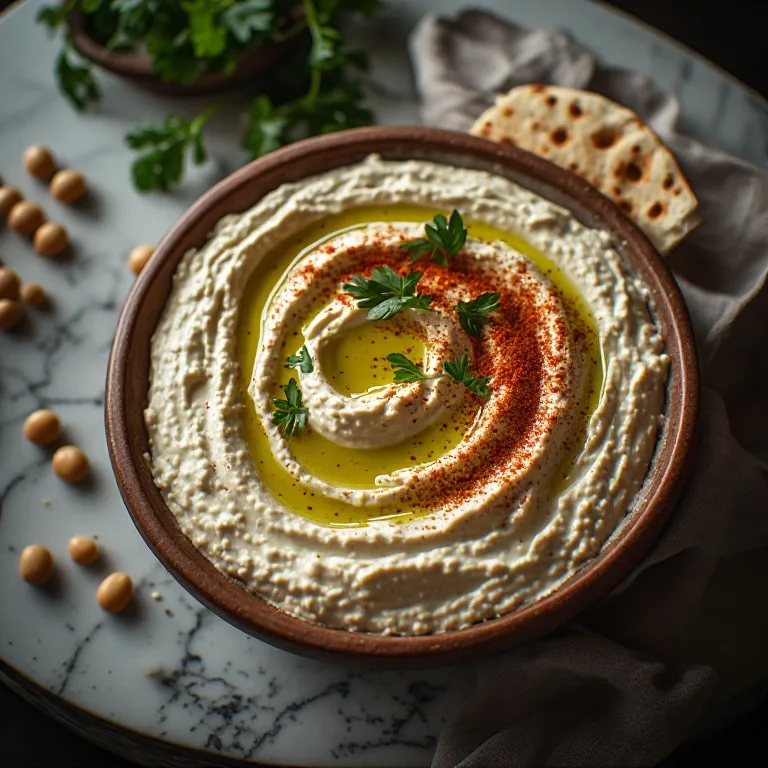
José Andrés named his DC restaurant “Zaytinya” — the Turkish word for olive oil — in 2002. He could have named it after chickpeas. He could have named it after tahini. He named it after olive oil, and the hommus he serves reflects that choice: a silky, chickpea-rich base finished with a generous pool of good extra-virgin olive oil and harissa chili crisp, the olive oil treated as a structural part of the dish rather than a decoration.
Zaytinya opened at 701 Ninth Street NW in DC’s Penn Quarter and became one of the city’s most beloved restaurants within a few years of opening. It earned a Michelin Bib Gourmand and has held it for multiple consecutive years. Washington Post critic Tom Sietsema gave it three stars. The concept was Eastern Mediterranean mezze — Turkish, Greek, and Lebanese small plates meant for sharing — in a spare, high-ceilinged room that made the food the event rather than the decor. By 2022, a New York location had opened at the Ritz-Carlton in NoMad (1185 Broadway), followed by Las Vegas and Nashville. On March 19, 2024, Andrés published the Zaytinya cookbook (Ecco), which includes the full hommus recipe, spelled in the Arabic-Lebanese transliteration, on page 46.
The hommus is $13 at the DC restaurant. It costs about $4 to make at home.
The One Technique That Changes Everything
Most hummus recipes put chickpeas in the food processor first, then add tahini. Zaytinya’s method reverses this order, and the difference is not subtle.
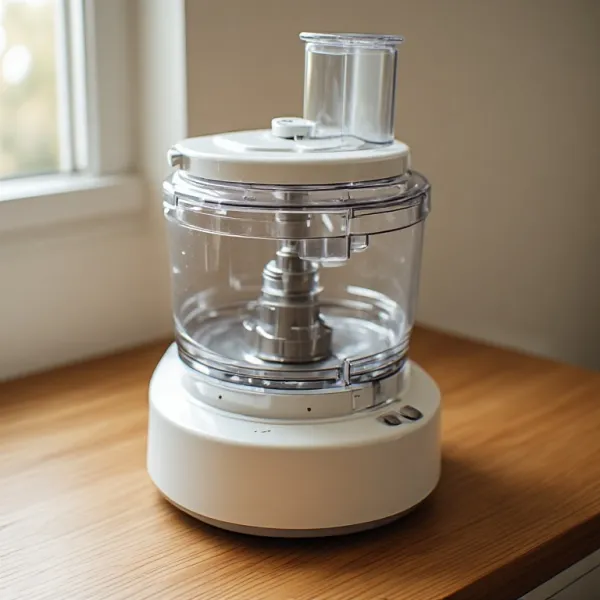
In the Andrés approach, tahini goes into the food processor with lemon juice and garlic before a single chickpea is involved. The machine runs for a minute while the mixture seizes into a stiff, pale paste. Then ice-cold water is streamed in while the machine runs, and the paste transforms into something glossy, loose, and creamy — a fully emulsified tahini-lemon base. Warm, overcooked chickpeas then go into this base, not the other way around.
Why it matters: tahini, when blended with an acid (lemon juice) and cold water, forms a proper emulsion — the fat from the sesame seeds and the water are held in suspension, producing a texture closer to a thick cream sauce than a paste. When chickpeas are then blended into this emulsion, they disperse smoothly through it rather than fighting through raw tahini. The result is more homogeneous and silky than anything produced by the chickpeas-first method, and requires less overall processing time to achieve a completely smooth texture.
The other variable is chickpea texture. Andrés uses dried chickpeas soaked overnight with baking soda and then cooked in fresh water with another dose of baking soda until they are genuinely overdone — past the point most recipes call “done,” into the range where a few are beginning to break apart on their own. The baking soda raises the pH of the cooking water, accelerating breakdown of the pectin bonds in the chickpea cell walls. The chickpeas produced this way disintegrate into a smooth paste in the food processor; chickpeas that are merely cooked tender do not.
On the Olive Oil
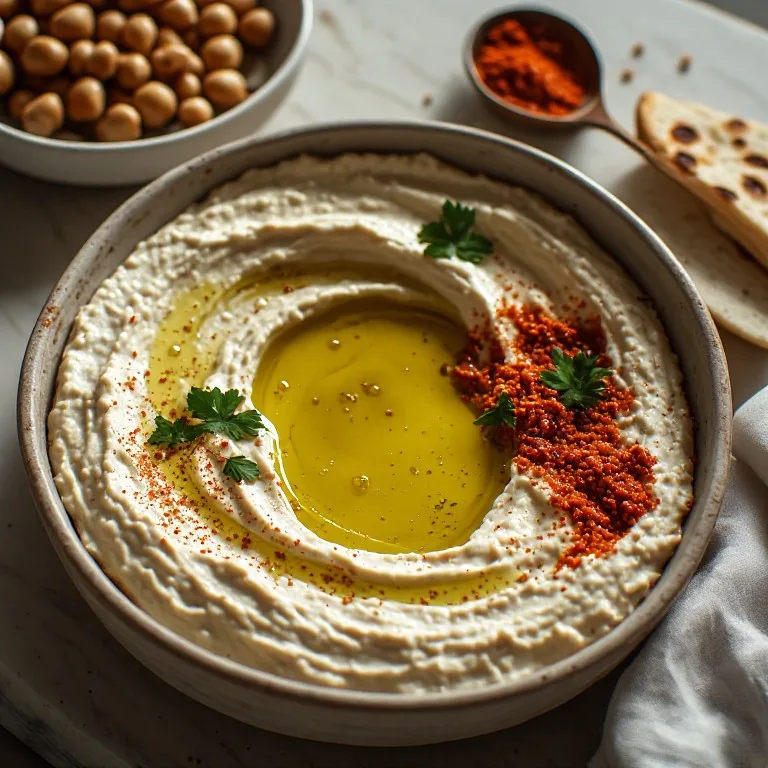
The restaurant is named for this ingredient. Use good olive oil — a bottle you’d put on bread, not one you use only for high-heat cooking. Fruity, slightly peppery extra-virgin olive oil is the right register here; something neutral or generic will produce a flat finish. Pour 3 to 4 tablespoons per bowl. That is not a typo. The olive oil pools in the center and coats every scoop of pita that passes through it — it is load-bearing, not decorative.
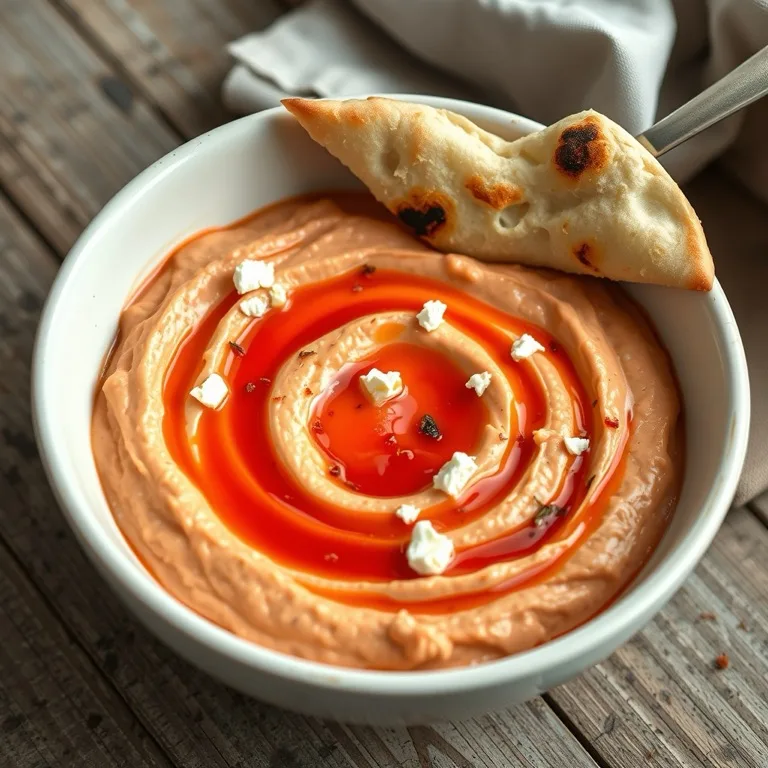
The harissa chili crisp goes into the center of the olive oil pool. In the restaurant, the harissa provides a visible swirl of heat and color against the pale hummus. At home, you can use harissa paste (stir 1 teaspoon into 1 tablespoon olive oil and spoon it over), harissa chili crisp (the Mina brand is excellent; so is anything labeled “harissa crisp” at a Middle Eastern grocery), or a high-quality plain harissa if you can’t find the crisp version. Do not substitute sambal oelek or sriracha — they are fine condiments in other contexts but they don’t have the caraway and coriander notes that make harissa read as Eastern Mediterranean.
How It Differs From Zahav Hummus (and Why Both Are Worth Knowing)
Both Zaytinya and Zahav are serious hummus. Both use dried chickpeas, baking soda, and high-quality tahini. They are not interchangeable, and having both recipes is useful rather than redundant.
Zahav (Michael Solomonov, Philadelphia) is explicitly a tehina restaurant — the tahini ratio is very high (2 cups of tahini to 1 cup of dried chickpeas), the garlic is blended into lemon juice and strained out rather than blended directly into the hummus, and the finish is sweet paprika and flat-leaf parsley. The flavor is tahini-dominant, very clean and complex, with no raw-garlic bite. It is Israeli in tradition — the cooking of the Levant filtered through a specific cultural lens.
Zaytinya is Eastern Mediterranean in a broader sense — Turkish, Greek, Lebanese. The tahini ratio is high but the chickpea is more present, the garlic is blended directly into the tahini-lemon base (which mellows it enough through processing), and the finish is olive oil and harissa. The result is slightly brighter, with more of a lemon and chickpea presence, and the heat from the harissa provides contrast rather than sweetness. It is the hummus of a mezze restaurant, designed to work as one of several spreads on a table, alongside htipiti, labneh, and tzatziki.
If you are serving both at the same time — they are different enough to be interesting together, and your guests will notice the distinction. If you are picking one: the Zaytinya recipe is slightly simpler (no garlic-straining step), and the harissa finish makes it feel more like something from a restaurant counter. The Zahav recipe produces something more concentrated and tehina-forward, closer to an event.
What to Order at the Restaurant (If You Go)
The hommus is the starting point. Order it. After that, the htipiti — roasted red pepper and feta — is consistently recommended by first-timers and regulars alike, and it is nothing like the feta-and-olive thing you get at a Greek diner. The Brussels sprouts are worth ordering despite being a cliché of modern menus everywhere; Zaytinya’s version is genuinely different, fried crispy with a bright herb-lemon finish that cuts the richness of the other spreads. Grilled octopus. Shrimp with dill and lemon. And if the kitchen is running its lamb-topped hommus — the same base crowned with spiced ground lamb and toasted pine nuts — order it for a more complete small meal from a single plate.
Warm pita arrives throughout. Use it for everything. The mezze format at Zaytinya is designed for sharing among three or four people; a table of four with eight to ten plates runs about $60–70 per person with drinks. Reservations are recommended for DC and NYC; the bar at both locations takes walk-ins.