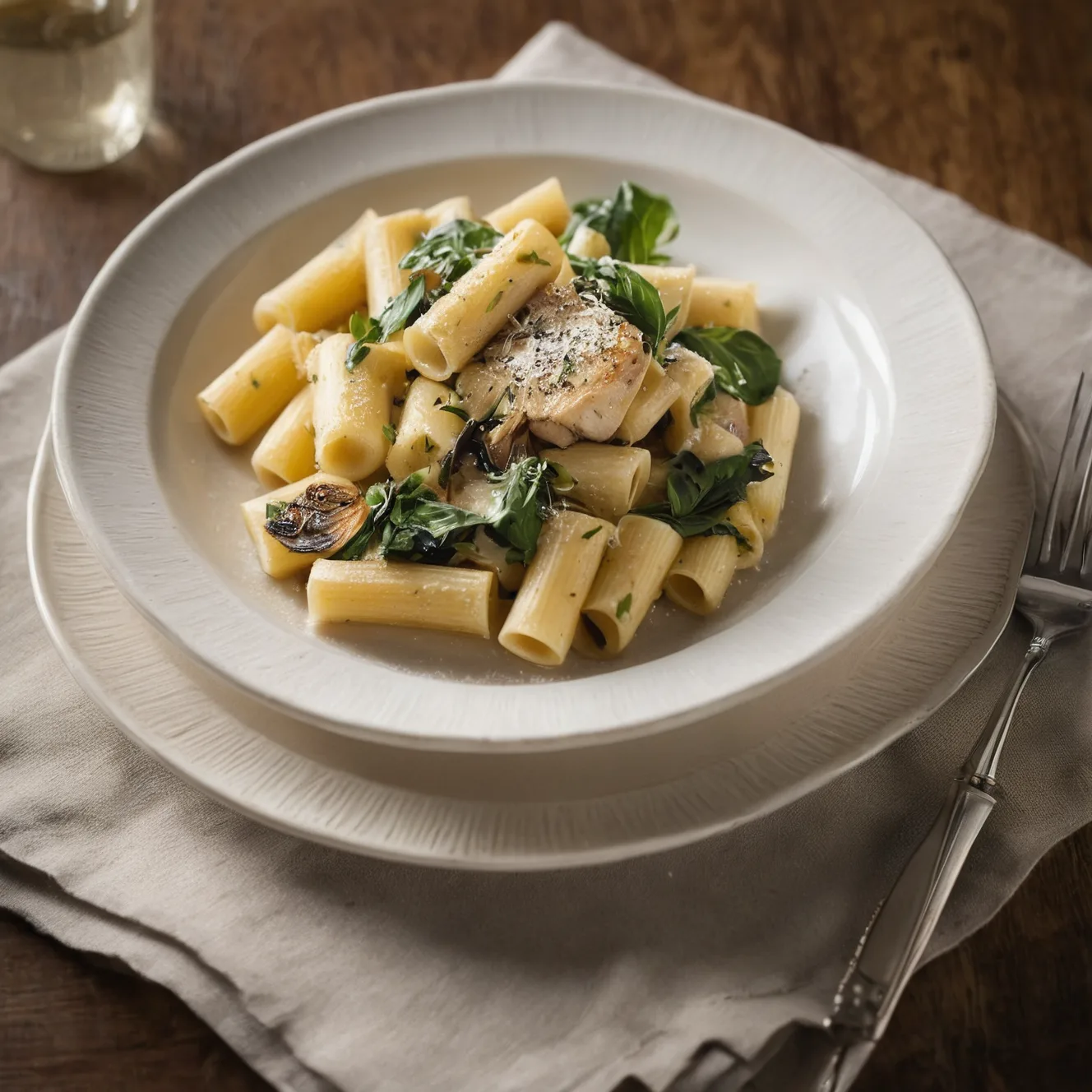
Maggiano’s Little Italy has kept essentially the same menu since its first location opened in Chicago in 1991. The dishes that were ordering staples then — Rigatoni D, Chicken Piccata, the baked pastas — are still ordering staples now, across 50 locations. That longevity is a signal: these dishes work, and the techniques behind them are learnable.
Five of those dishes translate completely to a home kitchen. Below is the complete guide — what each dish actually is, what makes each one work, what it costs at the restaurant versus at home, and links to the full copycat recipes with verified technique.
At a Glance: All Five Dishes Compared
| Dish | Difficulty | Cook Time | Home Cost (4 servings) | Restaurant Price (per person) |
|---|---|---|---|---|
| Rigatoni D | Medium | 50 min | ~$28–32 | ~$26 |
| Chicken Piccata | Medium | 25 min | ~$28–32 | ~$26 |
| Taylor Street Baked Ziti | Easy | 40 min | ~$12–16 | ~$24 |
| Linguine di Mare | Hard | 30 min | ~$28–35 (2 servings) | ~$36.50 |
| Linguine alle Vongole | Medium | 25 min | ~$18–24 (2 servings) | ~$33–35 |
The right order to attempt these: Baked Ziti first (easiest, cheapest, most forgiving), then Chicken Piccata (one technique to master), then Rigatoni D (two techniques, but both learnable), then Linguine alle Vongole (clams are the only variable), then Linguine di Mare last (four seafood proteins, precise timing required).
Maggiano’s at Home: What You Actually Need
Before diving into each dish, three things define Maggiano’s Italian-American cooking style and appear in almost every recipe:
Dry Marsala wine. Not sweet Marsala, not Marsala all’uovo, not grocery-store cooking wine. Dry Marsala appears in the Rigatoni D sauce and improves the Chicken Piccata and Baked Ziti if you deglaze with it. Look for bottles labeled “Secco” (dry) from Florio or Pellegrino — around $12 at most wine shops. A bottle lasts through multiple recipes.
Butter as a finishing ingredient, not a cooking fat. Maggiano’s sauces — particularly the Chicken Piccata and Linguine alle Vongole — are finished by swirling cold butter pieces into a warm (not boiling) sauce off the heat. This technique is called monter au beurre and it is what gives the sauces their glossy, restaurant-quality texture. It only works with cold butter; butter added to a hard boil just melts and pools separately.
Fresh pasta water. Every pasta dish benefits from 1 cup of starchy pasta cooking water reserved before draining. The starch is what binds sauce to pasta and gives Italian-American restaurant dishes their cohesive, not watery, finish. Keep a measuring cup by the pot and pull the water before you drain.
Rigatoni D {#rigatoni-d}
What it is: Rigatoni with balsamic-sautéed cremini mushrooms, caramelized onions, sliced chicken breast, and dry Marsala cream sauce — finished with fresh basil, flat-leaf parsley, and aged Parmesan. It has been Maggiano’s best-selling pasta since opening day.
The D stands for David Di Gregorio, “Chef D,” who developed the dish for the original Chicago location. It has been on the menu for over 30 years and is now trademarked. The restaurant serves it for roughly $26 per person at about 1,760 calories — a very large portion.
The two techniques that matter:
Balsamic on the mushrooms. Most copycat versions skip this. When balsamic vinegar hits a hot pan with mushrooms, it reduces in about 60 seconds to a concentrated, syrupy glaze. That concentrated sweetness is what gives the mushrooms their savory depth in the finished sauce. Use standard balsamic (not aged balsamic, which is too thick and too expensive to cook with) and let it reduce completely before moving on.
Caramelized onions, not softened onions. “Caramelized” means 25–35 minutes over medium-low heat until deep golden-brown, jammy, and reduced by two-thirds. “Softened” means 5–7 minutes until transparent — a completely different result in the finished dish. The onions cannot be rushed. If they start to stick, add a tablespoon of water and keep going.
Cost: At home, four servings cost roughly $28–32 in ingredients: chicken breasts, cremini mushrooms, dry Marsala, heavy cream, onions, and rigatoni. The restaurant charges about $26 per plate. Savings: roughly $70 for a table of four.
Full Rigatoni D recipe with step-by-step instructions →
Chicken Piccata {#chicken-piccata}
What it is: Thin, flour-dredged chicken cutlets pan-seared golden and finished in a bright white wine-lemon-caper butter sauce with fresh spinach — no heavy cream. The restaurant serves it with a choice of Spaghetti Aglio Olio or Rigatoni Marinara for roughly $26 per person.
This is also the dish where Maggiano’s most clearly differs from other Italian-American chains. Cheesecake Factory’s Chicken Piccata adds heavy cream and cremini mushrooms, making a richer, milder sauce. Maggiano’s stays closer to the Italian original: white wine, chicken broth, lemon, capers, and cold-butter finish. The sauce is sharper, the lemon and capers are the primary notes rather than background, and it reads as lighter despite being equally satisfying.
The one technique that matters:
The butter mount at the end. After the sauce is built and the heat is off, add cold butter pieces two at a time, swirling the pan between additions. This emulsifies the butter into the sauce rather than melting it separately, transforming a thin brothy liquid into a glossy, lightly thickened coating. If the pan cools too much, return it briefly to very low heat — enough to melt the butter into the sauce without breaking the emulsion at a hard boil.
Cost: At home, four servings run about $28–32: chicken breasts, lemons, capers, white wine, chicken broth, spinach. Savings: roughly $70 for a table of four versus individual plates at the restaurant.
Taylor Street Baked Ziti {#baked-ziti}
What it is: Ziti tossed in a light Italian sausage pomodoro — diced tomatoes, marinara, fresh basil, butter, dry white wine — then topped with sliced provolone and grated Parmesan and finished under the broiler. The restaurant charges roughly $24 per person.
The detail most people don’t expect: no ricotta. Virtually every home baked ziti recipe uses it, and the Maggiano’s version does not. The sauce clings to each piece of ziti cleanly, without a creamy layer disrupting it, and the dish tastes lighter as a result. The other differentiator: provolone on top instead of mozzarella. Provolone melts to a bubbly, lightly golden crust with a faintly smoky, savory character that mozzarella can’t replicate.
This is the easiest of the five dishes. There are no precise timing sequences, no emulsified butter mounts, and no delicate proteins. The sausage pomodoro is a forgiving sauce that holds well and reheats better than any cream-based pasta. The name “Taylor Street” comes from Chicago’s historic Italian-American neighborhood — the restaurant is paying tribute to the community that kept this style of cooking alive in the city for over a century.
Cost: About $12–16 in total ingredients for four hearty servings — Italian sausage, canned tomatoes, jarred marinara, ziti, provolone. The cheapest of the five dishes by a significant margin. Restaurant price: roughly $24 per person. Savings: roughly $80 for a table of four.
Full Taylor Street Baked Ziti recipe →
Linguine di Mare {#linguine-di-mare}
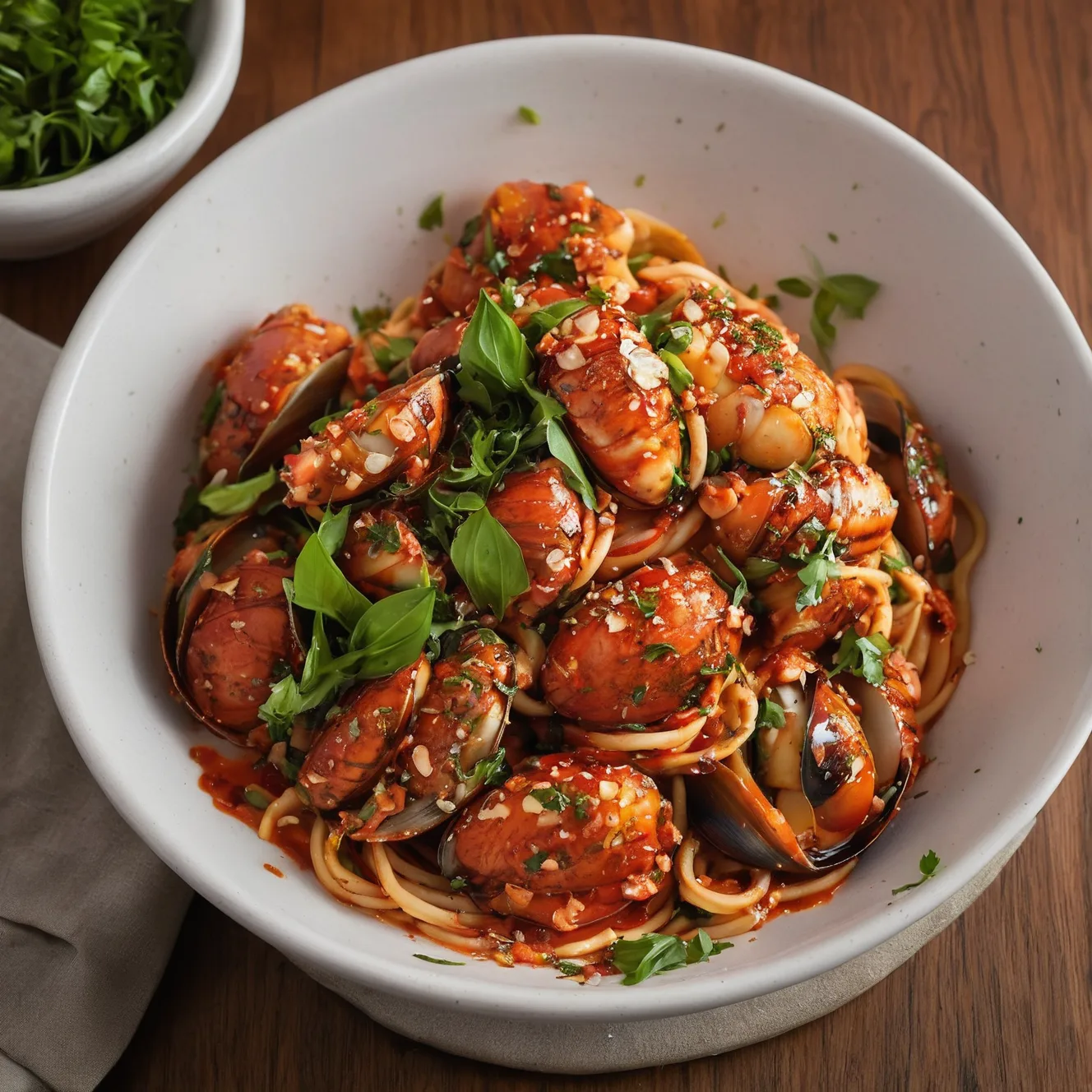
What it is: Linguine with four seafood proteins — lobster tail, shrimp, mussels, and clams — tossed in a spicy tomato-wine sauce built on garlic, crushed red pepper, dry white wine, and San Marzano tomatoes. The restaurant’s most expensive pasta at roughly $36.50 per person, and one of the most visually dramatic dishes on the menu (mussels and clams served in their shells).
At home, this dish costs about $28–35 in ingredients for two generous servings — the majority of that cost is the lobster tail. Unlike most Maggiano’s dishes, which scale easily to four servings, the seafood cost makes two the practical home portion size.
The one technique that determines success:
Cooking order and timing. Each seafood has a different cook time, and adding them in the wrong order means at least one protein is overcooked before the rest is ready. The correct order:
- Mussels and clams first — covered, about 5 minutes over high heat to steam open. They also release briny liquid that improves the sauce. Discard any that haven’t opened after 7 minutes.
- Shrimp next — 2–3 minutes, just until pink and curled.
- Lobster tail meat last — pre-cooked lobster tails (the most common kind sold at grocery stores) need only 60–90 seconds to warm through. More than that and the texture turns tough and chalky.
Add the lobster when you’d normally think “one more minute” and pull it 30 seconds before it looks done. Overcooking lobster is the single most common way this dish fails at home.
Cost: About $28–35 for two restaurant-sized servings. Restaurant price: $36.50 per person. Still a saving, but the ingredient cost is high relative to the other four dishes.
Full Linguine di Mare recipe →
Linguine alle Vongole {#linguine-alle-vongole}
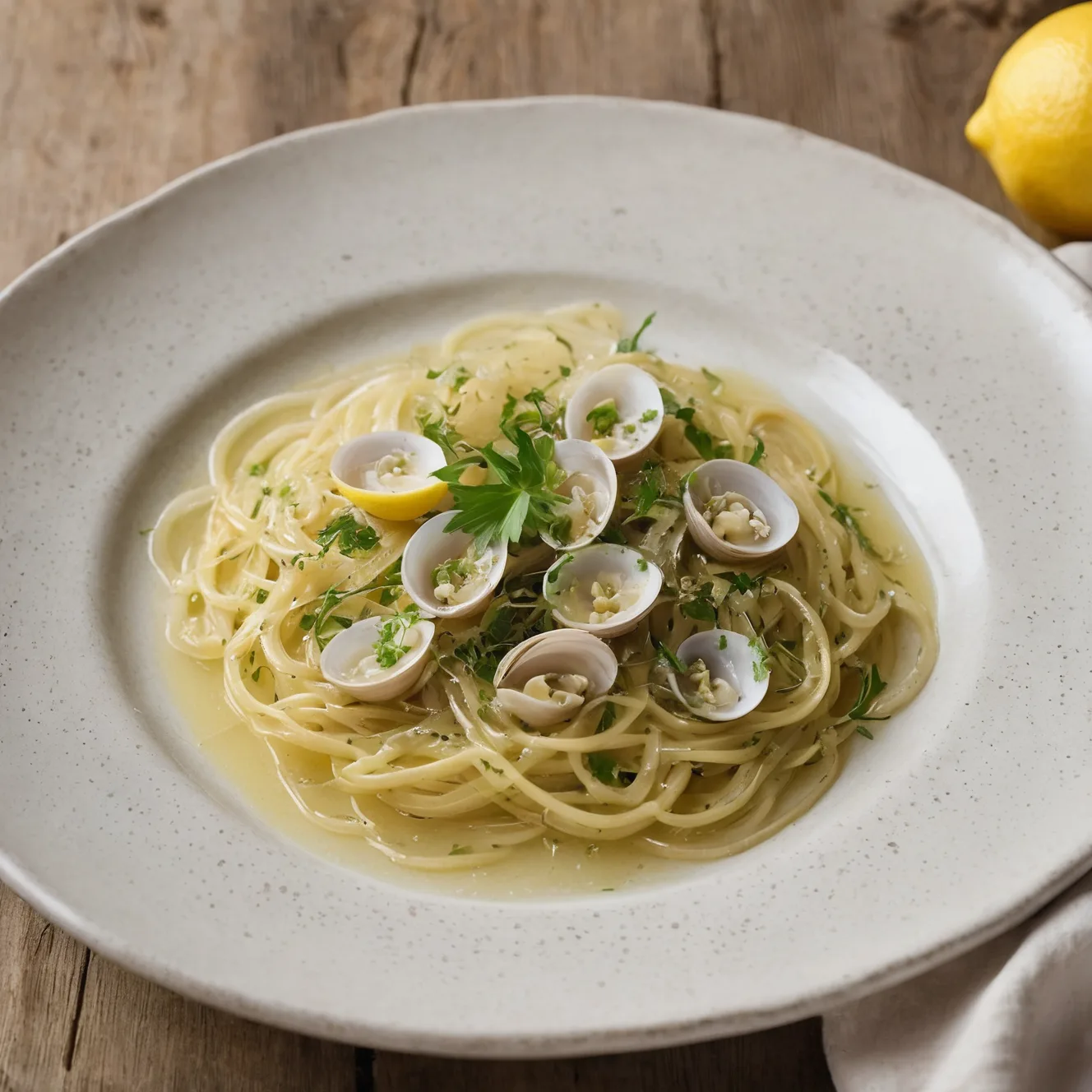
What it is: Linguine tossed with fresh clams steamed open in dry white wine and garlic, finished with their own cooking liquid as the sauce — plus fresh parsley, basil, a squeeze of lemon, and Parmesan. About $33–35 per person at the restaurant; about $18–24 in ingredients for two servings at home.
This is the cleanest, most ingredient-focused of the five dishes. Where Linguine di Mare is a bold, complex, tomato-based seafood showcase, Linguine alle Vongole strips the dish back to a single protein and a delicate white wine-butter broth. The clams themselves are the point — their brine becomes the sauce.
The technique the recipe turns on:
The clam liquor is the sauce. When the clams open in the pan, they release their own briny, ocean-flavored liquid. That liquid, combined with the white wine and garlic, goes directly onto the pasta — not discarded or reduced further. Finishing the pasta in the pan (rather than saucing it separately) allows the pasta starch to bind the olive oil, wine, and clam liquor into a cohesive coating that clings to the linguine rather than pooling at the bottom of the bowl.
Buy littleneck clams — small (1.5–2 inches), reliably available, clean flavor. Soak in cold, lightly salted water for 20 minutes before cooking to purge grit. Discard any with cracked shells or shells that don’t close when tapped.
Cost: About $18–24 for two generous servings (clam prices vary by season and market). Restaurant price: $33–35 per person. Savings: roughly $45 for two.
Full Linguine alle Vongole recipe →
Cost Breakdown: Maggiano’s vs. Home
| Dish | Restaurant (per person) | At Home (total, feeds indicated) | Saves |
|---|---|---|---|
| Rigatoni D | ~$26 × 4 = $104 | ~$30 for 4 | ~$74 |
| Chicken Piccata | ~$26 × 4 = $104 | ~$30 for 4 | ~$74 |
| Taylor Street Baked Ziti | ~$24 × 4 = $96 | ~$14 for 4 | ~$82 |
| Linguine di Mare | ~$36.50 × 2 = $73 | ~$32 for 2 | ~$41 |
| Linguine alle Vongole | ~$33 × 2 = $66 | ~$21 for 2 | ~$45 |
A full Maggiano’s dinner for four — ordering one of each — would run roughly $165–185 per person in food alone at the restaurant (or $660–740 for the table before drinks, tax, and tip). Made at home in sequence over a few evenings, the same five dishes cost $127–131 total in ingredients for everyone.
Which Dish Should You Make First?
If you have never cooked Maggiano’s at home before, the Taylor Street Baked Ziti is the right starting point. It requires no precision technique, uses grocery-store ingredients that cost under $16, and is nearly impossible to ruin. It also teaches you the Maggiano’s tomato-and-butter sauce base that underpins everything else.
After that: Chicken Piccata next, because the butter-mount technique is the single most transferable skill in Italian-American cooking — once you can do it cleanly, it works in dozens of dishes beyond Maggiano’s.
Then Rigatoni D — after the Piccata, the balsamic-mushroom and caramelization techniques are the only new skills, and both are practiced in relative slow time (nothing burns fast when you’re caramelizing onions).
The seafood pastas last. The alle Vongole before the di Mare — clams are more forgiving than the four-protein timing that di Mare demands.
Want the full list in one place? Every Maggiano’s copycat recipe we’ve verified lives on the Maggiano’s restaurant page, alongside the other restaurant chains we’ve reverse-engineered.