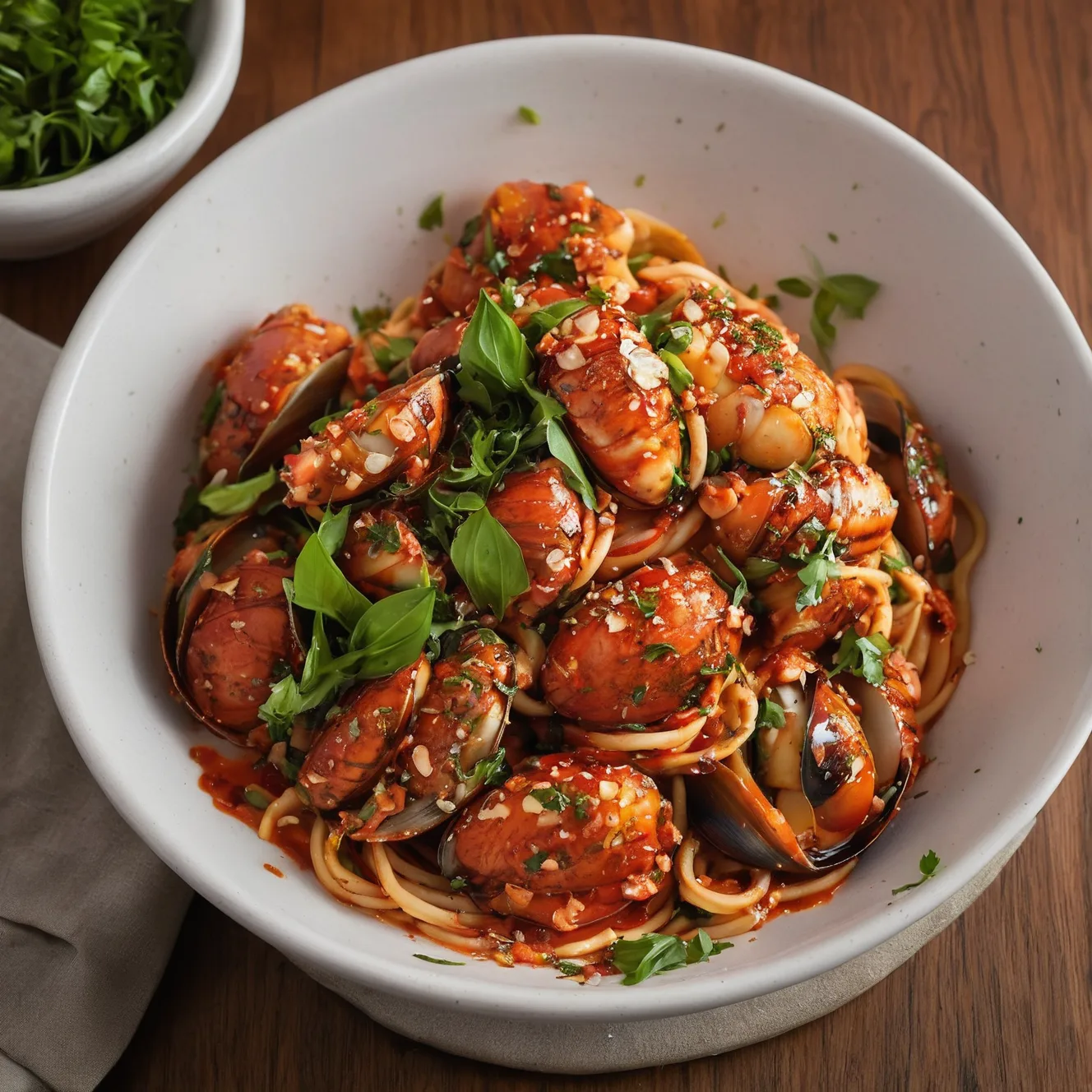
Copycat Maggiano’s Linguine di Mare
Prep: 20 min | Cook: 30 min | Makes: 2 restaurant-sized servings | Cost: ~$28–35 vs. ~$36.50 at Maggiano’s
Linguine di Mare is Maggiano’s most ambitious seafood pasta — a full Frutti di Mare built on a fra diavolo-style spicy tomato sauce with four seafood proteins. There’s no cream in this dish and no butter finish; it’s tomato, white wine, garlic, and crushed red pepper, which means every flavor has to come from the quality of the shellfish and the depth of the sauce.
The dish succeeds or fails on one thing: cooking order. Mussels and clams go into the hot sauce first and steam open with the lid on; their brine enriches the sauce with a depth no added ingredient can replicate. Shrimp follow, then lobster tail at the very end — warm through for 90 seconds and you’re done. Overcooking the lobster (it goes from tender to chalky in under 90 seconds of extra heat) is the most common way this goes wrong at home.
TL;DR: Four seafood proteins — lobster, shrimp, mussels, clams — tossed in a spicy tomato-wine sauce with linguine. The restaurant serves it at ~$36.50 and ~1,280 calories with 3,600mg sodium. At home this recipe makes two restaurant-sized plates for ~$28–35 total, and the lighter swaps below (less oil, low-salt tomatoes) can pull each plate down toward ~2,000mg sodium. Cooking order is the entire technique: clams and mussels → shrimp → lobster (last, barely).
The Spicy Tomato Sauce: What Makes It Fra Diavolo
“Fra diavolo” literally means “brother devil” in Italian — in Italian-American cooking it refers to a seafood pasta sauce built on tomato, white wine, and a meaningful amount of crushed red pepper. It is not a subtle dish. Maggiano’s Linguine di Mare is a restaurant interpretation of this preparation, with the addition of lobster (which is not traditional in the classic frutti di mare) and a refined sauce technique.
The sauce has three layers built in sequence. First: garlic and red pepper flakes bloomed in olive oil for 2 minutes — the fat carries the aromatic compounds from both and distributes them evenly through the sauce. Second: white wine deglazed and reduced by half, which adds acid and concentrates the wine’s flavor without leaving raw alcohol bite. Third: San Marzano tomatoes simmered for 8–10 minutes until the sauce tightens. By the time the shellfish go in, the sauce base is already full-flavored; the clam and mussel brine then amplifies that foundation with a natural oceanic salinity.
The Four Seafood Proteins: What to Buy and How to Prep
Lobster tails: The restaurant uses Maine lobster. At home, cold-water lobster tails (Maine, Canadian, or New Zealand) are meatier and sweeter than warm-water tails (Brazilian or Caribbean). Look for 6–8 oz tails. Thaw in the refrigerator overnight or under cold running water for 30 minutes. Pre-cook by boiling or steaming before the sauce goes on — they go into the sauce already cooked, just to warm through.
Shrimp: Large shrimp (21/25 count) hold up best in the tomato sauce without overcooking. Smaller shrimp cook so fast that by the time you see them curl pink, they’re already over. Peel and devein; tails can stay on for presentation or come off for easier eating.
Mussels: Buy them the day you cook. Discard any with open shells that don’t close when tapped — those are dead. Scrub the shells and pull the “beard” (the dark fibrous thread attached to the shell) off each mussel by tugging it toward the hinge. They should be tightly closed and smell of the ocean, not of ammonia.
Clams: Littleneck clams are the standard choice — they’re small (about 1.5–2 inches) and open reliably in 4–6 minutes of steaming. Scrub them well; clams carry sand. Soak in cold salted water for 20 minutes before cooking, then drain — they’ll purge grit during the soak.
Why Shell-On Shellfish Matter
The mussels and clams are served shell-on at Maggiano’s, as they are in the classic frutti di mare. This is not just visual — the shells retain heat and slow the cooling of the individual pieces, so the last mussel you eat is as warm as the first. More importantly: the liquid inside each shell is pure concentrated clam or mussel brine, released as you eat. It drips into the sauce in the bowl and makes the final bites of pasta even more intensely flavored than the first.
The alternative — shucking the shellfish before service — produces a technically tidier plate but loses this progressive flavor release. Keep them in the shell.
See also: Copycat Maggiano’s Rigatoni D — the chain’s bestselling pasta; Copycat Maggiano’s Chicken Piccata — lemon-caper pan sauce; Copycat Maggiano’s Taylor Street Baked Ziti — no-ricotta baked pasta with provolone; Copycat Red Lobster Shrimp Scampi — garlic-butter versus spicy-tomato, same protein; Copycat Olive Garden Shrimp Alfredo — cream-based versus tomato, same protein; Maggiano’s restaurant page — all our Maggiano’s copycat recipes.