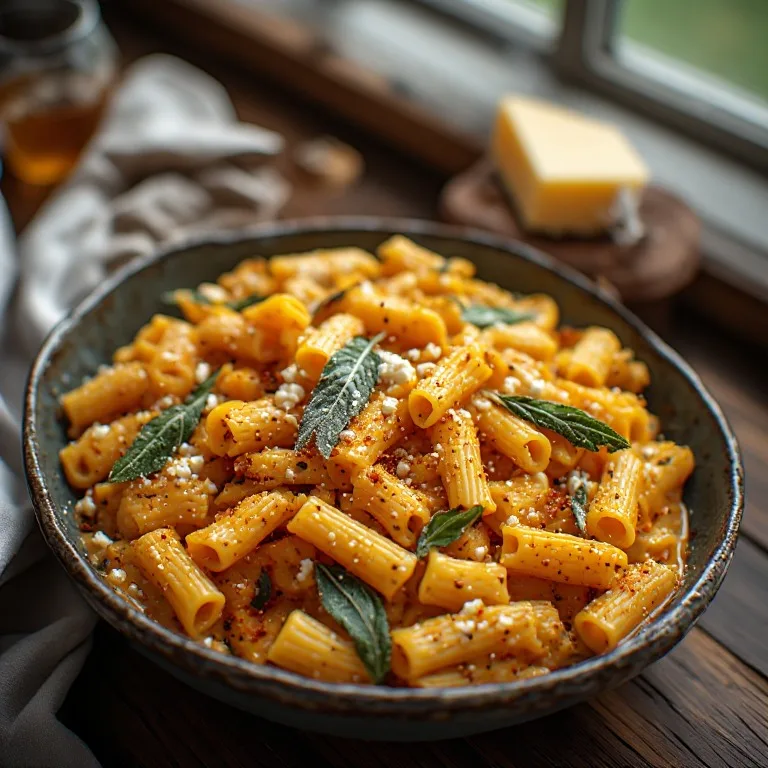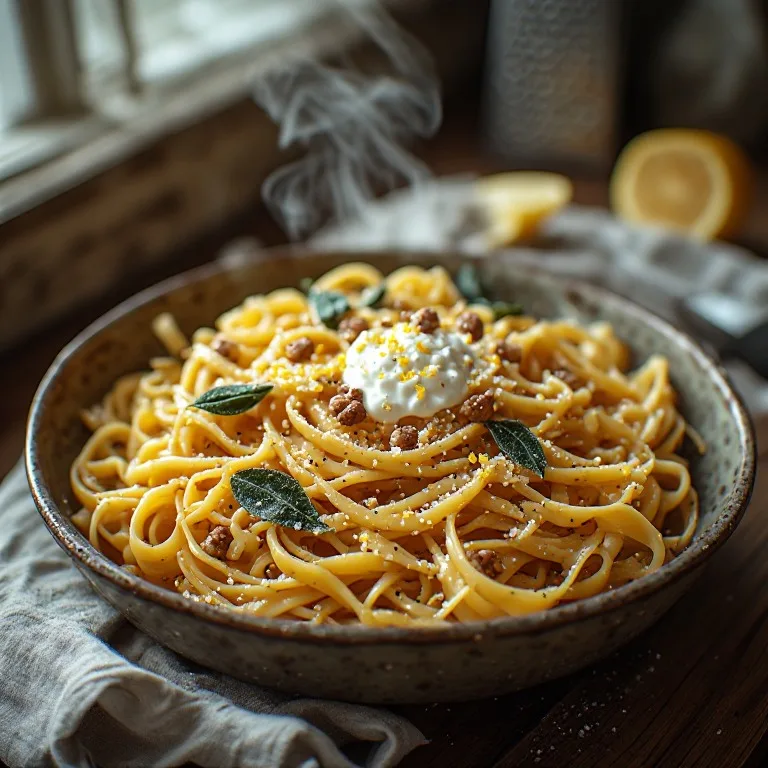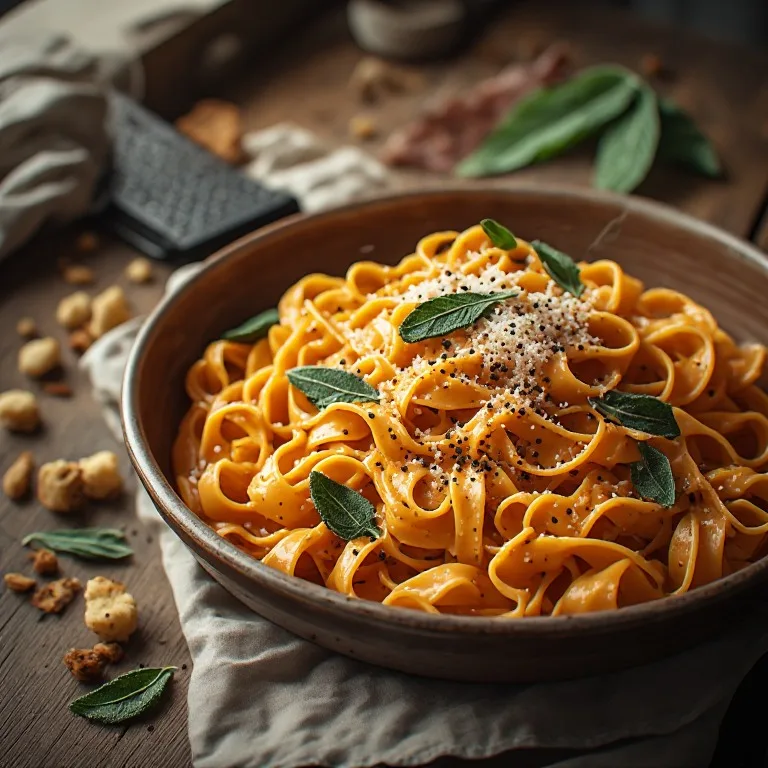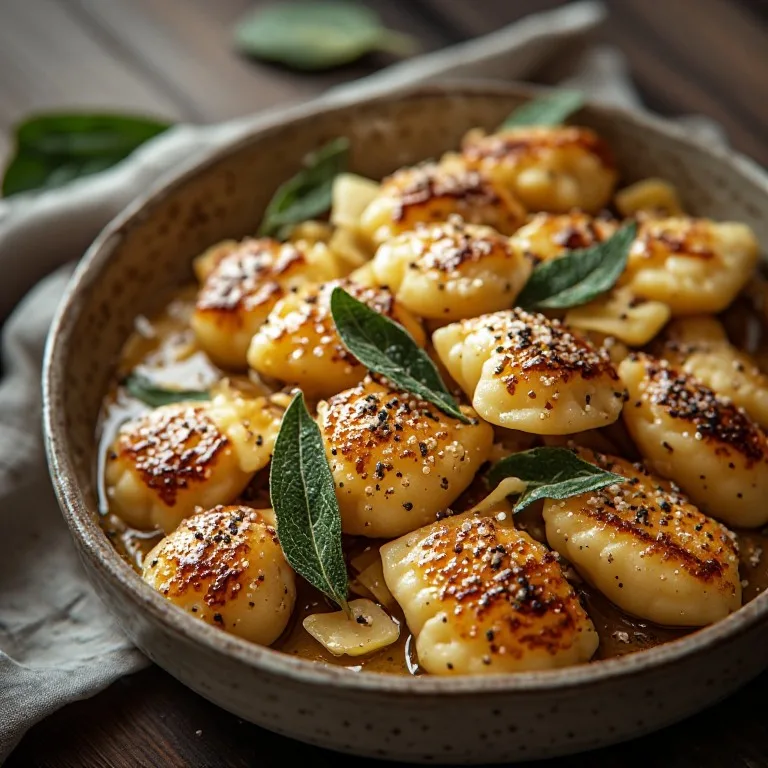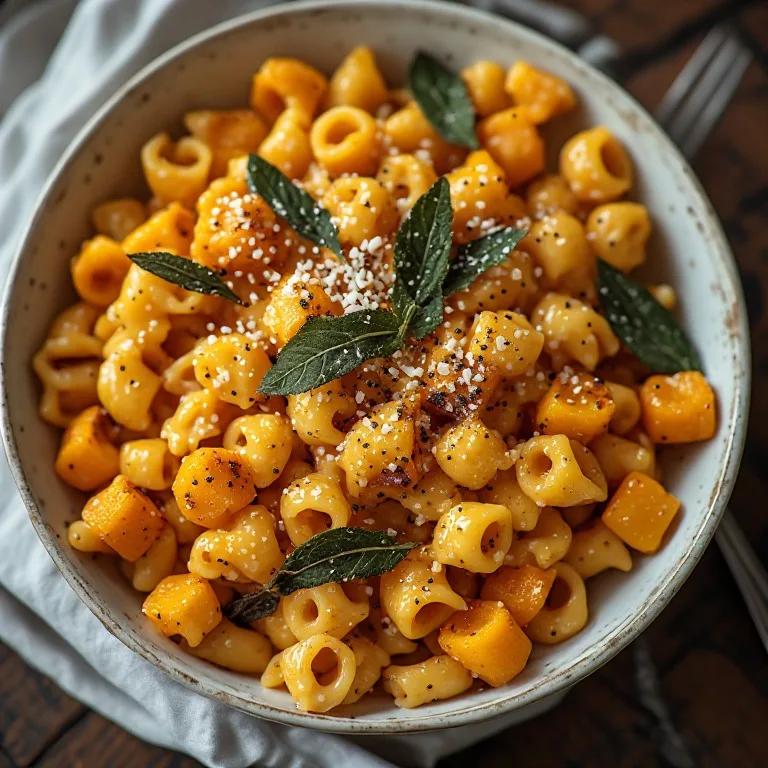


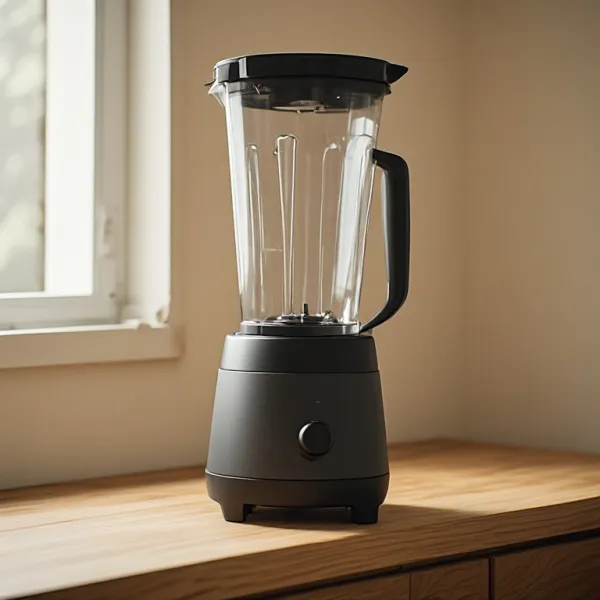
The step that made this pasta go viral is the blending move: roast butternut squash until it’s caramelized and concentrated, scoop half of it into a blender with a ladleful of starchy pasta water, and blend until smooth. What comes out is a naturally thick, naturally creamy sauce with no heavy cream, no flour, and no cream cheese. The whole squash’s flesh, starch from the pasta water, and a few tablespoons of browned butter do everything a beurre blanc would do in a restaurant kitchen.
Why roasting instead of steaming makes the difference
Steamed or boiled butternut squash tastes mild and slightly watery. Roasted butternut squash at 425°F for 25 to 30 minutes tastes like a concentrated version of itself: the water evaporates, the natural sugars caramelize at the edges, and the interior develops a depth that steaming never achieves. When you blend the roasted squash with pasta water, you’re blending caramelized sugars, browned surfaces, and concentrated squash flavor into the sauce — not watered-down mild purée.
The flip at 15 minutes is worth doing. Squash that sits flat on the pan browns on one side and steams on the other. Flipping gives you two caramelized surfaces per cube, which roughly doubles the Maillard compounds making it into your sauce.
The brown butter and sage: two minutes that change the dish
Brown butter is butter cooked until the milk solids at the bottom of the pan turn golden tan and the smell shifts from cooking butter to toasted hazelnuts. The transformation takes 2 to 3 minutes at medium heat, produces dozens of flavor compounds that plain melted butter doesn’t have, and is the single step that separates this from a simple squash pasta.
The sage crisps in the hot brown butter in about 90 seconds. Crispy sage is not the same as sautéed sage: it loses its herbaceous rawness and becomes intensely savory, almost meaty, with a texture like a very thin chip. Crumbling it over the finished pasta adds flavor to every bite without overpowering the squash.
Watch the color and the smell, not the clock. Brown butter goes from golden to burnt in 30 to 40 seconds. A light-colored stainless or enamel pan is strongly preferred — it lets you see the color change. In a dark nonstick pan, rely on smell: nutty and toasty means ready, sharp or acrid means it crossed the line.
Pasta water is the actual sauce binder
The starchy pasta water does two things: it thins the squash purée to the right coating consistency, and it emulsifies the butter into the sauce so it stays glossy instead of breaking into greasy puddles. This is the same reason professional pasta cooks never drain directly into a colander over a sink — they always reserve water.
Reserve it just before draining, not at the start of cooking. Pasta water becomes significantly starchier after 8 to 10 minutes of cooking than it is at 2 to 3 minutes. Starchy pasta water feels slightly slippery between two fingers and looks visibly opaque. That’s the water that works.
The cup shape earns its place here
Orecchiette cups catch and hold the squash purée in a way that smooth pastas can’t. Each cup scoops up sauce as you eat, so the last bite has as much sauce as the first. Farfalle and cavatappi are the closest substitutes if orecchiette isn’t available. Long pastas like spaghetti work with this sauce but the sauce will mostly sit on top rather than being integrated into each piece.
Making it ahead for a dinner party or Thanksgiving
The squash can be roasted and blended up to 2 days in advance — store the purée and the cubes separately in the refrigerator. Brown the butter and sage up to 8 hours ahead. When ready to serve, cook the pasta fresh (12 minutes), warm the purée in the pan with the browned butter, add the cubes, toss with pasta and pasta water, finish with Parmesan. From a prepped state it’s 15 minutes of active cooking — workable for a 4-course dinner party or a Thanksgiving side dish.