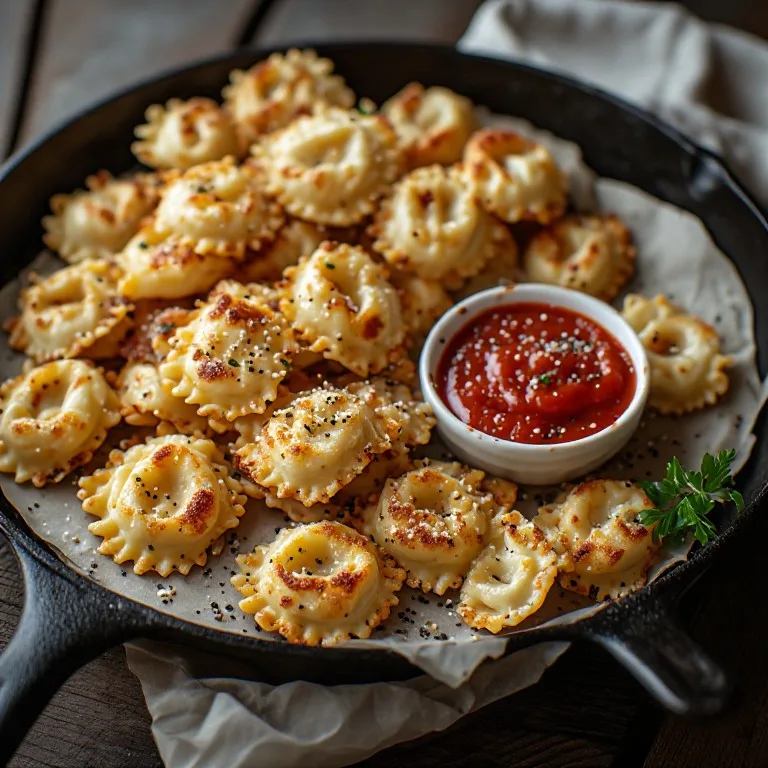


The video is always the same: someone drops a bag of refrigerated tortellini into boiling water for ninety seconds, drains them onto a towel, lets them sit, and then after ten minutes in an air fryer pulls out what look like golden, blistered chips. The crunch sound when they break one open — the immediate collapse into hot, molten cheese — is why this keeps cycling back through TikTok feeds.
What’s actually happening: boiled pasta dough, when dried and exposed to high dry heat (400°F air or a screaming-hot pan), undergoes the same kind of surface dehydration as frying in oil. The water on and near the surface flashes off, the starch on the exterior sets into a rigid, glassy layer, and the result is crispy in the way that wonton skin or phyllo dough is crispy — not greasy, not heavy, just shatteringly thin and light. The cheese filling stays liquid and hot inside because cheese has a higher heat capacity than pasta dough and doesn’t dehydrate the same way.
The only real technique is the drying step. Most people skip it or do it for two minutes. Ten full minutes of drying — or twenty in the refrigerator — is what separates genuinely crispy tortellini from disappointing, chewy ones.
The Two Methods
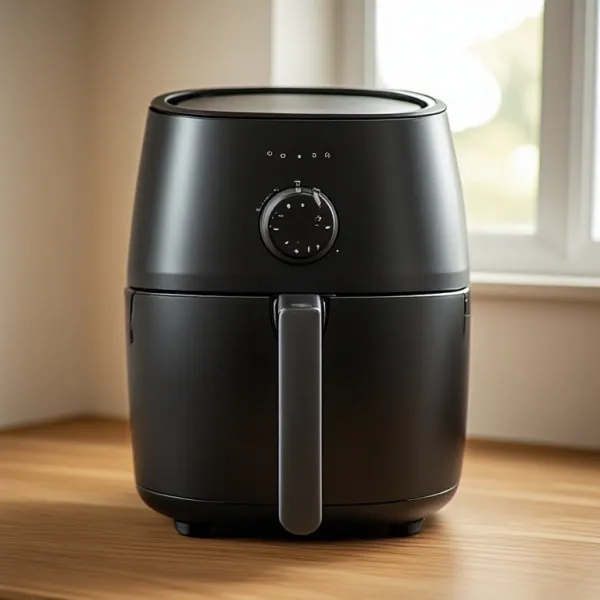
Air fryer is the better method. It circulates 400°F dry heat evenly around every surface simultaneously, producing uniform crispiness without the need to babysit. Nine to eleven minutes, one shake halfway through.
Pan-fry produces excellent color on two flat faces and is better for large batches without an air fryer. The curved sides require a bit of effort to brown (tilt each one against the pan edge with tongs). The result is crispier on the seared faces and slightly softer on the curved edges — still very good.
Common Mistakes
Using frozen tortellini without extra drying time. Freezing forms ice crystals inside the dough; thawing releases that water. Refrigerated tortellini has far less internal moisture and crisps more easily.
Overcooking in the boiling stage. Fully cooked tortellini is too soft and holds too much moisture. One minute less than the package minimum keeps the structure intact for the frying stage.
Skimping on drying time. Surface moisture becomes steam in the air fryer and prevents crispiness. Ten minutes minimum; twenty in the refrigerator is better.
Adding salt before cooking. Salt draws moisture to the surface via osmosis — exactly what you don’t want. Salt goes on after, while the tortellini are still hot.
Crowding the air fryer basket. Pieces touching each other create steam rather than crispiness. Single layer only. Two batches beats one crowded batch every time.
Waiting too long to serve. The filling generates steam as it cools. These go from perfectly crispy to noticeably soft in about 15 minutes. Eat them hot.
The Dipping Sauce Question
Marinara is the classic and the right call — it’s acidic and bright, which cuts through the richness of the cheese-filled tortellini. Warm it; room-temperature marinara makes the tortellini feel cold by comparison.
Garlic aioli (mayo + fresh garlic + lemon + Dijon) is the second-most-popular TikTok version. Richer, more indulgent, excellent with the four-cheese variety.
Pesto is a sleeper option — the herbaceousness works particularly well with mushroom-ricotta tortellini, where you want something green and bright rather than tomato-based.
In all cases: serve the sauce on the side for dipping, not poured over. Thirty seconds of sauce on top of a crispy tortellini and it’s a soft tortellini. Keep them separate.
Related recipes
- Viral TikTok air fryer pickles — the other addictive air fryer snack, this one with a golden panko crust and a tangy brine bite
- Viral TikTok baked feta pasta — the original TikTok pasta phenomenon, a five-minute creamy sauce built on a block of roasted feta
- Viral TikTok spicy vodka pasta — the gochujang-spiked pink sauce for when you want the tortellini’s cousin as a full meal
- Crispy one-pan gnocchi — the same crisp-the-dumpling idea applied to shelf-stable gnocchi, no boiling required
- Viral charcuterie cups — a make-ahead party board in single-serve cups, a natural companion to a plate of hot crispy tortellini