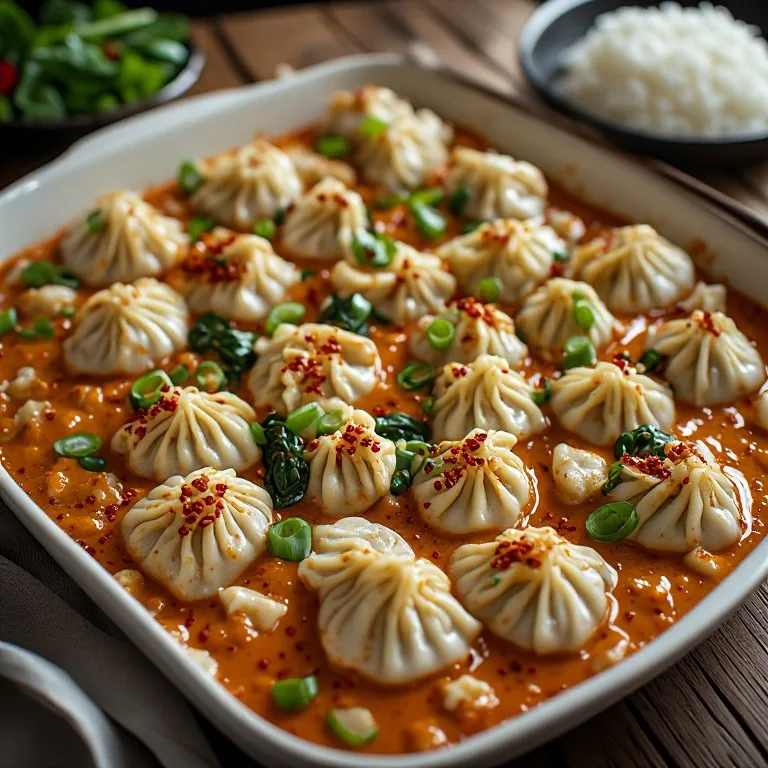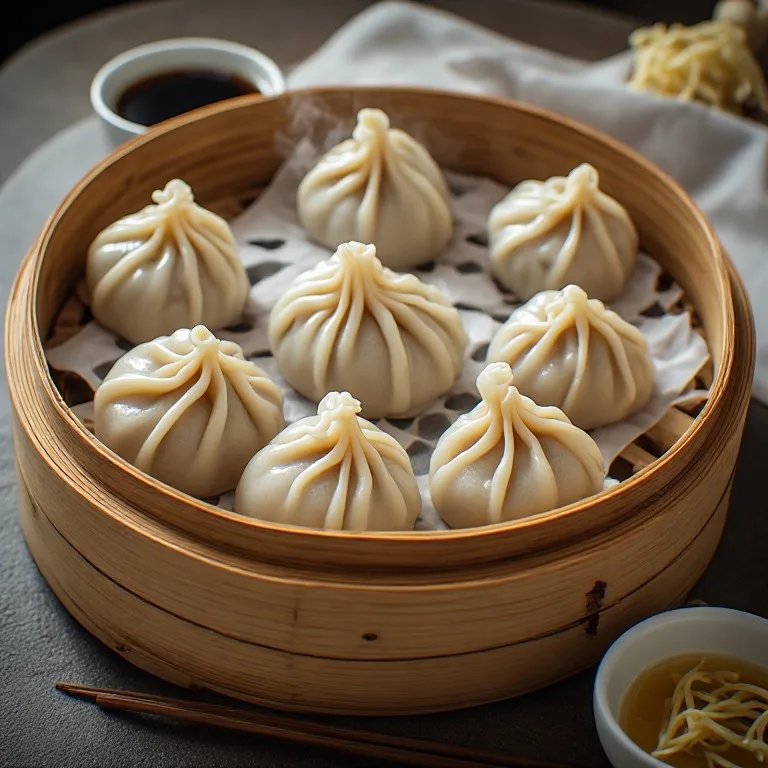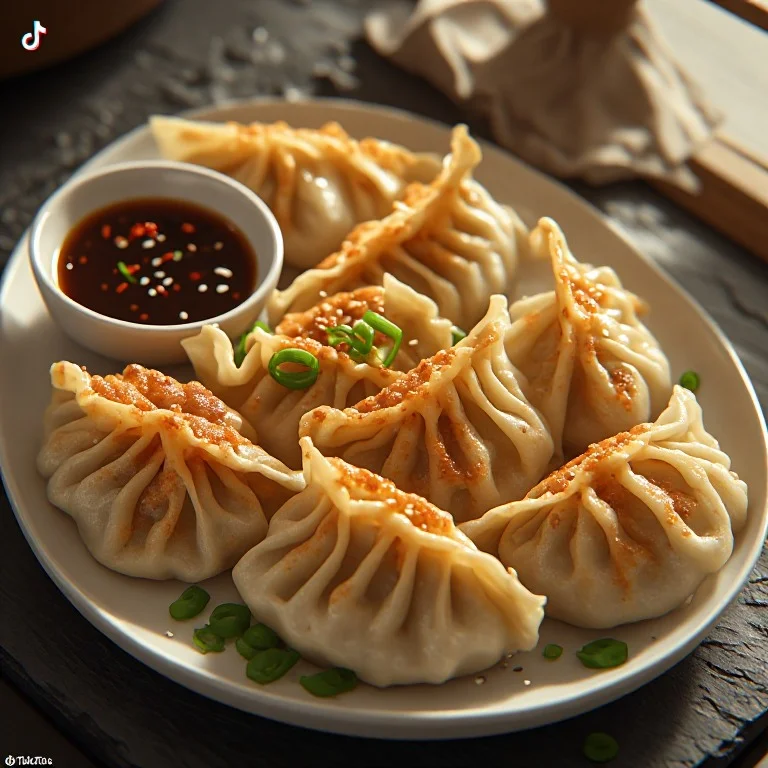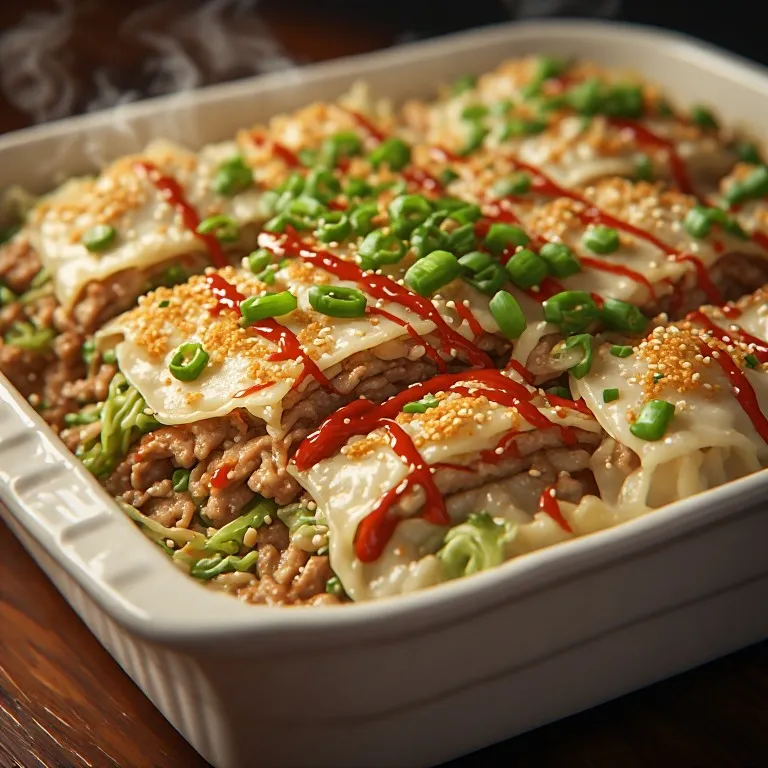


TikTok figured out that wonton wrappers — the same thin dough sheets used in every Chinese dumpling — can stand in for lasagna noodles. Layer them with classic pork-and-cabbage filling, steam-bake the whole thing covered in foil, and the wrappers transform into silky, tender sheets that taste exactly like dumpling skin. All the flavor of hand-folded dumplings, sliceable, ready in 40 minutes.
The appeal is obvious: making individual dumplings from scratch takes an hour of folding. This collapses that to assembly. At a dumpling restaurant, a full order runs $14–22 per person. This feeds six for about $2 per serving.
- Salt, rest 10 minutes, and squeeze-dry 2 cups chopped napa cabbage — this is the critical step
- Brown 1 lb ground pork; add garlic, ginger, scallions, soy, oyster sauce, sesame oil, squeezed cabbage
- Layer in a 9×9 pan: sauce → 1-second water-dipped wonton wrappers → filling → repeat 3 times
- Cover with foil, bake 375°F for 25 minutes; uncover and bake 10–15 more
- Rest 5 minutes, cut into squares, serve with chili crisp
- Total: 40 minutes; $2 per serving; no folding required
Why Wonton Wrappers Work as Noodles
Wonton wrappers are made from wheat flour, water, and egg — the same basic composition as fresh lasagna noodles, just thinner. Under the foil during baking, the steam from the sauce and filling hydrates and softens the wrappers from the outside in. After 25 minutes covered, they’ve transformed from dry, stiff sheets into something with exactly the texture of dumpling skin: slightly chewy, tender, silky.
The brief water dip before layering jumpstarts that process. Without it, a dry wrapper needs the full covered baking time just to hydrate enough to soften — and by the time the wrapper is soft, the edges have often crisped up where they weren’t covered by filling. The dip ensures even hydration across the full surface.
A standard 12-oz package of wonton wrappers contains about 48 square wrappers. You’ll use 30–36 for a 9×9 pan across 3–4 layers. Leftover wrappers freeze well.
The Cabbage Step Everyone Skips (Don’t Skip It)
Napa cabbage is approximately 90% water by weight. That water has to go somewhere during a 40-minute bake.
If it goes into the filling layers: soggy middle that won’t hold its shape when cut.
If you remove it beforehand: clean, distinct layers that slice like a terrine.
The process takes 10 minutes of passive time:
- Chop cabbage very fine — the smaller the pieces, the better they integrate
- Toss with ¼ teaspoon salt in a bowl, set aside 10 minutes
- Bundle in a clean kitchen towel, twist, and squeeze hard over the sink
You’ll express at least ¼ cup of liquid from 2 cups of cabbage. What remains is about a third of the original volume and folds into the filling without releasing any moisture.
The Filling: Classic Dumpling Seasoning
The filling uses the same flavor profile as traditional pork-and-cabbage dumplings:
| Ingredient | Role |
|---|---|
| Ground pork (80/20) | Base protein and fat; higher fat = more flavor and moisture |
| Napa cabbage (salted + squeezed) | Texture and subtle sweetness; must be dry |
| Garlic + ginger | Aromatic backbone; grated fine so they distribute evenly |
| Soy sauce | Salt and umami |
| Oyster sauce | Sweetness and body; can’t be replicated by soy alone |
| Sesame oil | Nutty depth that makes it taste “Chinese” |
| Rice wine vinegar | Brightness that cuts the fat |
| White pepper | Traditional dumpling heat; black pepper is a fine substitute |
The filling should taste aggressively seasoned on its own — it needs to carry the flavor through multiple layers of starchy, mild wonton wrapper.
Layering Sequence
The exact order matters for structural integrity:
Bottom of pan
  ↓  Sauce (3 tbsp — prevents bottom layer from sticking)
  ↓  Wonton wrappers (dipped, overlapping, full coverage)
  ↓  Pork filling (one-third, spread evenly)
  ↓  Sauce (3 tbsp drizzle)
  — repeat twice more —
  ↓  Final wonton wrapper layer
  ↓  Remaining sauce (poured over top)
Top of pan
The sauce at the bottom is important: without it, the first wonton layer sticks to the pan and tears when you try to serve. The sauce at the top keeps the final wonton layer from drying out and creates a lacquered finish after the uncovered baking period.
Baking: Covered Then Uncovered
Covered at 375°F for 25 minutes: The foil traps steam from the sauce and filling. This steam does the work of softening the wonton wrappers from dry sheets into silky noodles. Don’t lift the foil to check during this phase — you’re releasing the steam environment that’s doing the work.
Uncovered for 10–15 minutes: This drives off the last of the surface moisture and creates a slightly golden, glossy finish on the top wonton layer. Pull when the center feels firm to a gentle press — if it still feels jiggly or liquid under the surface, give it another 5 minutes uncovered.
Rest for 5 minutes: Required, not optional. Hot layers fresh from the oven will slide apart if you try to cut immediately. Five minutes of rest lets them set into something sliceable.
Variations Worth Trying
Chicken and shrimp version: Replace pork with ¾ lb ground chicken + ¼ lb small shrimp, roughly chopped. Season identically. The shrimp adds the same pop of sweetness and texture you’d find in restaurant Cantonese dumplings.
Spicy miso layer: Add 1 tablespoon white miso + 1 tablespoon gochujang to the layering sauce. It adds fermented depth and moderate heat without turning the dish into something distinctly Korean.
Crispy top: In the last 5 minutes of uncovered baking, switch the oven to broil on high. Watch closely — the top wonton layer can go from golden to charred in 60 seconds. The crispier finish contrasts well with the soft interior layers.
Vegetarian version: Replace pork with a mix of finely chopped shiitake mushrooms + pressed, crumbled firm tofu. Season the same way. Use vegetarian oyster sauce (labeled as such at Asian grocers) for the layering sauce.
What to Serve With Dumpling Lasagna
- Chili crisp: non-negotiable. The crunch and oil bring texture contrast to every soft bite.
- Simple cucumber salad: 1 English cucumber sliced thin, tossed with 1 tbsp rice vinegar + 1 tsp sesame oil + ½ tsp sugar + pinch of salt. Cuts through the richness.
- Steamed rice: optional but useful if serving as a main for a hungrier crowd — the dish is dense but not starchy enough to be fully filling on its own.
- Hot and sour soup: a natural companion; both are tangy, savory, and Chinese-flavored.
Cost: Dumpling Restaurant vs. Home
| Home (6 servings) | Per serving | |
|---|---|---|
| Ground pork (1 lb) | $5–7 | — |
| Wonton wrappers (12 oz pkg) | $3–4 | — |
| Napa cabbage | $2 | — |
| Soy sauce, oyster sauce, sesame oil, hoisin | ~$2 | — |
| Total | ~$12–15 | ~$2–2.50 |
| Dumpling restaurant (per person) | — | $14–22 |