


French Onion Tortellini Bake — One Pan, No Second Pot, Double Cheese
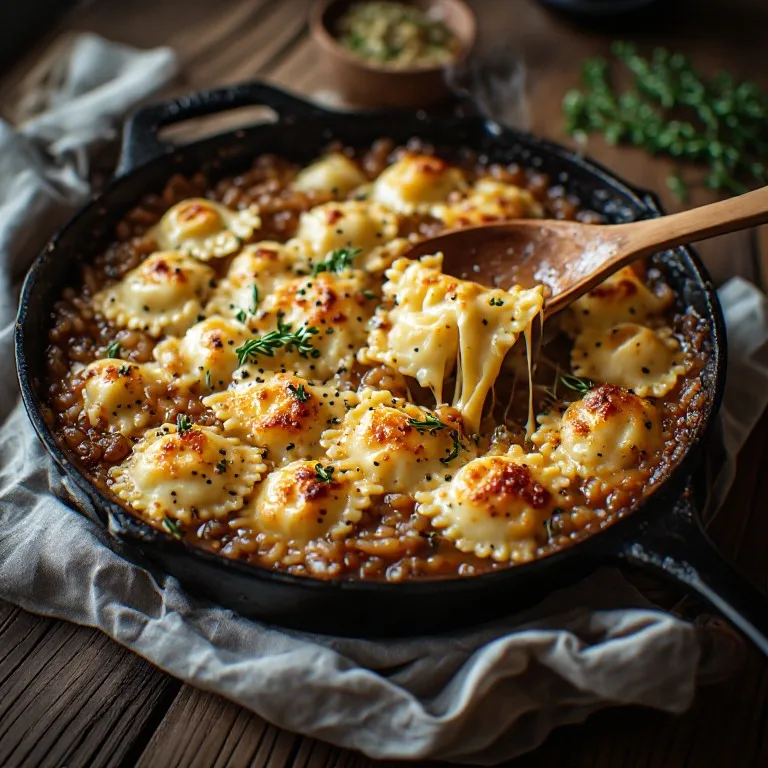
French onion tortellini bake is the most efficient version of the French onion pasta trend: you build the same caramelized-onion broth, but instead of boiling pasta in a second pot and then combining them, you nestle refrigerated cheese tortellini directly into the hot broth and let it cook in the oven. One pan. No colander. The starch that would normally go down the drain releases into the sauce instead, thickening it automatically.
The double-cheese effect is real: every piece of tortellini is already stuffed with ricotta, Parmesan, and Romano before a gram of Gruyère goes on top. The result is noticeably richer than French onion pasta — same deeply savory caramelized-onion backbone, noticeably creamier finish.
Why Refrigerated Tortellini, and Why You Skip the Boil
The no-pre-boil method works because of what refrigerated tortellini is: a fresh-pack pasta with a thin pasta sheet and a pre-cooked filling, calibrated to cook in about 3–4 minutes in boiling water. In a 375°F oven, surrounded by hot broth that generates steam, the tortellini cooks in 20–22 minutes — longer than boiling, but the trade-off is a better dish.
What you gain by skipping the boil:
No second pot. You never boil water, drain, or handle hot pasta at a colander.
The starch stays in the sauce. Boiling tortellini releases starch into the water, which you discard. Baking tortellini releases starch into the broth, which thickens the sauce from thin and brothy into something glossy and cohesive — similar to why pasta water is valuable in other contexts, but here the sauce absorbs all of it automatically.
Better texture. Pre-boiling and then baking produces mushy tortellini. The oven-only method yields a tender but distinct pasta with structural integrity.
The one variable to manage: broth amount. 1¾ cups is the correct quantity for 20 oz of tortellini in a 12-inch skillet. The tortellini should rest in the broth with its top half above the liquid line — surrounded but not submerged, cooking by steam and absorption rather than submersion.
The Caramelization Timeline — Same Rules Apply
Everything in the French onion family lives or dies on this step. Properly caramelized onions take 35–40 minutes over medium-low heat for three large onions. They will look soft and translucent at 15 minutes, begin turning golden at 25 minutes, and reach the deep amber, jammy, intensely sweet stage somewhere between 35 and 40 minutes. That’s the target.
Rushing with high heat produces the same failure mode every time: the exterior of the onion scorches before the interior softens, and you get bitter, unevenly colored onion bits in a pale sauce rather than deeply sweet, unified caramelized onions. The Maillard browning reactions that produce the characteristic flavor can only occur after most of the onion’s water (about 89% by weight) has evaporated — no shortcut bypasses the drying stage without burning the surface.
The optional baking soda shortcut (1/4 teaspoon per pound of onions, added in the first few minutes) cuts the time to 20–25 minutes by raising the onions’ pH and accelerating Maillard reactions. The trade-off is a slightly softer texture and simpler flavor profile. Use it on weeknights when you need the dish on the table in an hour rather than 90 minutes.
The Broth Is the Recipe
The beef broth is non-negotiable. It is what makes this dish French onion and not a generic baked pasta — the deep, umami-forward, savory character of beef stock is the flavor that the caramelized onions are being built upon. Chicken broth or vegetable broth produce a noticeably lighter, less cohesive dish.
The Worcestershire is also doing real work: it adds concentrated umami (fermented anchovy, tamarind, molasses), rounds out the broth’s salinity, and adds a faint sweetness that bridges the beef broth and the caramelized onions without any flavor being detectable on its own.
After deglazing with wine and adding the broth, taste before adding the tortellini. The broth should be rich, savory, and deeply fragrant — this is the liquid your tortellini will absorb, so it needs to be good before the pasta goes in. If it tastes flat, add more Worcestershire a few drops at a time. If it tastes thin, let it simmer an extra 2–3 minutes to concentrate.
The Gruyère Crust — Same Broiling Rules as French Onion Soup
Gruyère is correct for two reasons: it melts into a cohesive, bubble-punctuated crust rather than separating into greasy puddles (as cheddar does), and its nutty, slightly sweet aged flavor (Gruyère AOP is aged a minimum of 5 months, most sold for cooking 8–12 months) is the cheese of French onion soup. Mozzarella melts beautifully and stretches like candy — if you want the dramatic pull for photos or video, blend 1 oz of mozzarella with the Gruyère. Fontina is a strong substitute if Gruyère is unavailable.
Broil from 6–8 inches, on HIGH, for 3–4 minutes. Watch it the entire time. Gruyère over a hot dish goes from pale to perfect to burnt in about a 90-second window. Pull it at deep golden-brown with visible bubbling — not pale, not black-spotted.
What Makes This Richer Than French Onion Pasta
The tortellini filling. Standard refrigerated cheese tortellini from brands like Rana or Buitoni contains a blend of ricotta, Parmesan, and Romano inside each folded pasta piece. When you bake the tortellini in the caramelized-onion broth, that filling warms through and slightly loosens into the sauce where it contacts the broth — you get cheese melting into the broth from inside the pasta as well as from the Gruyère layer broiled on top.
The result is a dish where every bite has three cheese components working simultaneously: the fresh cheese filling inside the tortellini, the rich caramelized-onion broth that has absorbed some of that cheese, and the broiled Gruyère crust on top. French onion pasta with rigatoni has only the sauce and the crust — it is a less layered dish in terms of richness.
| French onion tortellini bake | French onion pasta (rigatoni) | |
|---|---|---|
| Pots used | One (skillet, stove to oven) | Two (pasta pot + skillet) |
| Pasta cooks in | The broth, in the oven | Boiling water, drained |
| Cheese layers | Filling inside + broiled Gruyère | Broiled Gruyère only |
| Texture | Tender, pillowy, broth-cupping | Al dente tube chew |
| Total time | ~70 min | ~55 min |
Variations
Add protein. Shredded rotisserie chicken (1½–2 cups) stirred in with the broth transforms this from a vegetarian-adjacent pasta into a full one-pan dinner. Ground beef or Italian sausage cooked and drained before the onions adds a heartier, more Bolognese-like character.
White beans. One drained can of cannellini beans added with the tortellini extends the dish to 5–6 servings, adds fiber and plant protein, and the beans absorb the broth and caramelized onion flavor beautifully — they taste like they were braised in French onion soup.
Spinach. Stir 2–3 cups of fresh spinach into the broth just before adding the tortellini — it wilts immediately into the sauce and adds color and nutrition without changing the flavor profile.
Breadcrumb topping. Mix ¼ cup panko with 1 tablespoon melted butter and scatter over the Gruyère before broiling. The panko toasts alongside the cheese and approximates the crouton of a traditional French onion soup crock.
How This Fits Into the French Onion Family
If you’ve been following the French onion TikTok trend, the technique transfers across formats. The same caramelized-onion broth base works identically in:
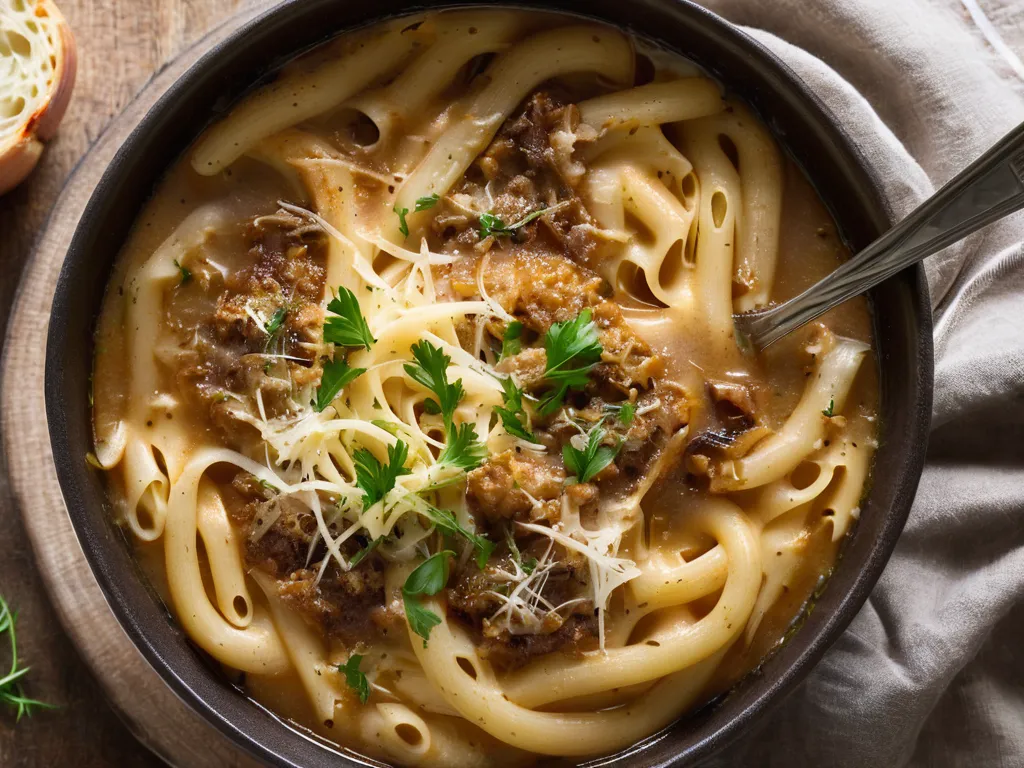
- French Onion Soup Pasta — rigatoni boiled separately, finished in the broth, broiled with Gruyère (the original pasta version)
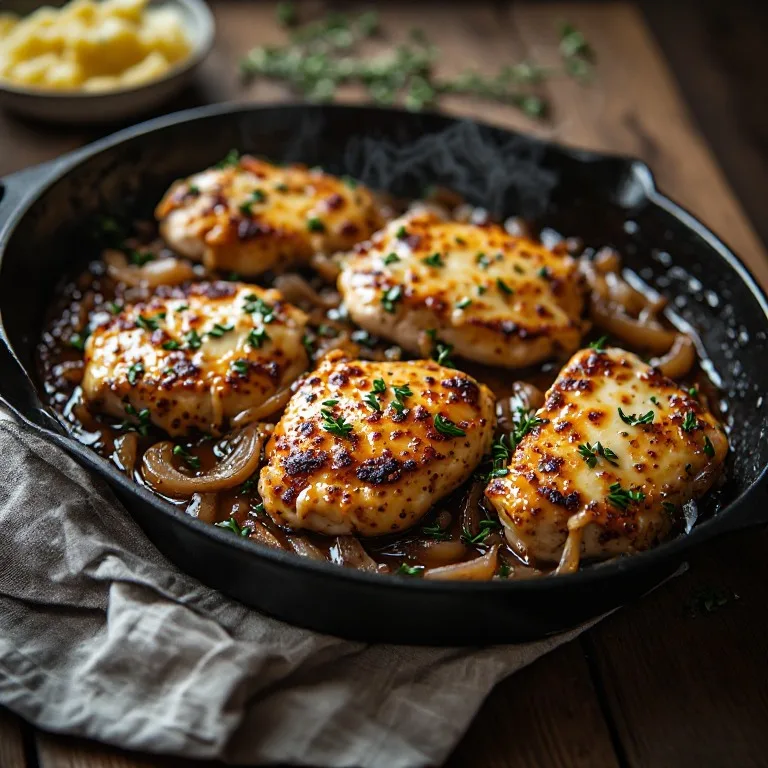
- French Onion Chicken — bone-in chicken thighs seared and braised in the same broth, broiled with Gruyère at the end
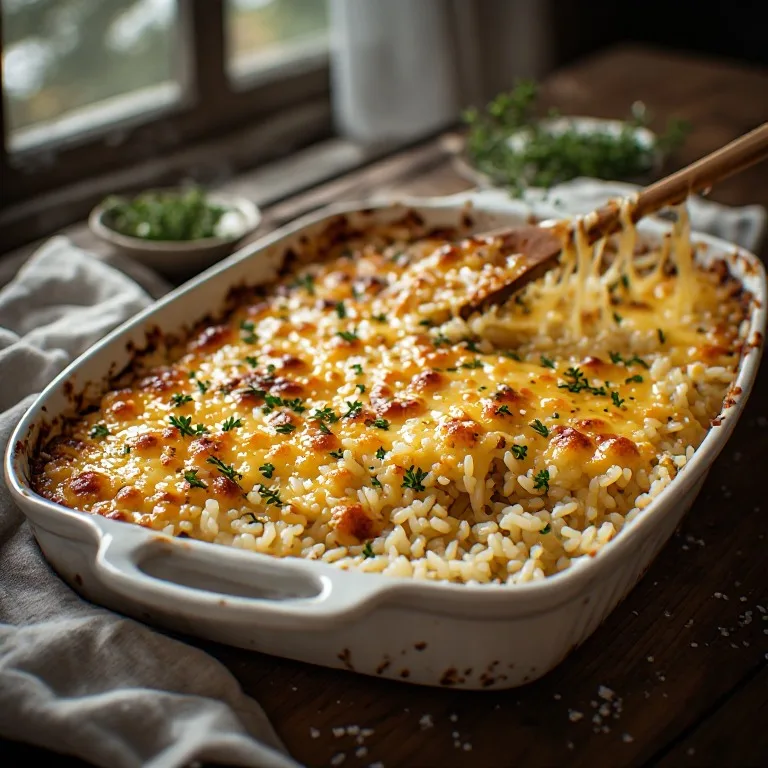
- French Onion Baked Rice — short-grain rice cooked entirely in the French onion broth in the oven (same no-second-pot logic as this bake)
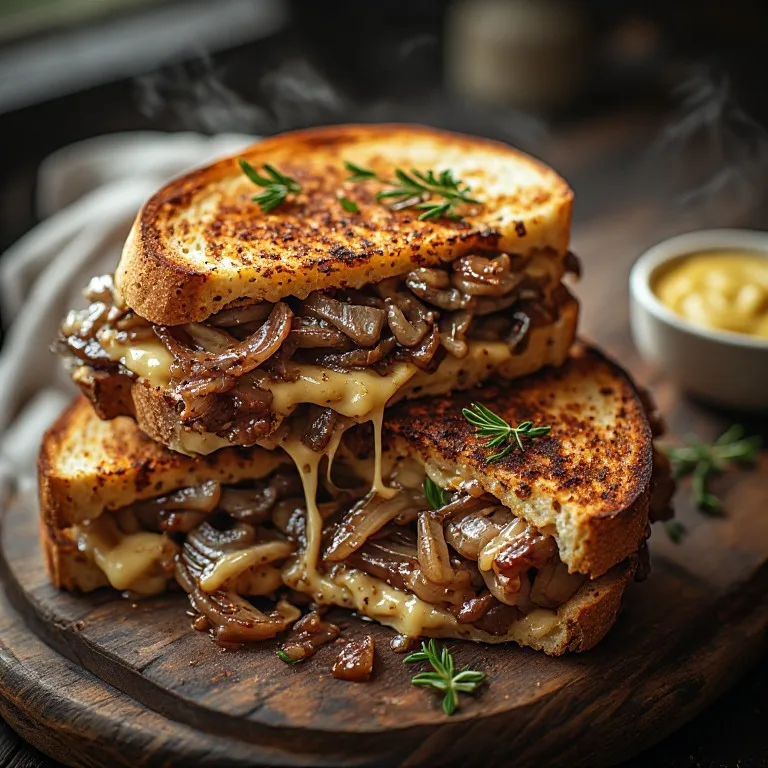
- French Onion Grilled Cheese — the sandwich form, using the caramelized onions as a filling with Gruyère on brioche
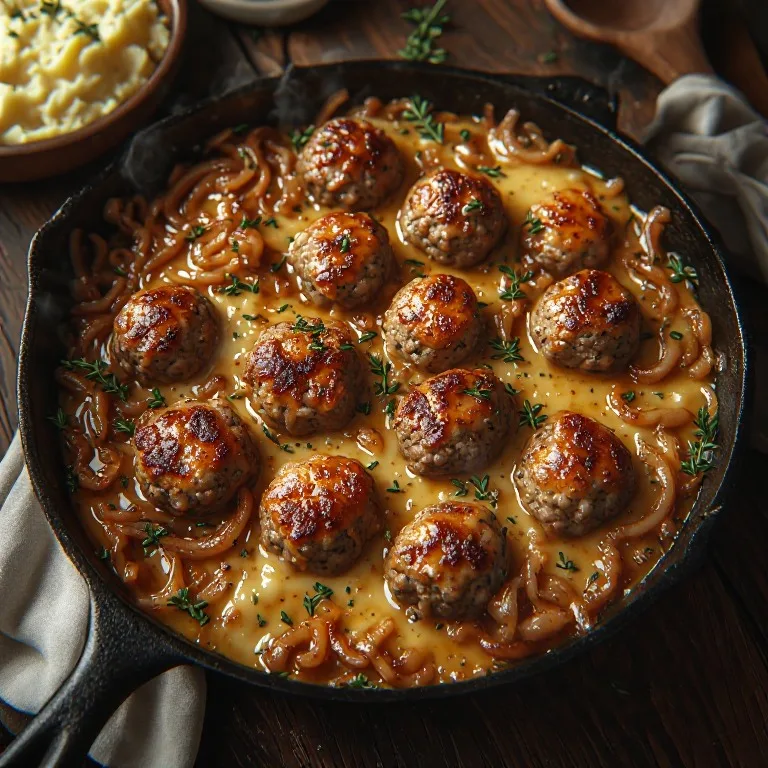
- French Onion Meatballs — pan-seared meatballs braised in French onion broth, broiled with Gruyère
- French Onion Pot Roast — a slow-braised chuck roast built on the same onion-and-beef-broth foundation
- How to Actually Caramelize Onions — the technique guide that applies to all of the above
The caramelization is the same across every version. Master that 40-minute process once, and the whole family of dishes becomes approachable.