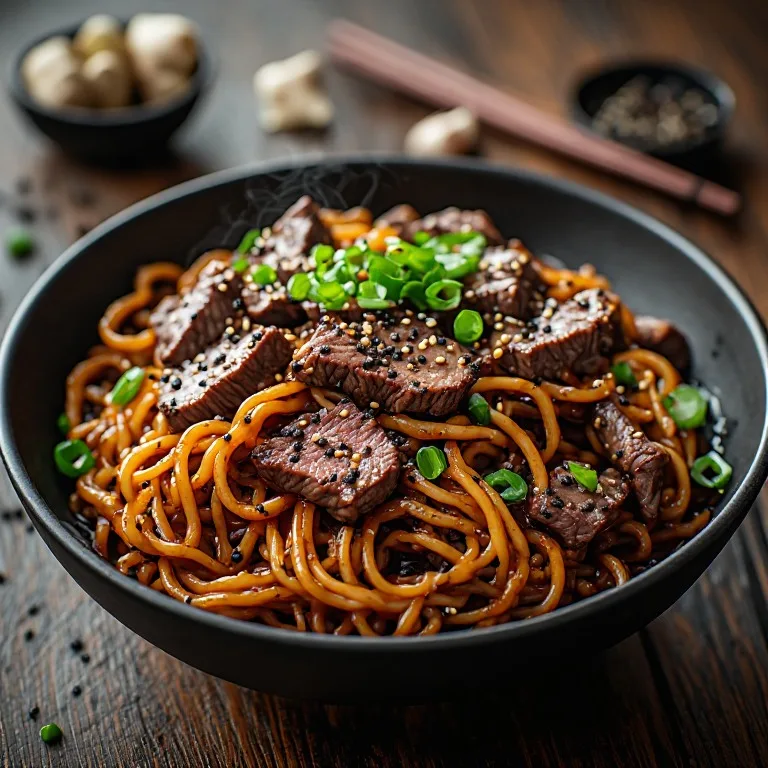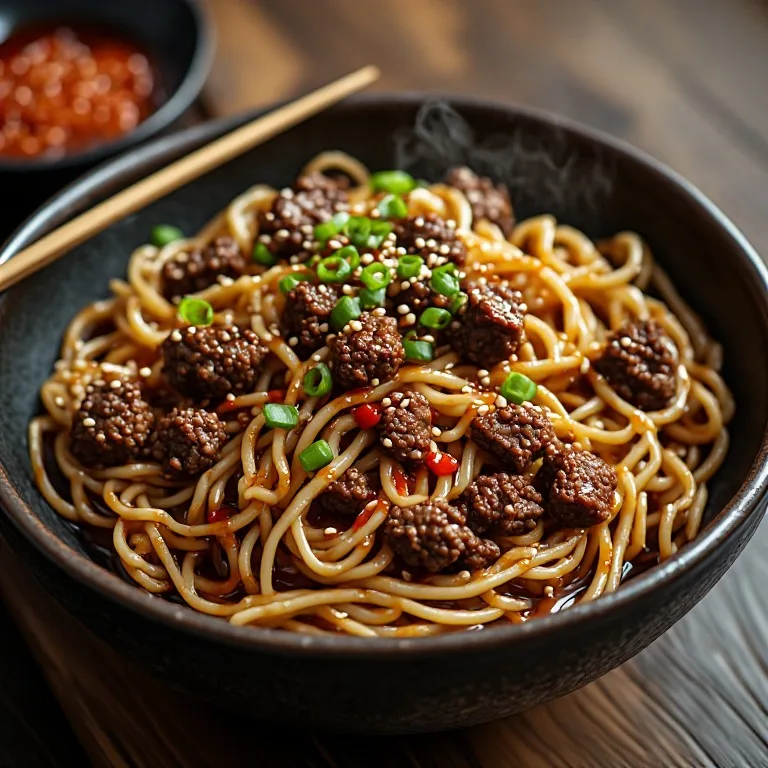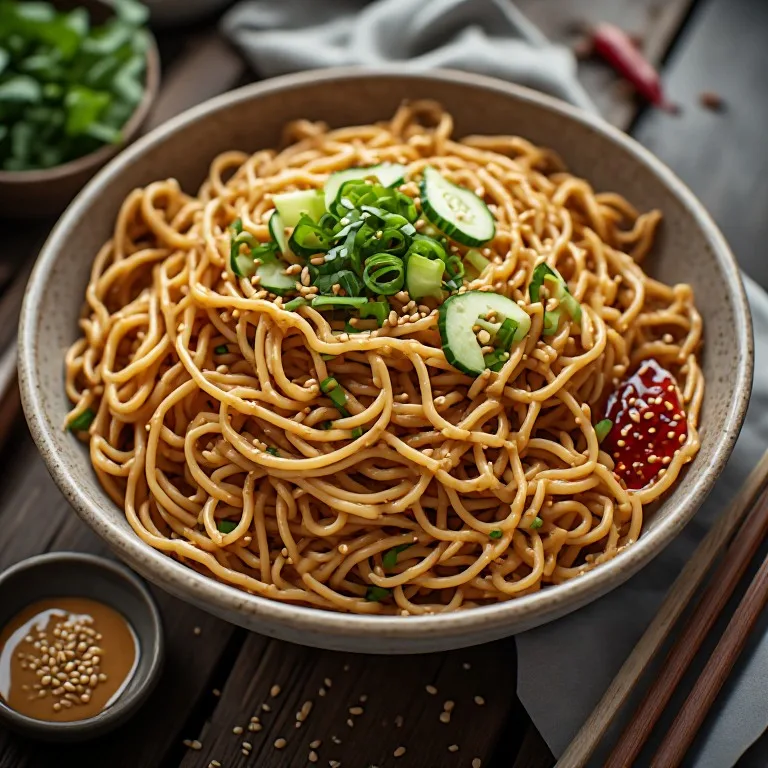



Why This Five-Ingredient Noodle Goes Viral Every Six Months
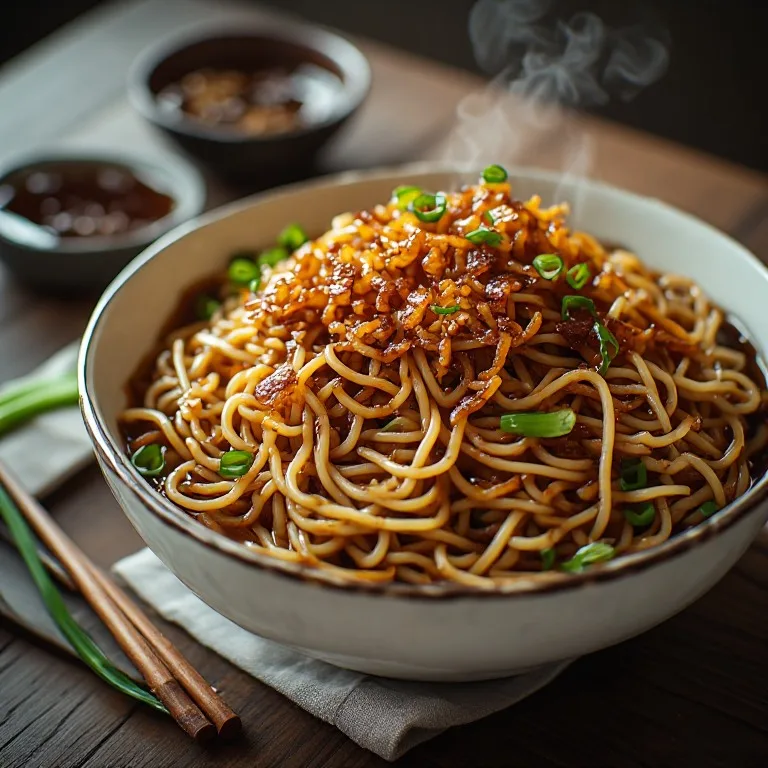
Scallion oil noodles — 葱油拌面, cōng yóu bàn miàn in Mandarin — have one of the best flavor-to-ingredient ratios in Chinese home cooking. Five things, most already in your kitchen, and the result tastes like something from a serious noodle restaurant.
The reason it keeps circulating on TikTok is the technique. Watching someone slow-fry scallions in oil for 20 minutes — the bubbling, the color change from bright green to caramel gold, the moment the kitchen fills with that savory-sweet roasted smell — is inherently satisfying to watch. And then seeing how that oil, combined with a three-ingredient soy sauce blend, turns plain noodles into something deeply flavorful validates the patience.
This is a Shanghai street food classic, eaten at breakfast and lunch counters throughout the city for generations. The dish reached Western kitchens in earnest when Chinese-American creators popularized it around 2022–2023, and it hasn’t stopped recirculating since.
The One Technique That Makes or Breaks It
There is exactly one step in this recipe that requires real attention: the scallion oil.
The goal is to drive all the moisture out of the scallions while keeping the oil below the temperature where they’d fry and burn. You want a slow, gentle infusion — the scallions softening, collapsing, rendering their sugars and aromatic compounds into the surrounding oil over 18–20 minutes at medium-low heat.
What you’re watching for:
| Stage | What it looks like | Heat check |
|---|---|---|
| 0–5 min | Scallions bright green, oil just starting to bubble | Correct — gentle steady bubble |
| 5–12 min | Scallions yellowing, shrinking, oil smells fragrant | Correct |
| 12–18 min | Deep golden color, edges starting to crisp | Watch closely — reduce heat if browning fast |
| Done | Deep amber-gold throughout, oil is warm amber | Pull off heat immediately |
| Overcooked | Dark brown or black, bitter smell | Oil is still usable but the scallions are lost |
If your oil is splattering violently in the first few minutes, the scallion pieces still had moisture on them (pat dry after cutting) or your heat is too high. Medium-low on most home stoves is correct. An instant-read thermometer in the oil should read 250–300°F.
Why white parts first: The white and light-green parts of scallions are denser and take longer to soften and render. The dark green parts are more delicate and would burn if cooked the full 18–20 minutes. Adding them 8 minutes in gives each part the time it needs.
The Sauce: Why All Three Components Matter
The dressing is three ingredients: light soy sauce, dark soy sauce, and sugar. Each one does a distinct job.
Light soy sauce — this is your standard all-purpose soy sauce, what Americans typically think of as “soy sauce.” It’s salty, bright, and provides the primary seasoning of the dish.
Dark soy sauce — aged longer and often with molasses added, dark soy sauce is thicker, less salty, and has a more rounded, slightly sweet depth. It’s responsible for the dish’s characteristic deep brown color. Look for it at any Asian grocery store; the Pearl River Bridge brand is widely available.
Sugar — half a teaspoon rounds the sharp edge off the soy sauces and brings the sauce into balance. This is why the dish doesn’t taste simply like “soy sauce noodles.” The scallion oil adds fat and fragrance; the sugar adds the third dimension that makes the combination feel complete.
4 Variations Worth Trying
The Classic (as above)
The base recipe. Pure, clean, lets the scallion oil carry the dish. Best with fresh thin wheat noodles from an Asian grocery if you can get them.
With Crispy Shallots Instead of Scallions
Substitute thinly sliced shallots (about 4 medium shallots) for the scallions. Shallot oil is sweeter and more delicate than scallion oil, with a slightly winey quality. This is the more dinner-party version — the crispy shallots that come out of the oil are also a useful topping for rice, salads, and soups all week.
Sichuan Spicy Version
After the scallion oil is done and slightly cooled, whisk in 1 tablespoon of doubanjiang (spicy fermented bean paste) and 1 teaspoon of chili oil into the sauce. Toss the noodles and top with a spoonful of crispy chili oil. This turns a mild, clean Shanghai dish into something with serious heat and the fermented umami backbone of Sichuan cooking.
Scallion Oil Noodles with Soft-Boiled Egg
Add a soy-marinated soft-boiled egg (jammy egg simmered for 2 minutes in a mixture of 2 tablespoons soy sauce, 1 tablespoon mirin, and ½ cup water after its 6-minute boil) on top. The runny yolk breaks into the noodles and turns the sauce creamy. This is the version that converts people who initially think the dish sounds too plain.
Cold Sesame-Scallion Noodles
Make the scallion oil and sauce as directed, but let both cool to room temperature. Cook noodles, rinse, and cool. Toss with the cooled scallion oil and sauce plus 1 tablespoon tahini, 1 teaspoon rice vinegar, and 1 teaspoon sesame oil. This becomes a cold noodle dish (Chinese liang mian style) excellent for meal prep — it holds in the refrigerator for up to 3 days, unlike hot-dressed noodles which absorb everything overnight.
Noodle Guide
The best options, in order:
-
Fresh thin wheat noodles — sold refrigerated at Asian grocery stores. If the package says “thin noodles,” “longevity noodles,” “mian tiao,” or lists wheat flour and water as ingredients without eggs, this is what you want. Cook 1–2 minutes.
-
Dried thin Chinese noodles — labeled “thin noodles” or just “noodles” in the dried noodle aisle. Similar to angel hair pasta but with a slightly different wheat character. Cook 3–5 minutes.
-
Somen noodles — Japanese thin wheat noodles; slightly finer texture than Chinese noodles but an excellent substitute. Cook 2 minutes. Available at most grocery stores.
-
Thin spaghetti — works completely fine. Not traditional, but the flavor of the scallion oil and soy sauce is powerful enough that the pasta’s Italian character disappears. Cook 1 minute less than the package directions.
Avoid: Thick udon, rice noodles (texture is too soft), glass noodles (they don’t absorb the dressing the same way), or fresh pasta with eggs (the egg richness competes with the scallion oil).
Shanghai Street Food, Home Kitchen Context
Cong you ban mian has been a Shanghai breakfast staple since at least the mid-20th century. In Shanghai’s food stalls, the dish is typically assembled to order: a bowl of noodles, a measured ladle of scallion oil, a drizzle of soy sauce, a quick toss. It’s fast, cheap, and filling — the kind of dish that workers ate standing up at a counter on the way to the factory or market.
The scallion oil itself is a product of Shanghai’s Jiangnan cooking tradition, which emphasizes restrained seasoning and technique over spice. Unlike Sichuan cooking (which builds flavor through chile heat and fermented ingredients) or Cantonese cooking (which relies on premium-quality fresh ingredients), Jiangnan cooking often extracts maximum flavor from humble ingredients through careful cooking — braising, slow-frying, patient rendering.
When the dish circulated on TikTok, Western viewers had two reactions: surprise that something so simple could taste so complete, and frustration at not having known about it sooner. Both reactions are accurate.
Common Mistakes
Using too-high heat. The most frequent error. If your scallions are browning in 5 minutes, the oil is too hot. You want a 20-minute slow extraction, not a 5-minute fry. Reduce heat immediately.
Skipping the cold water rinse. Rinsed noodles stay separate, coat evenly, and have a pleasant springy bite. Unrinsed noodles clump and the sauce distributes unevenly. Don’t skip it.
Over-salting the noodle water. You don’t need salt in the cooking water. The soy sauce does all the seasoning work. If you’ve salted the water the way you would for Italian pasta, the dish will be oversalted.
Not tasting and adjusting. The ratio of scallion oil to soy sauce is a guideline, not a recipe. Some people prefer more oil (richer, more fragrant) and others more soy sauce (saltier, more intense). Toss, taste, and add more of whichever element the dish needs.
Using all dark soy sauce. Dark soy sauce alone would make the noodles too thick, sweet, and oddly colored. It’s a supporting ingredient — always use more light soy than dark.
Related Recipes
If you like the idea of Chinese pantry noodles, these are the next ones to learn:
- Viral TikTok Gochujang Pasta — Korean-Italian fusion with a similar “minimal ingredients, big technique” logic; gochujang caramelized into a glossy red paste
- Viral TikTok Chili Oil Noodles — spicy sesame chili oil noodles, the bolder sibling to scallion oil noodles
- Viral TikTok Ground Beef Noodles — savory ground beef soy-glazed and tossed with noodles; faster, more substantial version of the scallion oil format
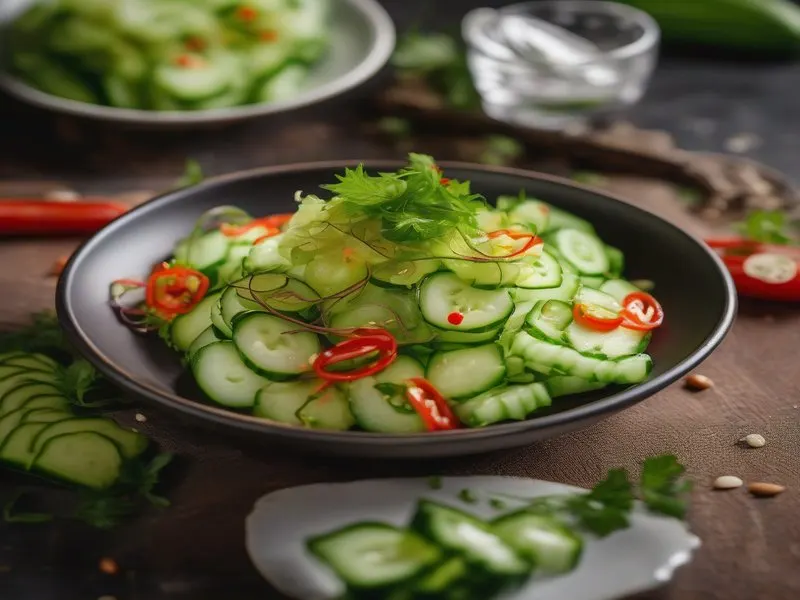
- Copycat Din Tai Fung Cucumber Salad — the perfect cold side dish to serve alongside scallion oil noodles; DTF’s garlic-chili rice vinegar dressing
- Viral TikTok Brown Butter Miso Udon — uses brown butter the way this dish uses scallion oil: a slow-cooked fat that transforms the dish’s flavor profile entirely