


Pin It

Ginger Milk Pudding (姜汁撞奶)

Ginger Milk Pudding (姜汁撞奶)
Jump to Recipe
Prep 10 min Cook 5 min Serves 2
Quick answer: Peel and grate about 60g fresh ginger on a microplane; press through a fine-mesh sieve to collect 2 tablespoons of juice. Divide 1 tablespoon of juice into each of two small cups or bowls and set on a flat, undisturbed surface. Heat 400ml whole milk and 2 teaspoons sugar in a small saucepan over medium-low heat to exactly 70–72°C (158–162°F) — hot but not simmering, with small bubbles just forming at the edges. From 8–10 inches above the bowl, pour the hot milk in a steady stream over the ginger juice. Do not stir, do not move the bowl. Leave undisturbed 8–10 minutes. Test by gently pressing a small spoon on the surface: if it rests without sinking, it has set. Serve warm immediately or refrigerate 30–60 minutes for a firmer, chilled version.

Shop the tools

Gear matched to this recipe. These are Amazon affiliate links — we may earn a small commission if you buy, at no extra cost to you.

As an Amazon Associate, Copycat Spices earns from qualifying purchases. Product images are generic illustrations, not the exact item listed.

Ginger Milk Pudding (姜汁撞奶)

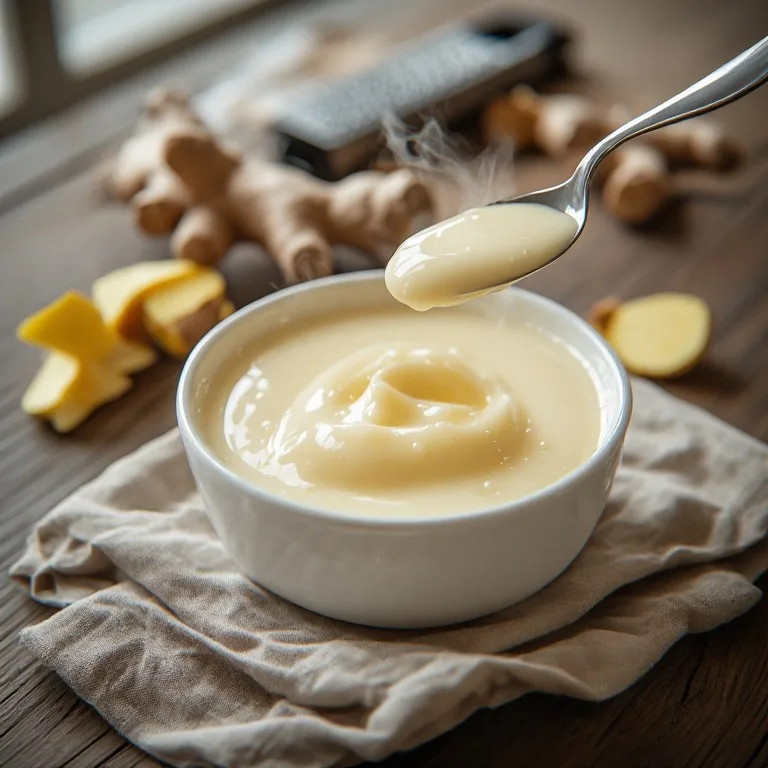
The viral TikTok ginger milk pudding recipe — 3 ingredients, no gelatin, no eggs, no stove skill required. Fresh ginger's natural enzyme sets whole milk into a silky Cantonese custard in 10 minutes. Master the 70°C rule and it works every time.

Easy Prep: 10 min Cook: 5 min Total: 15 min2 servings ~$3.50/serving
Prep10 min
Cook5 min
Total15 min
Servings
2
At home~$3.50/serving
vs
Restaurant~$15.75/serving
You save ~78%

The Story Behind the Recipe

Ginger milk pudding (姜汁撞奶, literally "ginger juice bumping into milk") is a centuries-old Cantonese dessert from Shawan, a village in the Panyu district of Guangdong province. Street-cart vendors and dessert shops (糖水舖) in Hong Kong and Macau have served it as a late-night specialty for generations — a three-ingredient bowl that costs the equivalent of under $1 USD in a Hong Kong back-street shop or $7–10 at a Cantonese dessert shop in New York. The name describes the technique exactly: hot milk is poured directly onto fresh ginger juice and left to set on its own.

The recipe went viral on TikTok because it looks like chemistry-class magic. Ginger contains a natural protease enzyme called zingibain that cleaves the casein proteins in dairy milk. When hot milk (around 70°C) hits fresh ginger juice and is left undisturbed, the enzyme links those proteins into a soft, spoonable gel — no gelatin, no agar, no eggs, no heat after pouring. The one technique that makes or breaks this recipe is temperature: below 65°C the enzyme is too slow to fully set the pudding before it cools; above 80°C the enzyme denatures and it never sets at all. A kitchen thermometer costs $10 and removes all the guesswork.

Nutrition Facts

Per serving (2 servings)
Calories170
Total Fat7g
Total Carbs10g
Dietary Fiber0g
Sugars10g
Protein7g
Sodium95mg

* Estimated values based on standard recipe preparation. Actual values may vary.

Ingredients

  • The pudding
  • Optional toppings

Instructions

💡
Pro tip: This recipe tastes even better the next day. The flavors need time to meld together in the fridge.
❄️
Storage: Keeps in an airtight container in the fridge for up to 2 weeks. Freezer-friendly for up to 3 months.
🎃 Free Halloween cookbook — download now The Copycat Halloween Cookbook A ready-made, photo-illustrated PDF of our best halloween copycat recipes — free to download, no building required. Pay what you want to support if you love it.

Free PDF — instant download. We'll also send new seasonal copycat recipes now and then; unsubscribe anytime. Or just download it →

Three ingredients. No gelatin. No eggs. No baking. Pour hot milk over fresh ginger juice, don’t touch it for ten minutes, and it sets into a silky, spoonable Cantonese custard through enzyme chemistry alone. This is 姜汁撞奶 — ginger milk pudding — one of TikTok’s most-searched dessert science moments, and one of Guangdong province’s oldest recipes.

  • Grate and press 60g fresh ginger to get 2 tablespoons of juice — must be fresh (bottled kills the enzyme)
  • Divide ginger juice between two pre-warmed bowls; set on a flat, stable surface
  • Heat 400ml whole milk + 2 tsp sugar to exactly 70–72°C — use a thermometer
  • Pour from 8–10 inches height in one steady stream; do not stir after
  • Wait 10 minutes; test with a spoon resting on the surface
  • Serve warm immediately or refrigerate 30–60 min for a chilled, firmer version
  • Total: 15 minutes, ~$1.50 of ingredients, $7–10 at a NYC Cantonese dessert shop
The Science: Why This Works

Ginger contains a proteolytic enzyme called zingibain — the same category as papain (from papaya) and bromelain (from pineapple). Zingibain targets casein, the dominant protein in dairy milk. When it cleaves casein’s protein chains at the right temperature, the severed ends cross-link into a three-dimensional gel network. The entire mechanism is the same principle that allows rennet to set cheese — just at lower enzyme concentrations and without heat-curing.

The temperature window matters because zingibain has a narrow peak of activity:

Milk temperatureResult
Below 60°C (140°F)Enzyme too slow — milk cools before full set
65–75°C (149–167°F)Enzyme maximally active — perfect set in 8–10 min
Above 80°C (176°F)Enzyme denatures — milk will never set

At 70°C specifically, the milk proteins are also just starting to partially unfold (technical term: partial denaturation), which makes them more accessible to the enzyme. The combination — enzyme active, proteins accessible — produces the cleanest, most reliable set.

Why Fresh Ginger Is Non-Negotiable

Zingibain is destroyed by heat and oxidation. That eliminates every processed form:

  • Bottled ginger juice — pasteurized at high heat; enzyme is completely inactivated
  • Powdered or dried ginger — dehydration destroys enzyme activity
  • Ginger paste (tubes) — heat-treated in processing
  • Ginger that has been sitting cut and oxidizing — enzyme activity degrades quickly

The ginger you need is a heavy, firm, smooth-skinned fresh root with noticeable aroma when cut. If the flesh looks pale and the aroma is faint, the root is old and the enzyme may be too weak to fully set the pudding. Younger ginger (thin skin, pinkish tips) has higher enzyme concentrations; mature ginger (thick papery skin) is slightly lower but still works well.

The Pour Technique

Pouring from 8–10 inches above the bowl creates a brief moment of turbulent mixing as the milk stream hits the ginger juice. This replaces the stir you’re not allowed to do. After that initial splash, the enzyme is distributed through the full volume and needs undisturbed time to link the protein chains.

Two things that kill the set after pouring:

  1. Stirring — breaks the gel network as it’s forming
  2. Moving the bowl while liquid — even gentle vibration creates currents that disrupt the protein lattice

Set the bowls on a stable surface, pour once, and walk away.

Temperature Without a Thermometer

If you don’t have a thermometer, look for these signs at approximately 70°C:

  • Gentle, constant steam rising from the surface
  • Tiny bubbles forming at the edge of the pan (not in the center, not rolling)
  • The milk feels uncomfortably hot to a quick touch — not painful, but clearly not drinkable
  • No visible shimmer or convection waves in the center of the pan

This is still an approximation. A $10 clip-on instant-read thermometer makes this recipe essentially impossible to fail and pays for itself the first time it saves a wasted batch.

Serving in Hong Kong vs. at Home

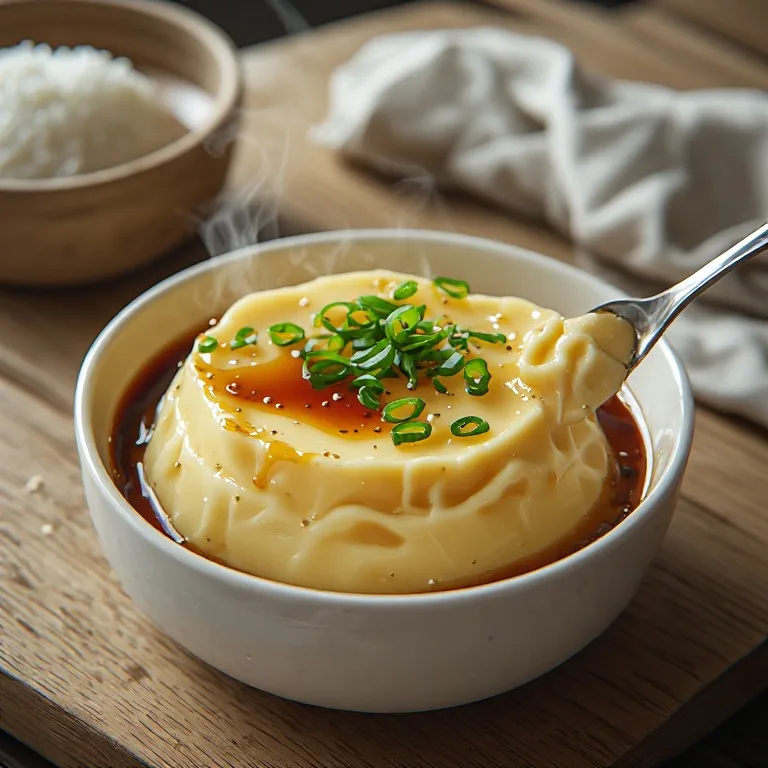
In traditional Hong Kong dessert shops, ginger milk pudding arrives in a small ceramic bowl, warm, sometimes with a few tablespoons of osmanthus flower syrup (桂花糖浆) poured over the top. The osmanthus syrup is floral, lightly sweet, and does not compete with the ginger’s heat — it amplifies it.

At home, the simplest version needs nothing: the pudding’s own clean, mildly spicy, slightly sweet flavor is the point. Optional additions worth trying:

  • Osmanthus syrup — most authentic; find it at any Chinese grocery
  • A drizzle of raw honey — adds floral warmth
  • Toasted sesame seeds — texture contrast without adding sweetness
  • Goji berries, 4–5 — traditional Cantonese pairing, lightly sweet and chewy

Avoid anything acidic (citrus, passionfruit) — it competes with and curdles the clean milk flavor.

🥗

Make It Healthier

Love Ginger Milk Pudding (姜汁撞奶) but want a lighter version? Try these simple swaps:

  • ✓2% reduced-fat milk works and cuts about 1.5g of fat per serving — the enzyme sets equally well at lower fat percentages, though the pudding is slightly less silky; whole milk is recommended if you've never made it before, since the richer result is more forgiving of small temperature deviations
  • ✓Reduce sugar to 1 teaspoon per serving (from 2) — ginger milk pudding is traditionally mildly sweet; the ginger's natural spice makes the dessert feel more complex than its sugar content suggests, so less sugar is often better
  • ✓Skip toppings with high added sugar (flavored syrups, sweetened bean paste) — the pudding itself is elegant and restrained; a pinch of toasted sesame seeds or a tiny drizzle of raw honey adds texture and visual contrast without spiking the carb load
  • ✓Make a double batch with a single heating session — the marginal effort of two puddings vs. one is essentially zero (one pour instead of one), and having a chilled version ready in the fridge makes a very low-calorie, protein-present dessert available anytime

Frequently Asked Questions

Why does ginger milk pudding set without gelatin or eggs?

Fresh ginger contains a natural protease enzyme called zingibain. When hot milk (around 70°C) meets ginger juice and is left undisturbed, zingibain cleaves the casein proteins in the milk. The severed protein chains cross-link into a soft gel — a process identical in principle to how rennet sets cheese curds, but gentler and at lower concentrations. The result is a silky custard-textured pudding that holds its shape and jiggles like silken tofu. No gelatin, no agar, no eggs. Just enzyme chemistry.

Why won't my ginger milk pudding set?

Four causes, in order of likelihood: (1) Old or dried-out ginger — the zingibain enzyme degrades as ginger ages and loses moisture. Use a firm, heavy root with no wrinkled skin. If the juice looks pale or has almost no aroma, the enzyme is likely too weak. (2) Milk too hot — above 80°C destroys the enzyme before it can work. Boiled milk will never set. Use a thermometer. (3) Milk too cold — below 65°C slows the enzyme so much that the pudding cools before it can fully gel. Reheat the milk to 70°C and try again (with fresh ginger juice). (4) Stirred after pouring — even a quick swirl after the pour disrupts the protein matrix as it forms. Pour once, from height, then do not touch.

Does viral ginger milk pudding work with plant-based milk?

Not reliably. The zingibain enzyme targets casein proteins, which are specific to dairy milk. Oat, almond, and rice milk contain no casein and won't set. Full-fat coconut milk and some soy milks have enough protein that partial setting occasionally occurs, but results are inconsistent and the texture is inferior. This recipe works specifically because of dairy's protein structure. For a vegan version, a separate recipe using agar-agar with ginger-infused coconut milk produces similar visual results through a different mechanism.

Can I use bottled ginger juice, powdered ginger, or ginger paste?

No. Heat and processing destroy zingibain. Bottled ginger juice is pasteurized — the enzyme is gone. Dried or powdered ginger has no active enzyme. Ginger paste in tubes is also processed. Only juice pressed from a fresh, raw ginger root contains active zingibain. This is not a workaround situation — without the enzyme, you're just making ginger-flavored milk that will not set.

Do I serve ginger milk pudding hot or cold?

Traditionally warm — the pudding is served immediately after setting, while still at roughly body temperature. Many people prefer it chilled: refrigerate covered for 30–60 minutes and the pudding firms to a slightly more defined, spoonable texture. Both are correct. Reheating after it has set destroys the protein network; the pudding will liquefy and will not re-set.

How do I know my milk is at the right temperature without a thermometer?

Look for these signs at approximately 70°C: steady gentle steam rising from the surface, small bubbles beginning to form at the very edge of the pan (the equivalent of a low simmer), and no rolling boil anywhere. The milk should feel uncomfortably hot to a quick finger-dip — like a very hot coffee. This is still imprecise; a $10 instant-read thermometer is the definitive answer and makes the recipe essentially foolproof.

How is this different from Chinese steamed egg custard (蒸蛋)?

Steamed egg custard sets via cooked egg protein — you whisk eggs into stock, pour into a bowl, and steam it. Heat is the mechanism. Ginger milk pudding sets via enzyme activity at around room temperature after the initial hot pour. No eggs, no steamer, no heat after the initial pour. The texture of steamed egg is savory and firmer; ginger milk pudding is lightly sweet, more delicate, and slightly wobblier. The workflows are completely different, but both are examples of using protein chemistry to set a liquid into a custard without gelatin.

Can I flavor the milk before heating?

Yes, with a few caveats. Vanilla extract (½ teaspoon) blends seamlessly and doesn't affect the setting chemistry. A chai spice blend steeped in the milk (strain out solids before heating to target temperature) adds warmth. Brown sugar or palm sugar work in place of white and add a molasses note. What doesn't work: acidic additions like citrus juice (they curdle the milk before the enzyme can act cleanly), cream (fine, but can slow the set slightly), or starches (starch competes with the enzyme-setting process).

Love this recipe? Share it!

Free PDF: our 12 most-wanted copycat recipes — instant download.

Made it? Buy us a coffee

Every recipe here is free, with no paywalls. If this one was a hit at your table, a small tip keeps new copycats coming.

$

Ratings & Reviews

—
No ratings yet

Rate this recipe

Click a star to rate

Leave a Review

0/500

CS

Copycat Spices Editorial

Researched + fact-checked. Every recipe on Copycat Spices is built from published sources — official ingredient lists, brand-published recipes, interviews and food-science references — and fact-checked before it goes live, then written as clear, step-by-step instructions for home cooks of all skill levels.

Learn more about our mission →