

Pin It

Viral TikTok Gyro Meat Recipe — Crispy Like the Restaurant, No Spit Required

Viral TikTok Gyro Meat Recipe — Crispy Like the Restaurant, No Spit Required
Jump to Recipe
Prep 20 min Cook 25 min Serves 4
Quick answer: Mix 1 lb ground lamb + 1/2 lb ground beef with grated onion, garlic, 2 tsp oregano, 1 tsp marjoram, 1 tsp cumin, 1/2 tsp each rosemary and thyme, and 1.5 tsp salt. Divide the seasoned meat in half. Working one portion at a time, place between two sheets of parchment paper and roll flat to about 1/4 inch thick with a rolling pin. Slide the parchment-sandwiched sheets onto a baking sheet and bake at 400°F for 15–18 minutes. Remove, carefully peel away the top parchment, and tear the cooked meat into irregular 1–2 inch pieces — the torn, uneven edges are what crisp. Arrange the pieces on a foil-lined baking sheet and broil on HIGH, 6 inches from the element, for 2–3 minutes until the exposed edges char and crisp. Serve immediately in warm pita with tzatziki, diced tomato, thinly sliced red onion, and crumbled feta. For tzatziki: grate half an English cucumber onto a clean towel and squeeze out all liquid, then mix with 1 cup full-fat Greek yogurt, 2 minced garlic cloves, 1 tbsp lemon juice, 1 tbsp olive oil, 2 tbsp fresh dill, and 1/2 tsp salt. Make it first — it improves as it sits.

Shop the tools

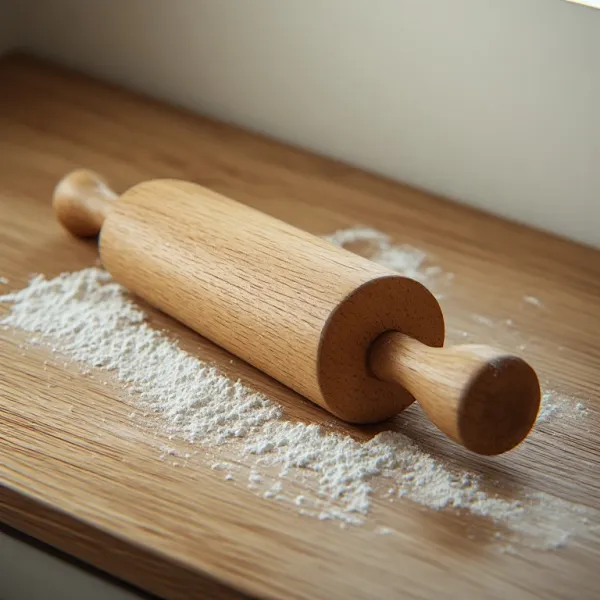
Gear matched to this recipe. These are Amazon affiliate links — we may earn a small commission if you buy, at no extra cost to you.

As an Amazon Associate, Copycat Spices earns from qualifying purchases. Product images are generic illustrations, not the exact item listed.

Viral TikTok Gyro Meat Recipe — Crispy Like the Restaurant, No Spit Required

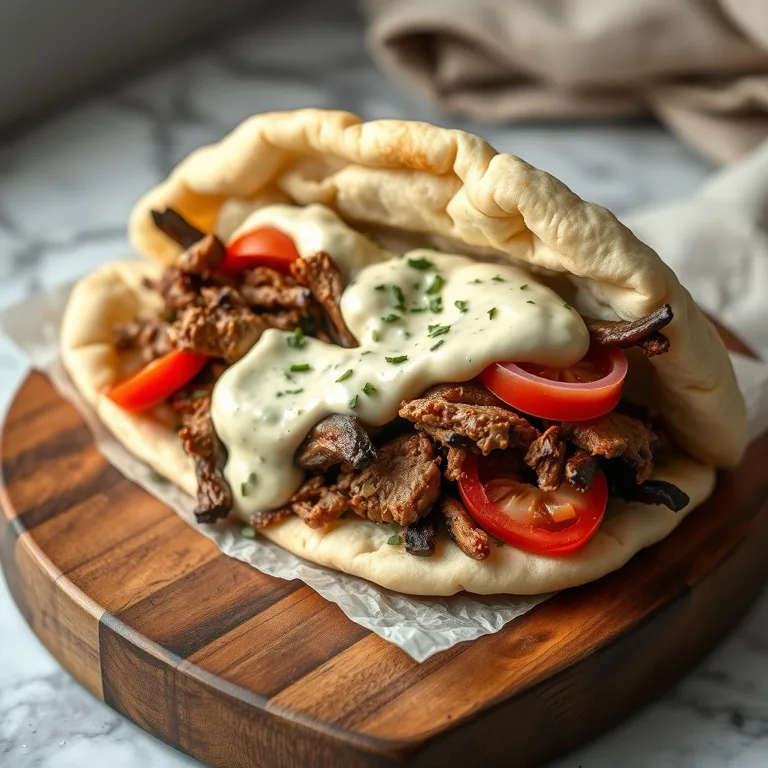
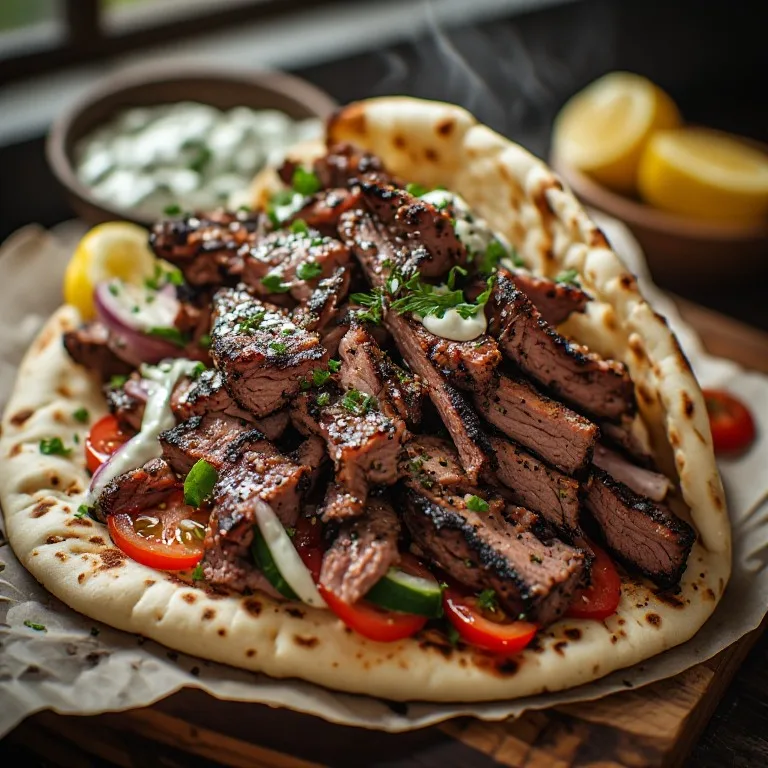
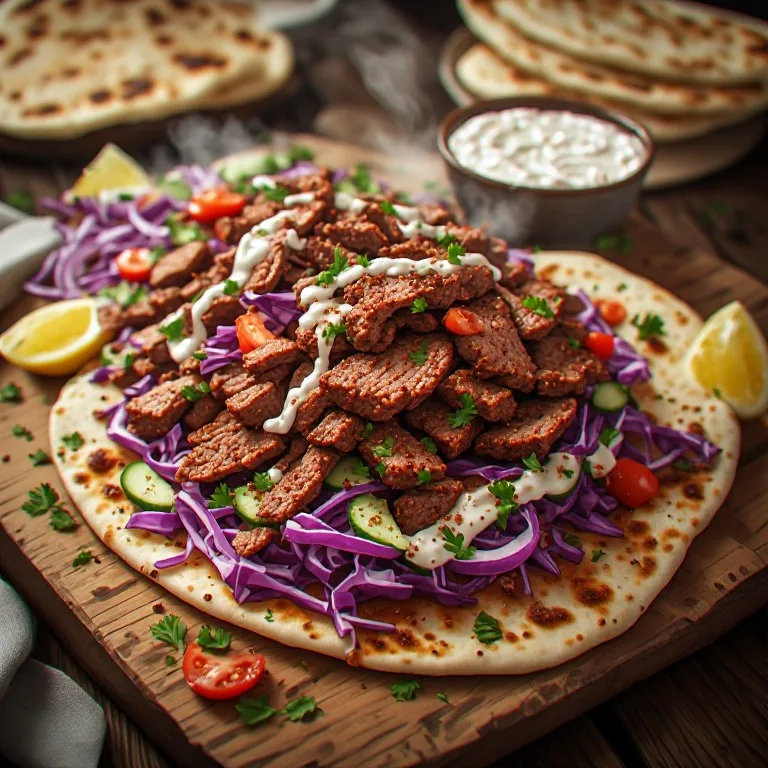
The viral TikTok gyro meat technique: lamb and beef pressed thin in parchment, baked, then torn and broiled until the edges go crispy — exactly like the spit-roasted meat shaved at a Greek street stand. Serve in warm pita with homemade tzatziki.

Easy Prep: 20 min Cook: 25 min Total: 45 min4 servings ~$4.50/serving
Prep20 min
Cook25 min
Total45 min
Servings
4
At home~$4.50/serving
vs
Restaurant~$20.25/serving
You save ~78%

The Story Behind the Recipe

Gyro meat (pronounced YEE-ro in Greek, JEER-oh in American) is one of the most copied restaurant foods that almost no one attempts at home — because the original requires a $3,000 vertical spit rotisserie and a 30-lb cone of tightly packed, highly seasoned lamb. The TikTok hack changes that with a single clever insight: you don't need a spit if you can replicate the spit's effect. Restaurant gyro gets its signature crispy, cragged edges from constant rotation under direct heat. The parchment-press method recreates that by pressing the spiced meat paper-thin, baking it flat, tearing it into irregular pieces, and finishing it under the broiler. The torn, uneven edges char and crisp exactly the way spit-sliced meat does.

Lamb is the traditional base — Greek gyros historically used pork or lamb, and the lamb/beef blend that became standard in American Greek restaurants developed as a cost compromise. A full lamb gyro costs around $12–16 at a New York diner or Greek street stand; this recipe makes four for roughly $14 in ingredients. The spice blend — oregano, marjoram, cumin, rosemary, garlic — is what separates gyro from any other seasoned ground meat: together they create that unmistakable, herby, slightly smoky flavor that makes you think "Greek diner" the moment it hits your nose.

Nutrition Facts

Per serving (4 servings)
Calories620
Total Fat28g
Total Carbs44g
Dietary Fiber3g
Sugars4g
Protein42g
Sodium940mg

* Estimated values based on standard recipe preparation. Actual values may vary.

Ingredients

  • Gyro meat
  • Tzatziki
  • For serving

Instructions

💡
Pro tip: This recipe tastes even better the next day. The flavors need time to meld together in the fridge.
❄️
Storage: Keeps in an airtight container in the fridge for up to 2 weeks. Freezer-friendly for up to 3 months.
🎃 Free Halloween cookbook — download now The Copycat Halloween Cookbook A ready-made, photo-illustrated PDF of our best halloween copycat recipes — free to download, no building required. Pay what you want to support if you love it.

Free PDF — instant download. We'll also send new seasonal copycat recipes now and then; unsubscribe anytime. Or just download it →

Viral TikTok Gyro Meat Recipe — Crispy Like the Restaurant, No Spit Required

Prep time: 20 min | Cook time: 25 min | Makes: 4 gyros

The parchment press technique is the smartest home-cooking hack for gyro meat since the invention of the rolling pin. Greek restaurants spend $3,000 on a vertical rotisserie that slowly chars a 30-lb cone of seasoned lamb as it rotates. TikTok cracked the home version with two pieces of parchment paper, a rolling pin, and a broiler.

The trick is in two steps working together. First, pressing the spiced lamb and beef mixture flat removes excess moisture and forces it into a dense, uniform sheet — mimicking how tightly packed gyro cones cook from the inside out rather than steaming in a loose pile. Second, tearing the cooked sheet into irregular pieces before broiling creates dozens of exposed, uneven edges that char and crisp exactly the way spit-shaved meat does when it hits a hot flat-top. You get the juicy interior and the caramelized crust in the same bite.

The spice blend — oregano, marjoram, cumin, rosemary, garlic — is not negotiable. Each element does real work: oregano and marjoram are the unmistakable Greek herb note; cumin adds depth and a slight smokiness that makes the flavor register as gyro rather than generic seasoned beef; rosemary adds piney sharpness that cuts the fat. Skip the marjoram and the result tastes like taco seasoning. Use all of them and it tastes like a Greek diner at midnight.

Make the tzatziki first. The cucumber has to drain for at least 15 minutes or the sauce turns watery, and the garlic mellows significantly after 30 minutes of resting in the yogurt. Both improvements happen while the meat bakes.
🥗

Make It Healthier

Love Viral TikTok Gyro Meat Recipe — Crispy Like the Restaurant, No Spit Required but want a lighter version? Try these simple swaps:

  • ✓Use all-beef (80/20) instead of the lamb/beef blend — beef is leaner, and the spice blend still produces authentic gyro flavor. Cuts fat by about 6–8g per serving.
  • ✓Use a whole-wheat pita — the same flavor with 4–6g more fiber per serving and a lower glycemic response.
  • ✓Serve over a Greek salad (romaine, cucumber, tomato, olive, feta) instead of in pita to cut ~35g of carbs per serving without sacrificing any of the meat flavor.
  • ✓Make tzatziki with 2% Greek yogurt rather than full-fat — the texture is slightly less rich but still thick enough to coat the pita, and saves about 40 calories per serving.

Frequently Asked Questions

What is the difference between gyro meat and doner kebab?

Gyro and döner kebab are close cousins from neighboring culinary traditions. Greek gyros (from the Greek word for 'turn' or 'rotation') are traditionally made with pork or lamb, seasoned with oregano, marjoram, thyme, garlic, and cumin, and served in thick round pita with tzatziki, tomato, and onion. Turkish döner kebab (from the Turkish word for 'rotating roast') uses beef, lamb, or chicken, is seasoned with a different spice profile (heavier on paprika, lighter on marjoram), and is served in lavash, rice, or on a plate rather than stuffed pita. Both use the same vertical spit technique, which originated with Turkish döner in the 19th-century Ottoman Empire (Bursa) — Greek gyros were adapted from it in the 20th century, swapping in Greek herbs and tzatziki. In American Greek diners, gyro meat is almost always a beef-and-lamb blend rather than pure lamb or pork, which is the version most Americans recognize.

Why does the parchment-press technique work so well?

A vertical spit produces crispy gyro meat through two mechanisms: the constant rotation under direct radiant heat, and the fact that the meat is pressed so tightly into the cone that it becomes dense and sliceable, with the outer layer charring while the inner layers stay juicy. The parchment press replicates the second part — flattening the meat forces out excess moisture and creates uniform thickness so it bakes evenly instead of steaming in its own juices. The broiling step replicates the first part — direct top heat chars the torn edges exactly the way the rotisserie does as meat is shaved off. Together, the two steps produce the two textures that make gyro meat distinctive: the juicy interior and the crispy, browned exterior edges.

Does it have to be lamb, or can I use all beef?

All beef (80/20 chuck) works fine and is cheaper. The flavor is slightly less traditional — lamb has a distinctive gaminess and richness that gives real gyro meat its depth, but a well-seasoned beef version is genuinely good. If you want to approximate the flavor without buying ground lamb, add an extra 1/2 teaspoon of dried marjoram and a pinch of allspice — both are flavor notes in lamb that don't come from beef. The parchment technique works identically with either. Some viral versions specifically call for 96/4 lean ground beef, arguing leaner meat gets crispier in the broiler; this is true but also means less flavor and a drier chew. 80/20 is better.

What is tzatziki and how do I make a good one?

Tzatziki is a Greek condiment made from strained yogurt, cucumber, garlic, lemon, olive oil, and either dill or mint (dill is more traditional in mainland Greece; mint is common on the islands and in Cyprus). The critical step is squeezing every drop of liquid out of the grated cucumber before mixing — cucumber is mostly water, and undrained cucumber dilutes the yogurt into a thin, watery sauce within minutes. Grate the cucumber on the large holes of a box grater, then wrap it in a clean kitchen towel or cheesecloth and squeeze hard for 30 seconds. The result should be nearly dry. Full-fat Greek yogurt (not regular yogurt, not low-fat) gives tzatziki the thick, creamy body it needs to stand up on a pita rather than dripping off. Make it at least 30 minutes ahead — the garlic mellows and the flavors integrate.

How thin should I press the meat, and does it matter?

About 1/4 inch (6mm) is ideal. Too thick — over 1/2 inch — and the center stays dense and steamed rather than cooking through evenly in 15 minutes; you also get fewer crispy edges relative to interior. Too thin — under 1/8 inch — and the meat tears when you peel the parchment and has no interior texture, just crispy crumbles. At 1/4 inch, the center cooks through fully, the sheet holds together when you peel the parchment, and there's enough mass in each torn piece to give you both texture and juice. Use a heavy rolling pin and firm, even pressure. The meat won't roll as smoothly as pastry — some unevenness is fine and actually produces the irregular torn edges that crisp best.

Can I make this ahead for meal prep?

Yes — this is one of the better meats for meal prep. Bake and broil the gyro meat as directed, then cool completely before storing. It keeps in the refrigerator in an airtight container for up to 4 days. Reheat in a dry skillet over medium-high heat for 2–3 minutes, tossing occasionally, until the edges re-crisp. The microwave also works but softens the edges. Make the tzatziki separately — it keeps 4 days refrigerated and actually improves on days 2 and 3 as the garlic mellows. Warm the pita in a dry skillet or directly over a gas flame. Assemble to order; pre-assembled gyros go soggy quickly.

What pita should I use — the thick pocket kind or the thin flatbread?

The authentic Greek choice is the thick, fluffy pita without a pocket — the type you find at Greek restaurants, usually around 8 inches in diameter, heated on a griddle. In Greek and New York-style gyros, the thick pita wraps around the filling and is eaten like a taco or wrap, not split and stuffed. The thin lavash or flatbread style also works and is easier to roll tightly. American-style pocket pita (the type that opens into a pocket) is technically usable but tends to tear when you stuff in the meat and toppings. Either way: warm the pita immediately before serving — either 30 seconds in a dry skillet over medium heat (both sides) or directly over a gas burner for 15 seconds per side to get slight char marks.

Love this recipe? Share it!

Free PDF: our 12 most-wanted copycat recipes — instant download.

Made it? Buy us a coffee

Every recipe here is free, with no paywalls. If this one was a hit at your table, a small tip keeps new copycats coming.

$

Ratings & Reviews

—
No ratings yet

Rate this recipe

Click a star to rate

Leave a Review

0/500

CS

Copycat Spices Editorial

Researched + fact-checked. Every recipe on Copycat Spices is built from published sources — official ingredient lists, brand-published recipes, interviews and food-science references — and fact-checked before it goes live, then written as clear, step-by-step instructions for home cooks of all skill levels.

Learn more about our mission →