
Spritz cookies are the fastest Christmas cookie you can make at volume: one batch produces 60 perfectly shaped pressed cookies in 30 minutes of total time, and they keep for two weeks in a tin. The butter is the flavor — almond-scented, crisp, melting — and the shapes are the visual. A star, a tree, a wreath, a flower: the same dough pressed through different dies covers every holiday platter and tin you’ll need. At roughly 55 calories each (about 165 for three), they’re small by design — a tin holds dozens.
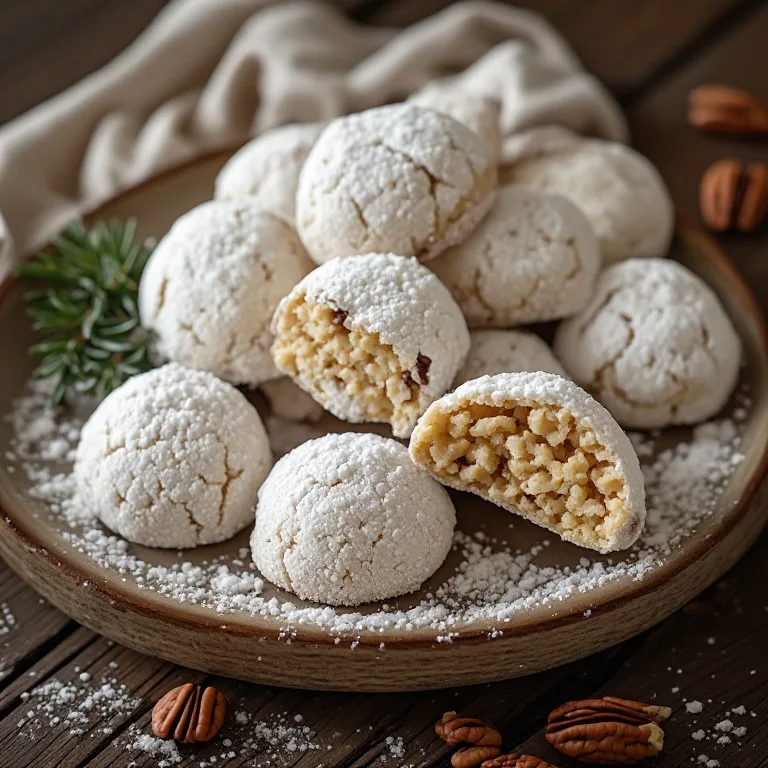
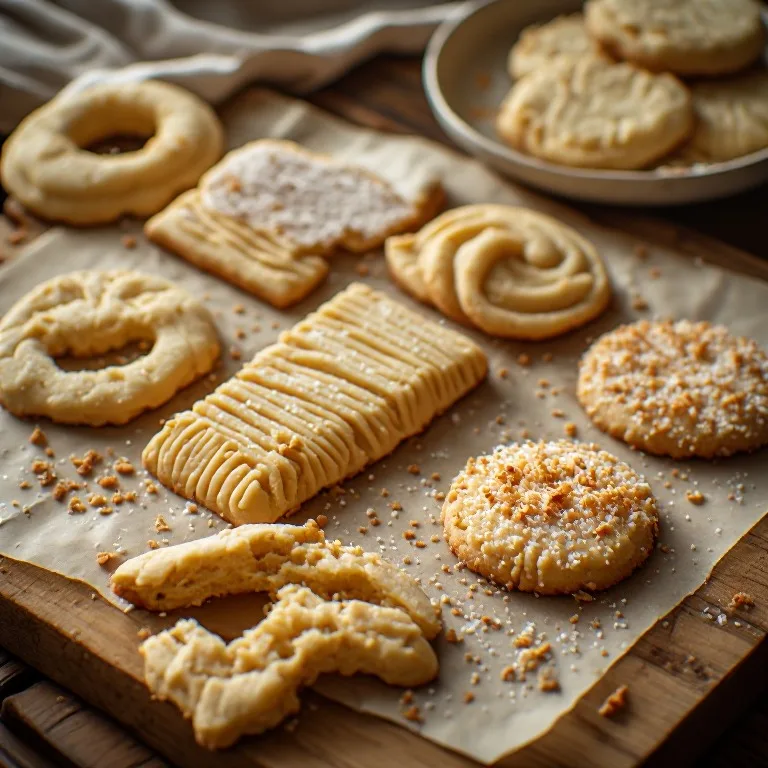
If you’re building a full holiday tin, spritz pair well with the pecan-dusted snowball cookies and the five-shape Royal Dansk Danish butter cookies — three butter-based cookies with distinct shapes and flavors that photograph well together.
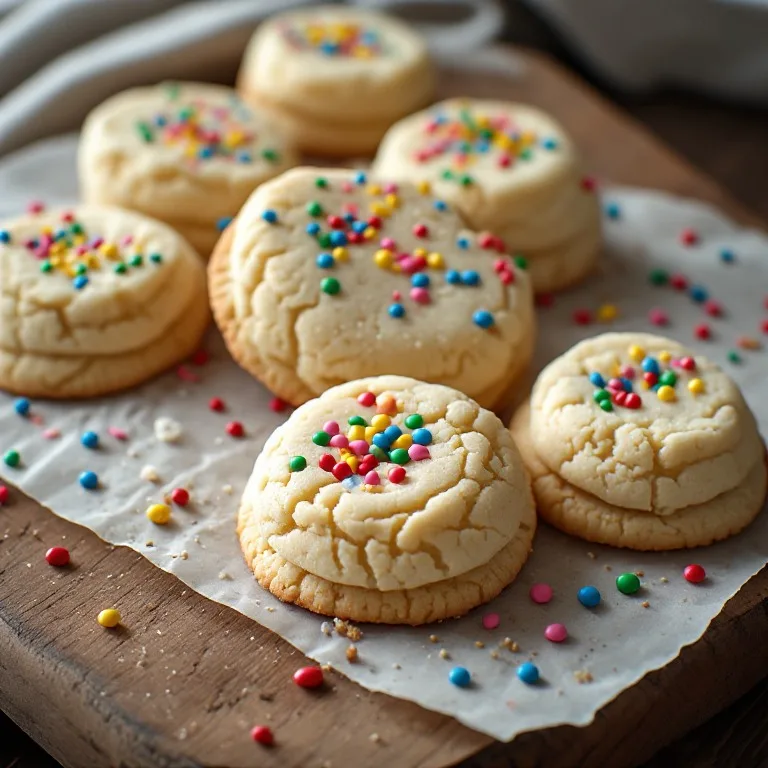
The word spritz comes from the German spritzen, meaning to squirt or spray. Spritzgebäck — pressed cookie — originated in Germany and Alsace-Lorraine as part of the winter baking tradition, and it has been a German Christmas staple long enough that the recipe is passed down through families rather than pulled from a cookbook. The modern TikTok version works because the cookie press reveal is inherently satisfying: watching the dough emerge cleanly through a star die, dozens of identical cookies appearing in quick succession, is the food equivalent of ASMR. The colored sanding sugar makes the visual.
The two rules that make spritz work
Every spritz problem — dough crumbling in the press, cookies lifting off the pan with the die, cookies going flat in the oven — comes from one of two things: the dough was the wrong temperature, or the pan was greased or lined.
Room-temperature dough. The butter must be genuinely soft — 65 to 70°F, which means it holds an indent when you press a finger in but doesn’t look shiny or greasy. Cold butter, even after creaming, produces a dough that cracks under the pressure of the press. The dough also needs the egg to be room temperature; a cold egg causes the creamed butter to seize slightly and the dough to stiffen. If you forgot to take the egg out in advance, set it in a bowl of warm (not hot) water for 5 minutes.
Ungreased, unlined metal pan. Spritz requires direct contact between the dough and dry metal. The pressed disc of dough sticks to the ungreased surface just long enough to release cleanly from the press; the cookie stays on the sheet, the press lifts away. A greased pan, a silicone mat, or parchment paper all prevent that contact. The cookie stays attached to the press instead of the pan. If your first few cookies are lifting off with the press, check the pan — either it was greased or it’s too cold.
What the dough should feel like
After mixing, the dough should be soft enough to press through the die without much effort but firm enough to hold the pressed shape without slumping. If it feels slightly tacky and sticky, the kitchen is warm — refrigerate the dough for 10 minutes before loading the press. If it feels stiff and crumbly when you try to press, it needs more time at room temperature.
One useful test: press a small amount of dough through the die onto a cutting board. If a star emerges cleanly with defined points, the dough is ready. If the points are ragged or the dough tears, it’s too cold. If the shape slumps and loses definition within 30 seconds, it’s too warm.
Flavor variations
The base dough — butter, sugar, egg, almond extract, flour — is neutral enough to absorb variations without losing its character:
Vanilla instead of almond. Vanilla is the milder, more universally familiar option. Use 1 teaspoon. The result is a straight butter cookie; the almond version has a slightly more complex, nutty-perfumed quality.
Half and half. Half a teaspoon of almond and half a teaspoon of vanilla is a common professional bakery ratio — the almond gives depth, the vanilla rounds it out.
Lemon or orange. Replace the extract with 1 teaspoon of finely grated lemon or orange zest (not extract — the juice makes the dough sticky). Citrus spritz are traditional in some German and Scandinavian versions.
Chocolate. Replace ¼ cup (30g) of the flour with ¼ cup (25g) of Dutch-process cocoa powder. The dough may need a touch more butter to reach the correct soft consistency — add 1 tablespoon and check.
Baking and cooling
375°F is the correct temperature. Higher heat sets the cookies faster and prevents spreading; 350°F is too low and allows the butter to spread before the structure sets. Spritz need 8 to 10 minutes — short enough that the inside stays tender, long enough that the bottom crisps slightly and the edge shows the faintest beginning of color.
The cookies are fragile when warm. Two minutes on the hot pan is enough for them to firm up enough to handle — not more. An offset spatula (thin blade) is the right tool; a regular spatula is too thick and cracks the fine edges.
Storage and gifting
Spritz keep better than almost any other Christmas cookie: the low moisture content of the dough means they stay crisp for 10 to 14 days in an airtight tin at room temperature. They improve over the first two to three days as the butter flavor mellows. Do not refrigerate — cold air dries them out and causes any colored sanding sugar to dissolve.
For gifting, layer the cookies with wax paper between layers. Flat cookies can be stacked; star or tree shapes need a single layer or careful staggered packing so the points don’t break in transit. A tin of 60 cookies — three to four dozen in varied shapes, decorated with colored sugar — looks like a professional bakery order and costs about $4 in ingredients.