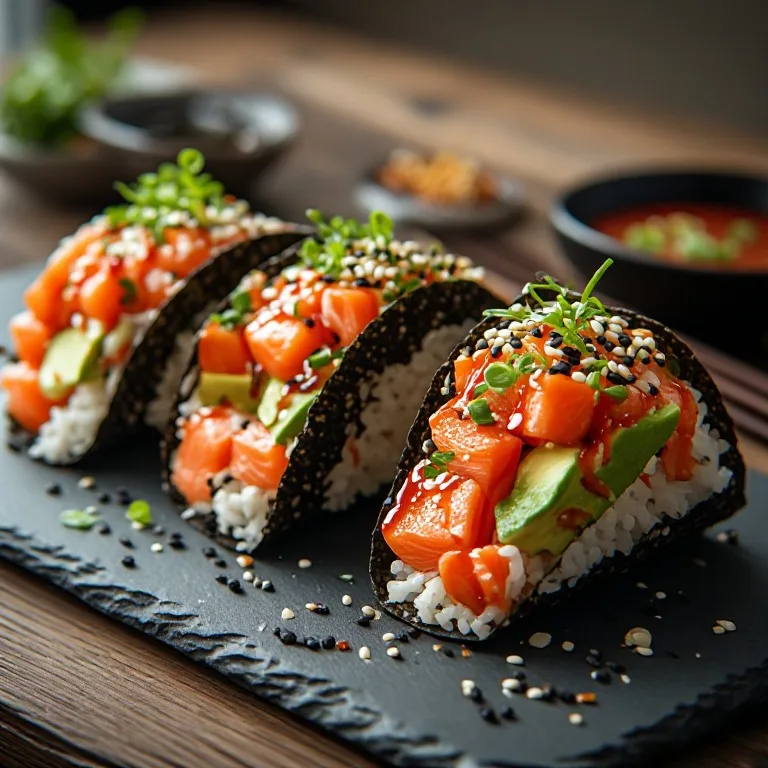
The sushi taco is exactly what it sounds like, and somehow more satisfying than it has any right to be. A half-sheet of nori, pressed thin with seasoned sushi rice on one side, air-fried until crispy and rigid, then folded into a taco shell and filled with spicy salmon or tuna, avocado, and a drizzle of Kewpie mayo. It went viral on TikTok in 2026 because the format is visually irresistible — the dark, textured shell, the bright orange salmon, the white mayo zigzag — and because anyone who makes it discovers that the crispy-nori bite with cold spicy fish is genuinely one of the better combinations in fusion cooking.
The technique has two honest failure modes: shells that crack during shaping (shaped too late, after cooling), and shells that go soggy too fast (filled too far ahead or rice pressed too thick). Both are easy to avoid once you know what you’re managing. This guide covers the technique with enough precision to get it right on the first batch.
What Makes the Sushi Taco Shell Work
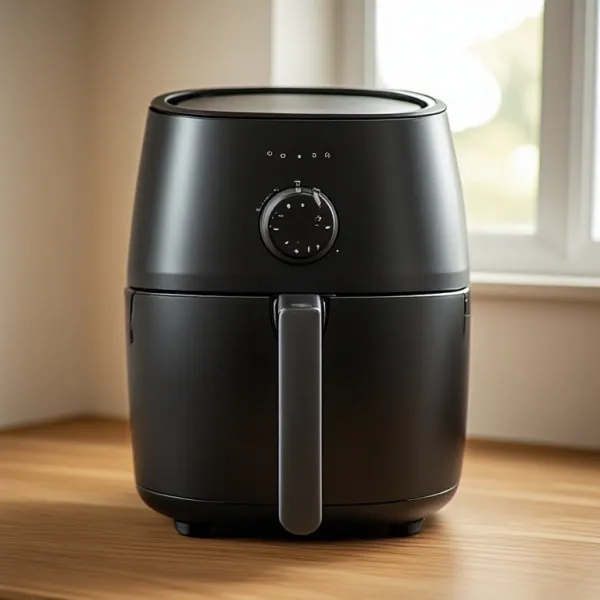
The shell is the whole trick. A half-sheet of nori (about 4×7 inches) with a thin, even layer of seasoned sushi rice pressed onto it goes into the air fryer at 380°F. In 8–10 minutes, the rice dehydrates and crisps, the nori stiffens and becomes papery, and the whole thing firms into a rigid cracker-like sheet. While it’s still hot — the first 60–90 seconds out of the fryer — the nori retains just enough flexibility to fold into a U-shape without cracking. Once it cools, that shape is permanent.
Two things determine whether the shell crisps or stays chewy: rice thickness and timing.
Rice thickness. Press for ¼ inch — about the depth of two stacked quarters. Thicker and the center stays soft while the surface dries out. Thinner and the shell is brittle and cracks on folding. Damp hands or a wet rubber spatula pressed firmly and evenly across the surface get you there in about 20 seconds per sheet once you’ve done it once.
Timing the fold. Remove the shells from the air fryer and fold within 90 seconds. This is not an approximation — the nori transitions from pliable to brittle as it fully cools, and there’s a clear window. Prop the folded shells in a muffin tin, against each other in pairs, or between crumpled foil wedges until they hold the taco curve on their own (about 2–3 minutes). After that, they’re structural and stay crispy until filled.
Why Sushi Rice (Not Cooked White Rice)
Sushi rice is short-grain Japanese rice seasoned with a rice vinegar, sugar, and salt mixture while hot. The short grain variety is higher in amylopectin starch, which gives it a stickier, more cohesive texture than long-grain varieties — essential for pressing the rice into a layer that clings to the nori and holds together in the fryer rather than shedding loose grains onto the air fryer basket.
The seasoning matters beyond flavor: the rice vinegar slightly lowers the pH of the rice, which also helps it firm up more crisply in the fryer. Under-seasoned or plain cooked rice produces a shell that’s chewier and less flavorful at the core.
The rinse-and-steam technique is what makes sushi rice taste like restaurant sushi rice rather than plain steamed rice: rinsing removes surface starch (preventing gumminess), and the 10-minute covered steam after removing from heat finishes the rice gently without overcooking it.
Spicy Salmon vs. Spicy Tuna
Both versions are equally popular on TikTok; the choice is mostly personal preference and availability.
Spicy salmon (used in this recipe) has a softer texture, slightly sweeter and more buttery flavor, and a vivid orange color that photographs well. Farmed Atlantic or Norwegian salmon has lower parasite risk than wild Pacific species and is widely available sushi-grade at Japanese grocery stores and Whole Foods.
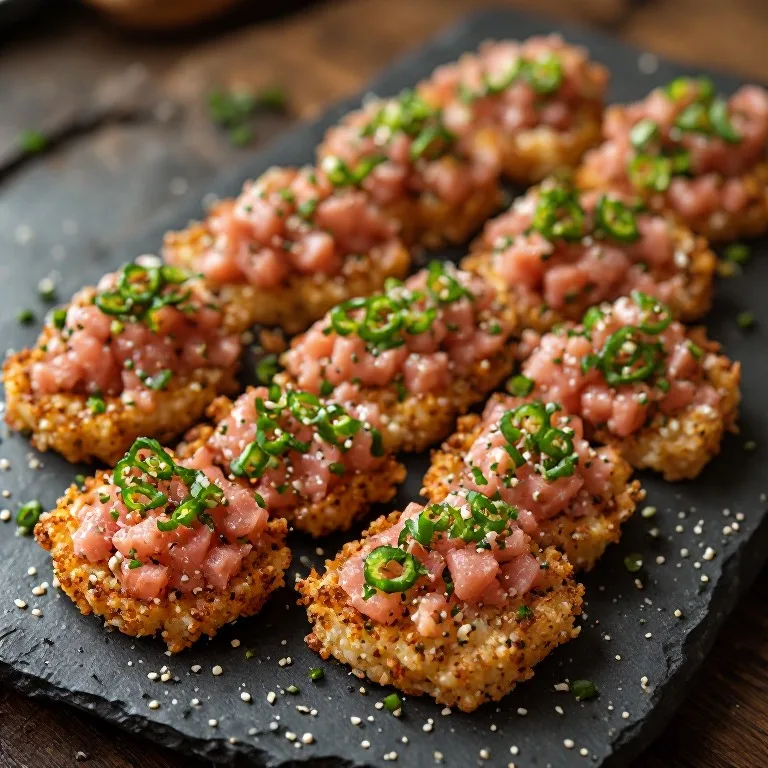
Spicy tuna (ahi / yellowfin) has a firmer, denser texture and a deeper, meatier flavor profile. It’s diced smaller than salmon — aim for ¼-inch cubes — and has a more intense ocean-forward character. If you like this flavor, the same spicy tuna mix is the star of the viral crispy rice with spicy tuna — a good companion recipe on the same shopping trip. The visual contrast of deep red-pink tuna against the dark nori and creamy white mayo is its own thing.
The seasoning ratio for both is identical: Kewpie mayo + sriracha + soy sauce + sesame oil. The ratio that works: roughly 2½ tablespoons Kewpie to 8 oz of fish gives a lightly coated, not drowning texture. The sriracha level is personal — 1 teaspoon is medium-mild; 2 teaspoons is noticeably hot.
The Kewpie Question
Every sushi-adjacent TikTok recipe calls for Kewpie, and for good reason: it’s made with only egg yolks (not whole eggs), rice vinegar instead of distilled vinegar, and MSG. The result is significantly richer, tangier, and more umami-forward than any American-style mayo.
On raw fish, Kewpie’s tangy-umami quality amplifies the fish flavor rather than flattening it the way a neutral mayo does. The difference is particularly pronounced in the squeeze-bottle finish on the assembled taco: the fine drizzle of Kewpie on top is not just decoration — it adds a concentrated hit of flavor and richness with each bite that regular mayo doesn’t deliver.
If you can’t find it: Asian grocery stores (Mitsuwa, H-Mart, 99 Ranch), most Whole Foods and Sprouts in the international aisle, Amazon, or the international section at most large Target or Walmart stores. The red-capped soft-squeeze bottle is the standard format. The same bottle does the heavy lifting in our viral furikake salmon and spicy salmon sushi bake, if you want to use up the jar.
The Moisture Problem (and the Avocado Solution)
The main thing that kills sushi tacos is a soggy shell, which happens when the spicy fish filling — which releases moisture as it sits — soaks into the rice layer from the inside.
The fix is layering sequence. Always add a thin layer of diced or sliced avocado first, directly into the shell. The avocado fat acts as a moisture barrier between the shell and the wet filling, buying 5–10 minutes of crunch even after filling. Without this barrier, spicy salmon sitting directly on rice-nori goes soggy within 3–4 minutes.
The deeper fix is timing: fill to order, not in advance. If you’re serving these at a party, set out the shells in a row and put the filling components in small bowls. Let guests build their own at the moment they’re eating. Shells maintain crunch for 30+ minutes if unfilled; they start softening within 10 minutes of being filled.
Four Variations Worth Making
Classic spicy salmon (this recipe): sushi-grade salmon + Kewpie + sriracha + avocado + jalapeño + ponzu.
Spicy tuna: exact same process, ahi tuna diced ¼-inch small. Substitute or mix half-and-half for variety.
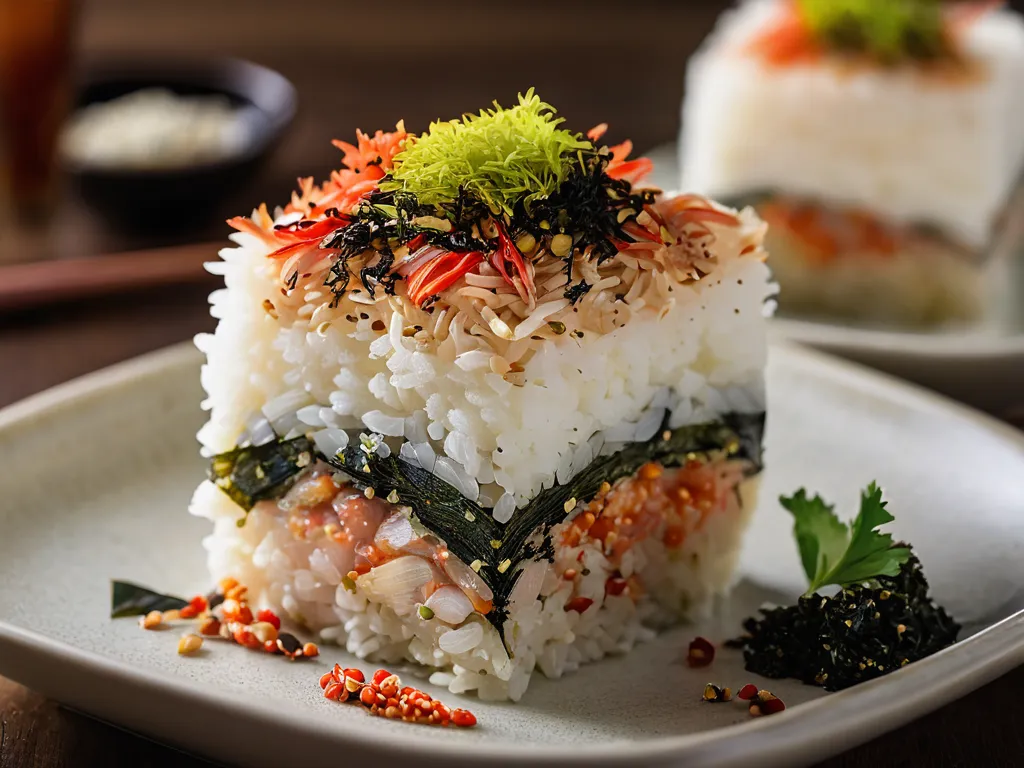
California roll: imitation crab (surimi), shredded by hand, mixed with Kewpie and a splash of rice vinegar + diced cucumber + avocado. No raw fish, fully cooked, excellent for guests who don’t eat raw fish. Add masago (orange fish roe) on top if you can find it.
Crispy shrimp: cooked shrimp (poached or from a bag of precooked shrimp), halved lengthwise, tossed with Kewpie + sriracha + mango brunoise + avocado. The sweet-spicy-creamy combination is very good and the presentation is dramatic.
For the vegetarian version: replace the fish with sliced ripe mango + avocado + pickled cucumber + sesame seeds + a drizzle of soy sauce and toasted sesame oil. The shell flavor stands well on its own with these clean accompaniments.
Assembly in the Right Order
The sequence that gives you the best taco:
- Cool and set the shaped shells completely before filling.
- Place one layer of avocado into each shell first.
- Add a rounded tablespoon of spicy salmon, mounded slightly in the center.
- Squeeze a thin zigzag of Kewpie mayo over the top.
- Add jalapeño coins, sesame seeds, and scallion greens.
- Drizzle with ponzu or a few drops of soy sauce.
- Finish with furikake if using.
- Serve immediately — or within 10 minutes maximum.
The visual goal: the dark nori shell as the frame, the pale rice visible at the rim, the orange-pink salmon mounded in the center, the white mayo drizzle, the green scallion and sesame seeds as the garnish layer. This is the shot that’s earned sushi tacos millions of TikTok views, and it’s accurate — it genuinely looks like this when done right.