


Pin It

Egg Katsu

Egg Katsu
Jump to Recipe
Prep 5 min Cook 5 min Serves 2
Quick answer: Pour ½ inch of neutral oil in a skillet and heat to 350°F. Spread 3 tablespoons of panko on a 5-inch square of parchment paper. Crack one egg onto the center of the panko, season with a pinch of salt, then cover the egg with 3 more tablespoons of panko, pressing gently so it sticks to the white. Using the parchment as a carrier, carefully lower the egg into the hot oil. After 30 seconds, when the panko on the bottom is set, use tongs to slide the parchment out from under the egg. Fry for 90 more seconds until the bottom is golden and crispy, then carefully flip with a wide spatula and fry 60–90 more seconds until the second side is equally golden. Remove, drain briefly on paper towels, and serve over rice with tonkatsu sauce. The yolk will be jammy and slightly runny — if you want it fully set, add 30 seconds per side.

Shop the tools

Gear matched to this recipe. These are Amazon affiliate links — we may earn a small commission if you buy, at no extra cost to you.

As an Amazon Associate, Copycat Spices earns from qualifying purchases. Product images are generic illustrations, not the exact item listed.

Egg Katsu

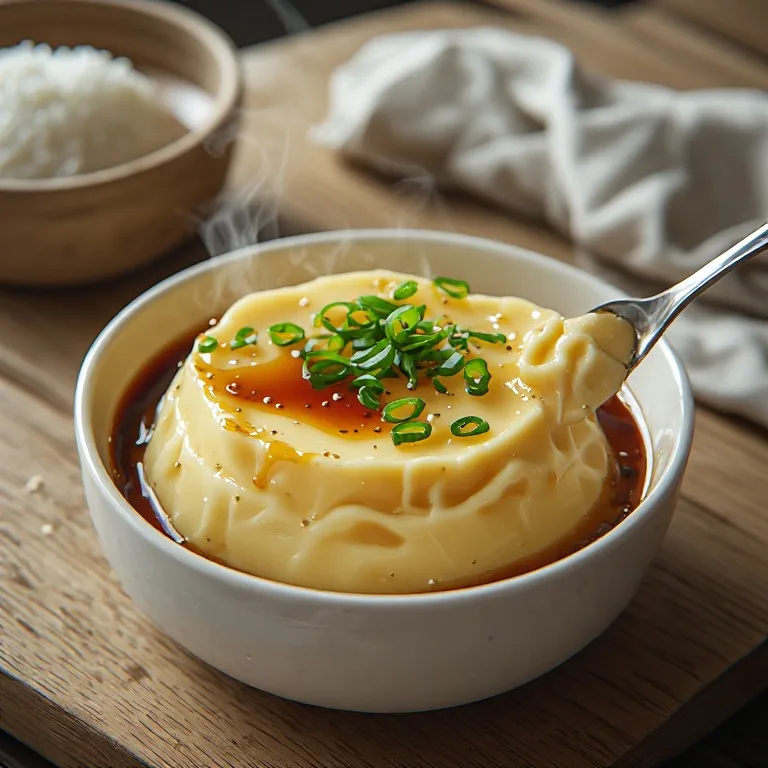
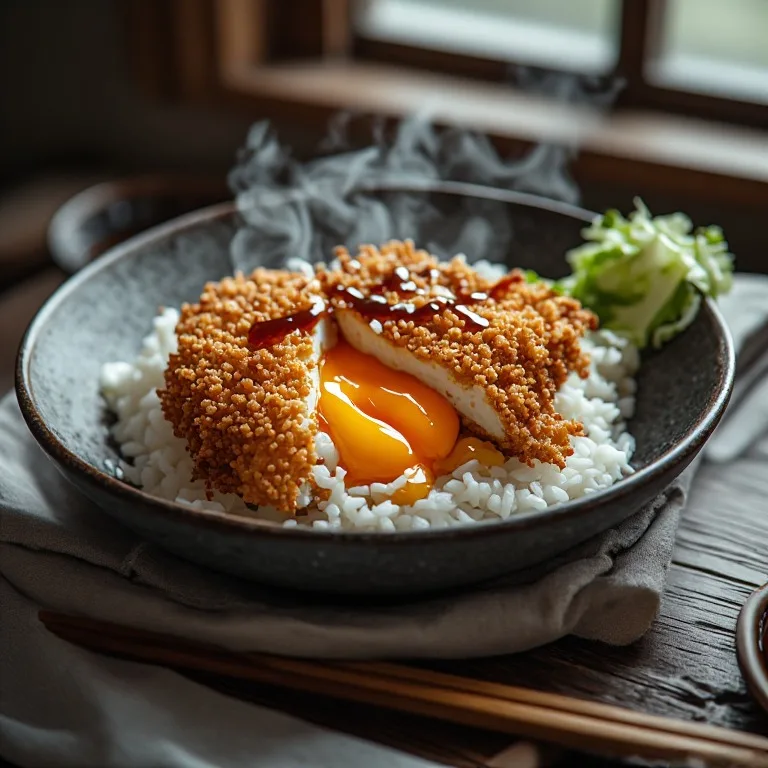
The viral TikTok egg katsu: a whole egg fried inside a crispy panko shell with a jammy, runny yolk. The parchment paper trick that makes it work, the 5-minute method, homemade tonkatsu sauce, and every serving option from katsu rice bowl to egg katsu sando.

Easy Prep: 5 min Cook: 5 min Total: 10 min2 servings ~$3.50/serving
Prep5 min
Cook5 min
Total10 min
Servings
2
At home~$3.50/serving
vs
Restaurant~$15.75/serving
You save ~78%

The Story Behind the Recipe

Tamago katsu — egg katsu — is a whole egg fried inside a panko shell, the yolk left jammy and runny, served over rice or tucked into a sandwich. It's a longtime snack at Japanese izakayas and convenience stores, and it's had a fresh run on TikTok as part of the broader Japanese home-cooking wave the food press has tracked through 2026. At sit-down Japanese restaurants in New York, Los Angeles, and Chicago, a single egg katsu piece runs $10–14. Made at home, the ingredient cost is under $1 per egg.

The reason it keeps resurfacing online isn't just the taste — it's the visual payoff. When you slice an egg katsu open, the crispy golden shell cracks to reveal a bright, barely-set yolk that runs over the white rice or soaks into the tonkatsu sauce. It's one of the most satisfying knife-through-food moments in cooking. The technique that makes it all work is a 30-second parchment paper trick: you build the panko bed on parchment, crack the egg onto it, cover with more panko, and lower the whole thing into hot oil on the paper. The panko sets before the parchment burns. You slip the paper out, fry 90 more seconds, flip, and you're done.

Nutrition Facts

Per serving (2 servings)
Calories220
Total Fat14g
Total Carbs14g
Dietary Fiber1g
Sugars3g
Protein8g
Sodium350mg

* Estimated values based on standard recipe preparation. Actual values may vary.

Ingredients

Instructions

💡
Pro tip: This recipe tastes even better the next day. The flavors need time to meld together in the fridge.
❄️
Storage: Keeps in an airtight container in the fridge for up to 2 weeks. Freezer-friendly for up to 3 months.
🎃 Free Halloween cookbook — download now The Copycat Halloween Cookbook A ready-made, photo-illustrated PDF of our best halloween copycat recipes — free to download, no building required. Pay what you want to support if you love it.

Free PDF — instant download. We'll also send new seasonal copycat recipes now and then; unsubscribe anytime. Or just download it →

Egg katsu is a 5-minute Japanese fried egg that looks harder than it is and tastes dramatically better than it should. The exterior is shattering-crisp panko; the interior is a whole egg with a barely-set, jammy yolk that breaks when you slice through it. It’s a longtime izakaya and convenience-store snack in Japan, and TikTok keeps pulling it back into the feed — part of the same Japanese home-cooking wave driving renewed interest in chicken katsu curry and ramen eggs.

What Egg Katsu Actually Is

Tamago katsu (玉子カツ) is a staple of Japanese convenience stores and izakayas, usually served as part of a bento set or a katsu sando. The word katsu is short for katsuretsu, Japanese for “cutlet” — breaded and fried, the same technique used for tonkatsu (pork cutlet) and chicken katsu. Apply it to an egg and you get tamago katsu.

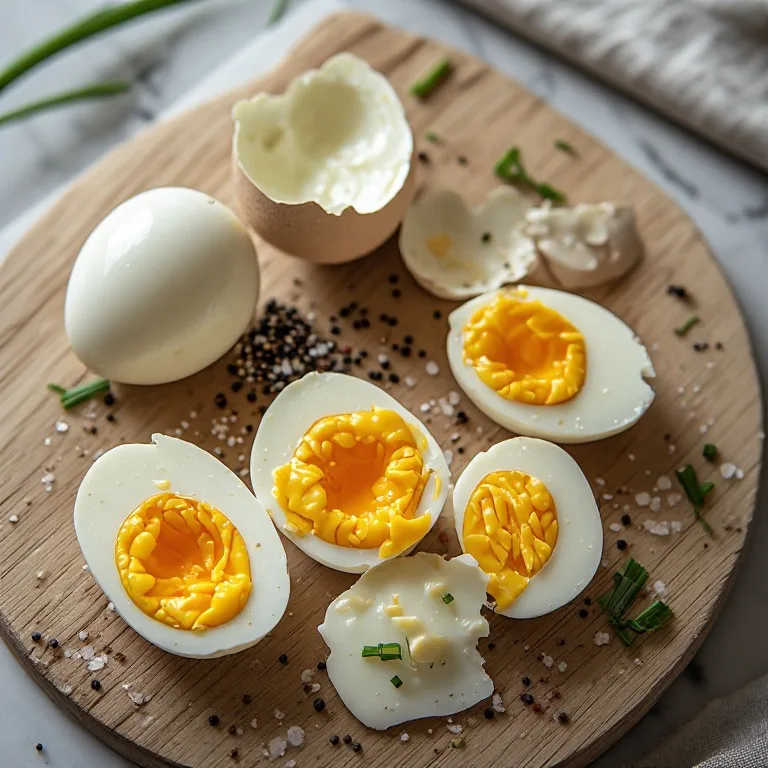
The defining characteristic is the yolk. A fully-cooked yolk is technically easier to fry — no timing anxiety — but it’s also the wrong result. The yolk should be jammy: set enough to hold its shape when cut, still fluid enough to run slightly when pressed. At 350°F with the timing in this recipe, you get exactly that: a yolk with the texture of a very soft-boiled egg, encased in a ½-inch shell of crispy fried panko that shatters when you cut through it.

The Parchment Paper Trick

The main reason home cooks avoided egg katsu before TikTok was the perceived difficulty of getting a raw, uncontained egg into hot oil without it spreading into a flat, uneven mess. The parchment trick solves this entirely.

The logic: raw egg white is sticky and clings to panko on contact. If you build a panko platform on parchment, crack the egg onto it, and immediately top with more panko, you have a panko-bound egg unit before it hits the oil. Lowering the whole assembly into the oil on the parchment keeps it intact during the first 30 seconds — which is all the time needed for the bottom crust to set firm enough to be self-supporting. Then you slide the parchment out (it doesn’t fuse to the egg — the panko is between them) and fry normally.

Parchment is silicone-coated and rated to 400°F+. Frying at 350°F for 30 seconds won’t burn it or cause it to release its coating into the food. This is the same reason pastry chefs line cake pans with parchment and bake at 350°F without problems.

The Oil Temperature Question

350°F is the correct temperature. This is worth understanding, not just accepting:

  • Below 325°F: The egg white begins spreading faster than the panko can trap it, and the crust absorbs significant oil before the coating sets, producing a greasy result.
  • 350°F: The panko crackles on contact and starts setting within seconds. The egg white’s spread is arrested before it reaches the parchment border. The crust forms before the egg overcooks.
  • Above 375°F: The panko browns and crisps in under a minute, before the egg white is fully set. You get dark, nearly-burnt crust with a slimy white center.

If you don’t have a thermometer: the panko-flake test is reliable. A panko flake dropped in at 350°F floats to the surface immediately, sizzles continuously, and turns golden in 15–20 seconds. That’s your signal.

Frying Sequence and Timing

The frying sequence for a jammy yolk (the correct result):

  1. 0:00–0:30 — parchment in oil; bottom panko sets
  2. 0:30 — slide parchment out with tongs
  3. 0:30–2:00 — fry first side (90 more seconds); deep golden brown
  4. 2:00 — flip with wide spatula
  5. 2:00–3:00–3:30 — fry second side 60–90 seconds
  6. 3:30 — remove, drain 30 seconds, serve

For a fully-set yolk, add 30 seconds per side (total fry time ~4:30). For a more runny yolk, subtract 20 seconds from the second-side fry time (total ~3:00).

The yolk continues cooking for 30–60 seconds after you pull it from the oil. Account for this — pull it 10 seconds before you think it’s done.

Tonkatsu Sauce: Homemade vs. Bottled

Tonkatsu sauce is the essential companion. The commercial standard is Bull-Dog Tonkatsu Sauce (available at H Mart, Mitsuwa, Marukai, Nijiya, and on Amazon — roughly $4 for a 10-oz bottle). The flavor is a specific combination of Worcestershire, fruit purée, soy, and vinegar that the Bull-Dog brand has made in Japan for over a century.

The homemade version in this recipe — 3 tablespoons Worcestershire + 2 tablespoons ketchup + 1 tablespoon soy sauce + 1 teaspoon sugar — is an honest approximation. The ketchup provides the fruit-sweetness and acidity that Bull-Dog gets from apple and tomato purée; the Worcestershire is the Worcestershire. It’s assembled in 30 seconds and requires no special ingredients.

What to look for in the balance: the sauce should be tangy enough to cut through the fried panko, sweet enough to complement the jammy yolk, and salty enough (from the soy sauce) to season the egg. Taste it before serving and adjust. If it tastes flat, more soy sauce. If it’s too sour, more ketchup. If it’s too salty, a few drops of lemon juice.

The Three Classic Serving Presentations

Egg katsu don (donburi) — steamed Japanese short-grain rice in a bowl, a small pile of very finely shredded green cabbage, the egg katsu placed on top, tonkatsu sauce drizzled generously over everything. This is the convenience-store presentation. The rice absorbs the sauce; the cabbage gives crunch and cuts the richness; the egg katsu ties it together. Eat with a spoon or chopsticks, cutting through the egg as you eat to let the yolk run into the sauce. For a heartier bowl, set the egg katsu over egg fried rice instead of plain steamed rice.

Egg katsu sando — the egg katsu version of the Japanese convenience-store sandwich. Two slices of shokupan (Japanese milk bread, available at Asian bakeries and some Japanese grocery stores) or thick-cut soft white sandwich bread. Spread both slices with tonkatsu sauce. Add a layer of very finely shredded cabbage to the bottom slice. Place the egg katsu on top of the cabbage, close the sandwich, press firmly, and serve. Trim the crusts and halve diagonally for the full presentation. The egg katsu’s crust softens in about 2 minutes against the moist bread — eat it fast, and make sure the yolk is jammy enough to soak into the bread slightly.

Egg katsu curry — make or heat a Japanese curry sauce (from a roux block — Vermont Curry and S&B Golden Curry are the standard brands, sold at Asian grocery stores and many mainstream supermarkets). Place the egg katsu on top of steamed rice and spoon curry over the rice around it, not directly over the egg. Eating the egg katsu in the curry is the point — the crispy panko shell stays intact for 2–3 minutes before absorbing curry and softening. That’s your window.

Variations Worth Knowing

Egg katsu with double-battered soft-boiled egg — boil eggs 6–7 minutes, transfer to ice water, peel, then do a full flour → egg wash → panko double-coat and fry 3–4 minutes at 340°F. This is the more structured, restaurant-style version — the shape is perfectly spherical and the white is fully set with a jammy center. Requires 12+ minutes total and more ingredient prep, but the result is more impressive visually.

Egg katsu sando with wasabi mayo — add 1 teaspoon of wasabi paste to 2 tablespoons of Japanese Kewpie mayonnaise and spread on the bread along with the tonkatsu sauce. The wasabi cuts the richness of the fried egg and adds a gentle, nose-clearing heat that complements the panko.

Egg katsu curry bun — slice open a steamed bao bun (nikuman-style, available frozen at Asian grocery stores), tuck in a small egg katsu, drizzle with tonkatsu sauce, and add pickled red ginger (beni shoga). A 2-minute assembly that’s essentially a Japanese katsu burger.
🥗

Make It Healthier

Love Egg Katsu but want a lighter version? Try these simple swaps:

  • ✓Air fryer method: place the panko-coated egg on a small piece of parchment in a preheated air fryer basket (400°F). Spray the top generously with cooking spray. Cook 5–6 minutes, checking at 4. The yolk will be slightly more set than the oil-fried version, and the crunch is lighter — but at about 120 calories versus 220, it's a meaningful difference.
  • ✓Use egg whites for most of the egg and keep just one whole egg: crack a whole egg onto the panko, then add 1 tablespoon of egg white on top before the panko lid — this increases protein and reduces fat without changing the shape.
  • ✓Serve over cauliflower rice instead of steamed white rice for a lower-carb bowl that still holds the sauce and the egg without the texture loss of a bare plate.
  • ✓Make a lighter tonkatsu sauce by replacing half the ketchup with grated fresh apple (grate it fine so it incorporates) — it adds natural sweetness and reduces the sugar while adding fiber and a fresher flavor.

Frequently Asked Questions

What makes egg katsu different from a regular fried egg or a Scotch egg?

A fried egg sits in oil with only the bottom surface touching fat — you get a crispy, lacy bottom but a steamed, soft top, and the cooking medium is the pan surface. Egg katsu is fully submerged in its panko shell, so every surface fries simultaneously and you get 360-degree crunch with a completely encased yolk that steams and sets to jammy inside the shell. A Scotch egg wraps a hard- or soft-boiled egg in sausage meat before breading — it's a different dish requiring pre-cooked eggs and 6+ minutes of frying. Egg katsu uses a raw egg, takes 5 minutes total, and produces a crust so thin and light it shatters when you bite it. The closest comparison is tempura, but panko gives a more audible, substantial crunch than tempura batter.

How do I stop the egg white from spreading all over the panko?

Three things control the spread. First, use a fresh egg — older eggs have thinner, more liquid whites that spread more aggressively; a very fresh egg (within a week of the date) has a tight, gel-like white that holds its shape. Second, work quickly after cracking: the white begins spreading immediately, so get the top panko on within 10 seconds of cracking. Third, the oil temperature matters — at 350°F the bottom panko layer sets and freezes the white's spread within the first 15–20 seconds of frying. If the oil is at 325°F or lower, the white spreads before the panko can trap it. A slightly spread egg katsu still tastes identical — the spread edge just gets extra-crispy. Some people prefer it that way.

Can I make egg katsu without a thermometer?

Yes, using the panko flake test: drop one panko flake into the oil. At 325°F it sinks slightly, bubbles slowly, and takes 30+ seconds to turn golden. At 350°F it floats immediately, sizzles actively, and turns golden in 15–20 seconds. At 375°F it browns in under 8 seconds. You want the 350°F behavior. Another method: a wooden chopstick or skewer inserted in the oil should produce a steady stream of small bubbles from its surface. If there are no bubbles, it's too cold. If the bubbles are large and vigorous, too hot.

What is tonkatsu sauce and what can I use instead?

Tonkatsu sauce is a Japanese condiment — thick, tangy, and lightly sweet, with a Worcestershire-and-fruit-base flavor. Bull-Dog is the dominant brand, widely available at Asian grocery stores and on Amazon. The homemade version in this recipe (Worcestershire + ketchup + soy sauce + sugar) replicates about 85% of it — Worcestershire already contains tamarind, vinegar, and spices that approximate the commercial product's depth. Alternatives if you have neither: plain Worcestershire sauce works but is tangier and less sweet; oyster sauce works but adds more umami and is thicker; a mix of hoisin and soy sauce is a reasonable substitute. Sriracha mayonnaise is a completely different flavor profile but a popular American variant.

What is the best way to serve egg katsu?

Three classic presentations. (1) Egg katsu don (rice bowl): steamed short-grain rice, a pile of very finely shredded cabbage, the egg katsu on top, tonkatsu sauce drizzled over. This is the most common convenience-store version in Japan. (2) Egg katsu sando (sandwich): two slices of shokupan (Japanese milk bread) spread with tonkatsu sauce, shredded cabbage on the bottom slice, egg katsu on top of the cabbage. Press lightly, trim crusts if desired, slice in half. The sandwich eats well with a medium-runny yolk — it soaks into the bread slightly. (3) Egg katsu curry: serve the egg katsu alongside or on top of Japanese curry rice (from a Vermont Curry or S&B Golden Curry roux block — standard Japanese curry brands). The egg's crispy shell stays intact in the curry for about 2 minutes before it softens; eat it quickly.

Can I make it ahead, and does it reheat well?

Egg katsu does not reheat well — the panko shell absorbs moisture from the egg as it cools and becomes soft within 10 minutes. It's best eaten within 3 minutes of coming out of the oil. If you're cooking for multiple people, fry them in sequence (each takes 5 minutes) and serve immediately as each comes out. For a party situation, keep finished egg katsu on a wire rack in a 200°F oven for up to 10 minutes — the rack lets air circulate underneath and the low heat slows softening. Don't use a plate or paper towels in the oven; they trap steam and accelerate the sogginess.

Love this recipe? Share it!

Free PDF: our 12 most-wanted copycat recipes — instant download.

Made it? Buy us a coffee

Every recipe here is free, with no paywalls. If this one was a hit at your table, a small tip keeps new copycats coming.

$

Ratings & Reviews

—
No ratings yet

Rate this recipe

Click a star to rate

Leave a Review

0/500

CS

Copycat Spices Editorial

Researched + fact-checked. Every recipe on Copycat Spices is built from published sources — official ingredient lists, brand-published recipes, interviews and food-science references — and fact-checked before it goes live, then written as clear, step-by-step instructions for home cooks of all skill levels.

Learn more about our mission →