


Pin It

Viral TikTok Turkish Pasta (Anna Paul's Cheat Manti — Crunchy Beef, Garlic Yogurt, Paprika Butter)

Viral TikTok Turkish Pasta (Anna Paul's Cheat Manti — Crunchy Beef, Garlic Yogurt, Paprika Butter)
Jump to Recipe
Prep 5 min Cook 20 min Serves 4
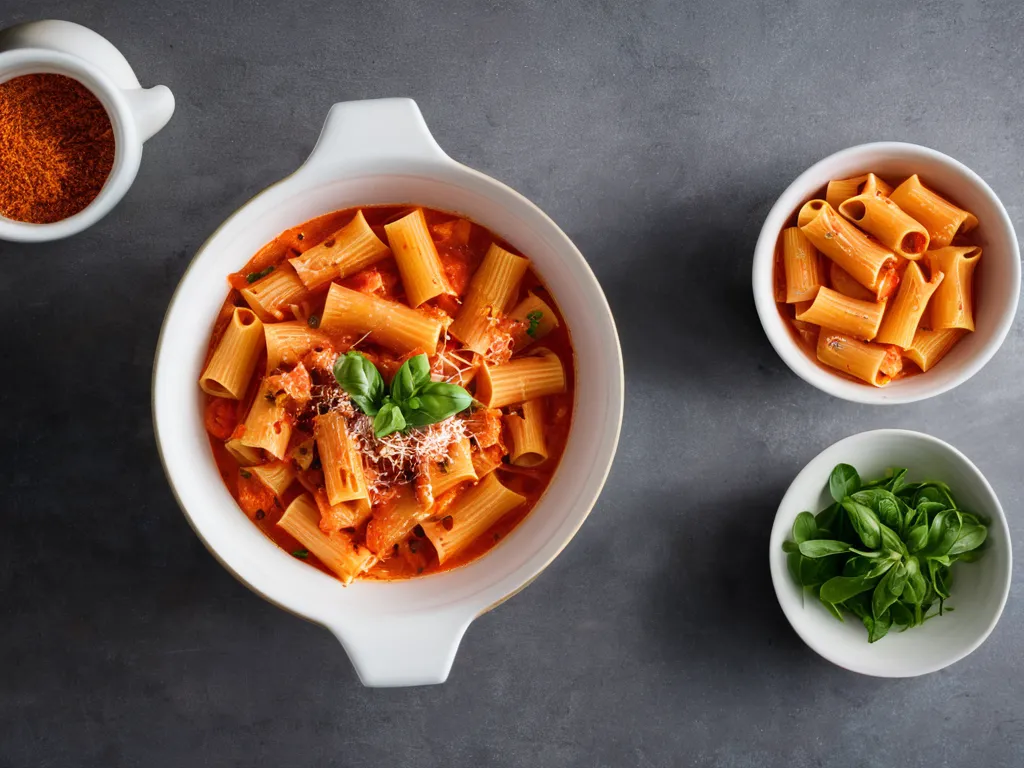
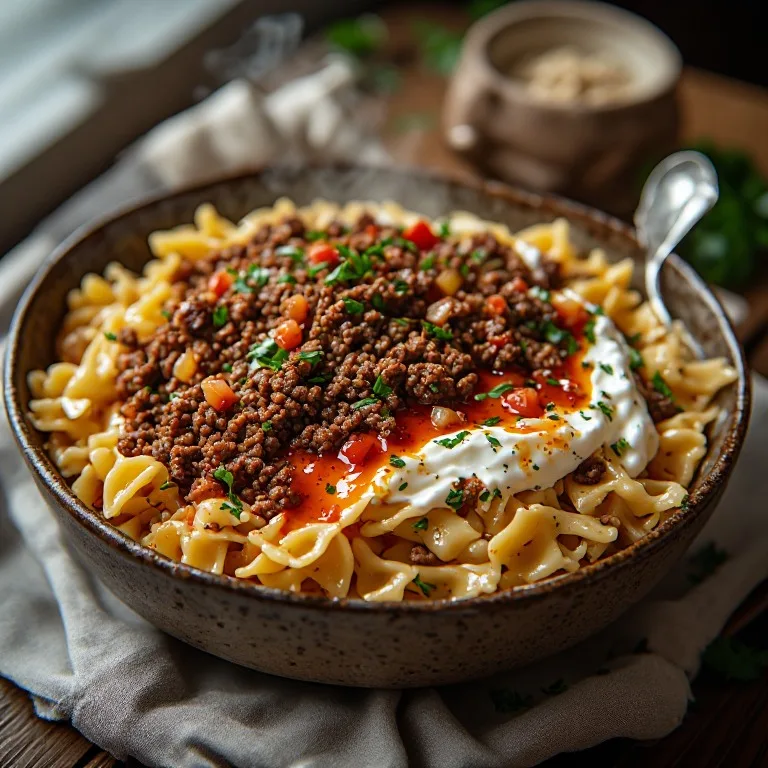
Quick answer: Anna Paul's Turkish pasta (cheat manti / yogurtlu kiymali makarna) is cooked short pasta topped with crunchy spiced ground beef, cool garlic yogurt, and a drizzle of hot sweet paprika butter. Cook 12 oz farfalle (Anna Paul's shape), penne, or rigatoni according to package directions. While the pasta cooks, brown 1 lb ground beef in a skillet over medium-high heat with 1 small diced onion; break it up continuously and cook until ALL the moisture evaporates and the beef starts to crisp at the edges — about 10 minutes. Season with ½ teaspoon salt, ½ teaspoon black pepper, and ½ teaspoon sweet paprika. In a bowl, mix 1½ cups full-fat Greek yogurt (room temperature) with 2 pressed garlic cloves and ¼ teaspoon salt. In a small pan, melt 4 tablespoons unsalted butter over medium heat; add 1½ teaspoons sweet paprika and a pinch of red pepper flakes, swirl 30 seconds until the butter turns red and fragrant, then remove from heat. To serve: drain the pasta and divide into bowls. Spoon garlic yogurt over each bowl, top with a heap of crunchy beef, then pour the hot paprika butter directly over everything — it will sizzle on contact with the yogurt. Garnish with chopped fresh parsley and optional diced fresh tomato.

Viral TikTok Turkish Pasta (Anna Paul's Cheat Manti — Crunchy Beef, Garlic Yogurt, Paprika Butter)

Anna Paul's mama's 15-minute Turkish pasta: short pasta topped with crispy spiced ground beef, cool garlicky yogurt, and a sizzling sweet paprika butter drizzle. The deconstructed manti that broke TikTok. The crunchy beef step is the one everyone rushes — here's why it takes 10 minutes.

Easy Prep: 5 min Cook: 20 min Total: 25 min4 servings ~$4.50/serving
Prep5 min
Cook20 min
Total25 min
Servings
4
At home~$4.50/serving
vs
Restaurant~$20.25/serving
You save ~78%

The Story Behind the Recipe

Anna Paul's mama's 15-minute Turkish pasta: short pasta topped with crispy spiced ground beef, cool garlicky yogurt, and a sizzling sweet paprika butter drizzle. The deconstructed manti that broke TikTok. The crunchy beef step is the one everyone rushes — here's why it takes 10 minutes.

Nutrition Facts

Per serving (4 servings)
Calories720
Total Fat31g
Total Carbs62g
Dietary Fiber3g
Sugars5g
Protein40g
Sodium680mg

* Estimated values based on standard recipe preparation. Actual values may vary.

Ingredients

  • Pasta
  • Crunchy beef
  • Garlic yogurt
  • Paprika butter
  • To finish

Instructions

💡
Pro tip: This recipe tastes even better the next day. The flavors need time to meld together in the fridge.
❄️
Storage: Keeps in an airtight container in the fridge for up to 2 weeks. Freezer-friendly for up to 3 months.
🎃 Free Halloween cookbook — download now The Copycat Halloween Cookbook A ready-made, photo-illustrated PDF of our best halloween copycat recipes — free to download, no building required. Pay what you want to support if you love it.

Free PDF — instant download. We'll also send new seasonal copycat recipes now and then; unsubscribe anytime. Or just download it →

Viral TikTok Turkish Pasta (Cheat Manti)

The TikTok clip format is always the same: short pasta in a bowl. A generous spoonful of white yogurt, pooled and spread. A heap of crumbled, deeply browned beef. Then the camera holds still as a small pan of brilliant red-orange butter is poured over everything. It sizzles. The red spreads across the white yogurt. Parsley lands on top.

The video is 30 seconds. The recipe is 20 minutes. Anna Paul’s Turkish-pasta clips have racked up tens of millions of views, and the format has since been copied by thousands of other creators.

The dish is Anna Paul’s mother’s Turkish pasta — yogurtlu kiymali makarna — which Australians and the rest of the English-speaking internet have taken to calling “cheat manti.”

What Is Manti?

Manti are traditional Turkish dumplings: small squares of thinly rolled dough, pressed around a filling of spiced ground meat, then boiled or steamed and served topped with garlic yogurt and a drizzle of paprika or Aleppo pepper butter. They are a labor of love — the kind of dish a grandmother spends a Sunday afternoon on, rolling the dough to near-translucent thinness, folding each one by hand. A real manti takes hours.

Yogurtlu kiymali makarna achieves the same result in 20 minutes by replacing the hand-rolled dumplings with any short pasta from a box. The three-component assembly is identical — seasoned beef, garlicky yogurt, spiced butter — and so is the eating experience. You are not making manti. You are capturing their flavor architecture without the technique.

“Cheat manti” is the accurate framing: the shortcut is honest, and what you get at the end is not a lesser dish — it is a different one with the same soul.

Why Three Components, Not a Sauce

Most pasta dishes work by coating pasta in sauce. Turkish pasta works by layering three separate elements that stay distinct and interact on contact in the bowl.

The pasta is the neutral base — warm, starchy, slightly undersalted relative to what will come. The garlic yogurt is cool and tangy, loosely draped over the pasta. The crunchy beef sits on top, browned and dry, providing texture and savory depth. The paprika butter is poured hot at the last moment — it sizzles on contact with the cool yogurt and spreads across the surface.

In the first bite, you get all three: the chew of the pasta, the cool tang of yogurt, the warmth and crumble of beef, and the bloom of sweet paprika from the butter. Each subsequent bite reassembles in a slightly different ratio, which is why the dish does not bore after the first few forkfuls. No sauce achieves this — a sauce is homogeneous; this assembly is not.

The Crunchy Beef: The Step That Determines Everything

Most people brown ground beef to a gray, slightly browned result and call it done. For this dish, that is not done — it is halfway.

The beef in yogurtlu kiymali makarna needs to be genuinely crunchy: deeply browned, almost crumbly, with visibly crisped edges and no remaining moisture. You achieve this by cooking longer than feels necessary. After the initial browning phase (when the pink disappears), keep cooking. All the moisture that the beef releases needs to evaporate completely. Then, once the pan is dry, the beef will begin to fry in its own rendered fat and caramelize. Keep stirring and cooking until individual pieces have crispy edges and the pan sounds like frying, not steaming.

This takes 10–12 real minutes. The temptation to stop at 6–7 minutes is strong because the beef looks “cooked.” Do not stop. The texture difference between adequate and genuinely crunchy beef — when it meets the cool yogurt in the bowl — is substantial.

A crowded pan produces steam rather than browning. Use a 12-inch skillet and spread the beef out. If it looks crowded, cook in two batches.

The Yogurt: Room Temperature Is Not Optional

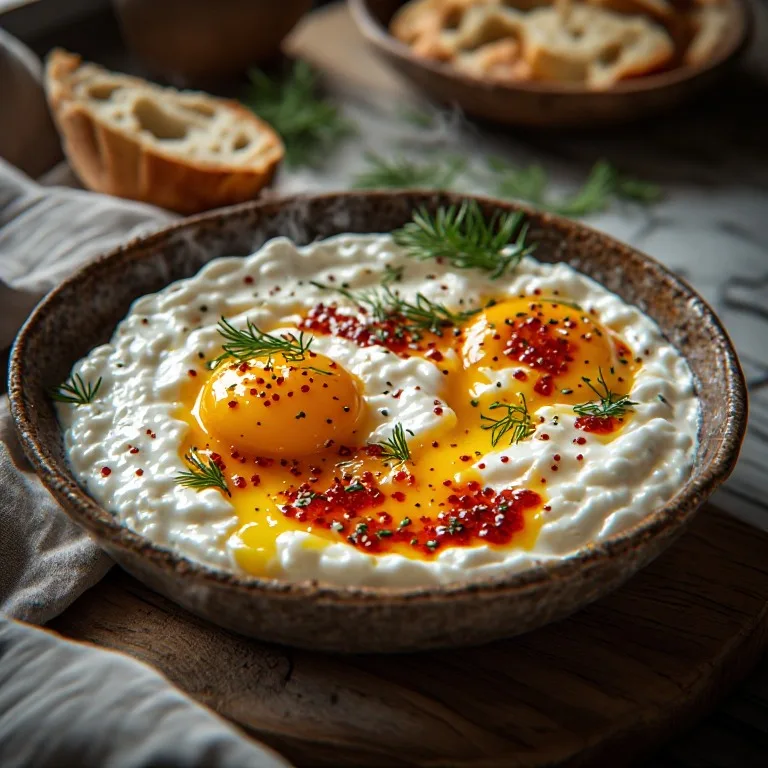
The same principle that governs Çılbır (Turkish eggs) applies here: cold yogurt straight from the refrigerator will absorb the heat of the paprika butter almost instantly, eliminating the sizzle-on-contact effect and flattening the temperature contrast that defines the dish.

Pull the yogurt from the fridge 30 minutes before you start cooking. Stir in pressed garlic and salt, and leave it at room temperature. By the time you are assembling the bowls, it will be at room temperature and the garlic will have had time to mellow slightly in the yogurt’s mild acidity — losing the sharp raw edge without losing the garlic flavor.

Two garlic cloves for 1½ cups of yogurt is the right ratio for most people. If you are very sensitive to raw garlic, use one large clove and let the seasoned yogurt sit 10 minutes before serving.

The Paprika Butter: Make It Last and Pour It Hot

The paprika butter is a simple emulsion of butter and sweet paprika — Turkish cuisine uses this preparation constantly, as a finishing element over yogurt dishes, soups, and vegetable plates. What makes it work here is temperature: the butter needs to be poured while it is still actively hot so it sizzles on contact with the cool yogurt.

Make the paprika butter as your absolute final step, immediately before assembling the bowls. Melt the butter until it foams, add the paprika all at once (it will sizzle and turn the butter red immediately), swirl for 30 seconds until fragrant, and pour without delay. If you make the butter and let it sit for two minutes, it will have cooled enough to lose the sizzle. The sizzle is the TikTok moment — but it also matters to the eating experience. The heat from the butter warms the top layer of beef and blooms the paprika’s volatile compounds on contact with the cool yogurt below. Pour it cold and you lose both effects.

Sweet paprika, not smoked. Smoked paprika will overpower the dish. Some versions add a pinch of red pepper flakes for very mild heat — this is optional and does not significantly change the flavor profile.
🥗

Make It Healthier

Love Viral TikTok Turkish Pasta (Anna Paul's Cheat Manti — Crunchy Beef, Garlic Yogurt, Paprika Butter) but want a lighter version? Try these simple swaps:

  • ✓Use 93/7 lean ground beef to cut roughly 100 calories and 10g fat per serving. Lean beef can still get crunchy — it just takes slightly longer since there is less fat to fry in. Add a teaspoon of olive oil to the pan when the beef is almost done to encourage crisping.
  • ✓Use 2 tablespoons of butter instead of 4 for the paprika drizzle — you lose some of the richness and the sizzle effect is less dramatic, but the paprika flavor remains.
  • ✓Labneh (strained yogurt) in place of Greek yogurt adds more protein (~35g per cup vs. ~22g), a more pronounced tang, and a sturdier, denser base. Thin it very slightly with 1–2 tablespoons of warm water so it drizzles over the pasta rather than sitting in a firm blob.
  • ✓For a lower-carb version, serve the beef and yogurt over cauliflower rice or roasted chickpeas instead of pasta. The three-component structure works on almost any starchy base.

Frequently Asked Questions

What is cheat manti and how does it differ from real manti?

Manti are traditional Turkish dumplings — small, hand-rolled, thumb-pressed parcels of dough filled with spiced ground meat (usually lamb or beef) and cooked by steaming or boiling. The dumplings are served topped with garlic yogurt and drizzled with paprika butter, often with a sprinkle of sumac and dried mint. Making authentic manti is a multi-hour project: the dough must rest, be rolled very thin, cut into small squares, filled, and folded by hand. 'Cheat manti' swaps the labor-intensive dumplings for any short pasta — you get the exact same three-component flavor combination (beef, garlic yogurt, paprika butter) in 20 minutes instead of three hours. The dish Anna Paul's mother makes is called yogurtlu kiymali makarna (pasta with ground meat and yogurt) in Turkey; the 'cheat manti' framing is the TikTok shorthand that explains immediately why this simple pasta combination is remarkable.

Why does the beef need to get 'crunchy'? Can't I just brown it normally?

Normally browned beef is gray-beige with some browning — it has been cooked through but not developed full Maillard caramelization or lost all its moisture. In this dish, the beef needs to be genuinely crispy at the edges — almost crumbly, with pronounced browning and no residual moisture — because it is served on top of a cooling, moist yogurt layer. If the beef is soft or wet, the combination becomes mushy rather than textured. The crunchy beef provides a physical contrast to the creamy yogurt and creates the best mouthfeel in the assembled bowl. The step takes a real 10–12 minutes over medium-high heat. You will know it is done when the skillet is mostly dry, the beef sounds like it is frying (not steaming), and the edges of individual pieces are visibly browned and slightly crispy.

What pasta shape works best?

Anna Paul uses farfalle (bow ties) in the original video. Other excellent choices: penne, rigatoni, rotini, or fusilli — any short shape with ridges or folds that catches the yogurt and beef. Long pasta (spaghetti, linguine) is harder to pile the beef on top of and makes the bowl more difficult to eat. Smaller shapes (ditalini, orzo) can get lost under the beef. The short, sturdy shapes in the 1–2 inch range are the sweet spot. Avoid fresh pasta — it is too delicate for this assembly and absorbs the yogurt too fast.

Is the room-temperature yogurt step actually necessary?

Yes. Cold yogurt straight from the refrigerator immediately chills the hot paprika butter when it hits the bowl, turning the sizzle-on-contact reveal into a dull hiss or nothing at all — the temperature contrast that gives this dish its character disappears. More importantly, cold yogurt will cool the hot beef down quickly, making the whole bowl taste like it was assembled ahead of time instead of just now. Pull the yogurt 30 minutes before you start cooking. If you forgot: microwave it in 5-second bursts, stirring each time, until it no longer feels cold.

My paprika butter didn't sizzle when I poured it. What went wrong?

Two possible causes: the butter was not hot enough, or the yogurt was too cold. The butter should come off the heat immediately after the paprika sizzles and turns the butter red — while it's still very hot. If you set the butter aside for a few minutes and then pour it, it will have cooled below the sizzle threshold. Make the paprika butter last, as the very final step before assembly, and pour it immediately. If the yogurt was cold (pulled straight from the fridge), even perfectly hot butter will barely sizzle — the yogurt's large thermal mass absorbs the heat instantly. Room-temperature yogurt is what allows the sizzle to happen.

Can I make this ahead of time?

Partially. The crunchy beef can be cooked up to two days ahead and refrigerated — it reheats well in a dry skillet over medium heat for 2–3 minutes until crispy again. The garlic yogurt can be made up to 24 hours ahead (the garlic flavor will actually mellow and deepen overnight). The pasta is best cooked fresh — refrigerated cooked pasta gets gummy. The paprika butter must always be made fresh, immediately before serving; it cannot be reheated and poured effectively. For meal prep, prepare the beef and yogurt ahead, cook fresh pasta night-of, and make the butter as the last step.

Can I use ground lamb instead of beef?

Yes — ground lamb is closer to the traditional manti filling and adds a richer, more mineral flavor. Lamb has slightly more fat than 80/20 beef and will take a similar time to get crunchy. The flavor is noticeably more intense and pairs very well with the sweet paprika butter. Ground turkey can also be used for a lighter version, but it takes longer to brown and is harder to get crispy — use a dry 12-inch skillet and higher heat. Avoid ground chicken; it is too lean and moist to get the textural contrast this dish needs.

What is the difference between this and the Turkish eggs (Çılbır) recipe?

Both dishes share the same foundational Turkish architecture: something warm served on cool garlic yogurt, finished with hot spiced butter. In Çılbır (Turkish eggs), the protein is a poached egg and the spiced butter uses Aleppo pepper (pul biber), which is fruitier and slightly hotter than sweet paprika. In Turkish pasta (yogurtlu kiymali makarna / cheat manti), the protein is crunchy spiced ground beef, the spiced butter uses sweet paprika for a milder, more earthy flavor, and there is a pasta base. Çılbır is a breakfast or brunch dish; Turkish pasta is a weeknight dinner. Both reward room-temperature yogurt and hot butter poured at the last moment.

Love this recipe? Share it!

Free PDF: our 12 most-wanted copycat recipes — instant download.

Made it? Buy us a coffee

Every recipe here is free, with no paywalls. If this one was a hit at your table, a small tip keeps new copycats coming.

$

Ratings & Reviews

—
No ratings yet

Rate this recipe

Click a star to rate

Leave a Review

0/500

CS

Copycat Spices Editorial

Researched + fact-checked. Every recipe on Copycat Spices is built from published sources — official ingredient lists, brand-published recipes, interviews and food-science references — and fact-checked before it goes live, then written as clear, step-by-step instructions for home cooks of all skill levels.

Learn more about our mission →