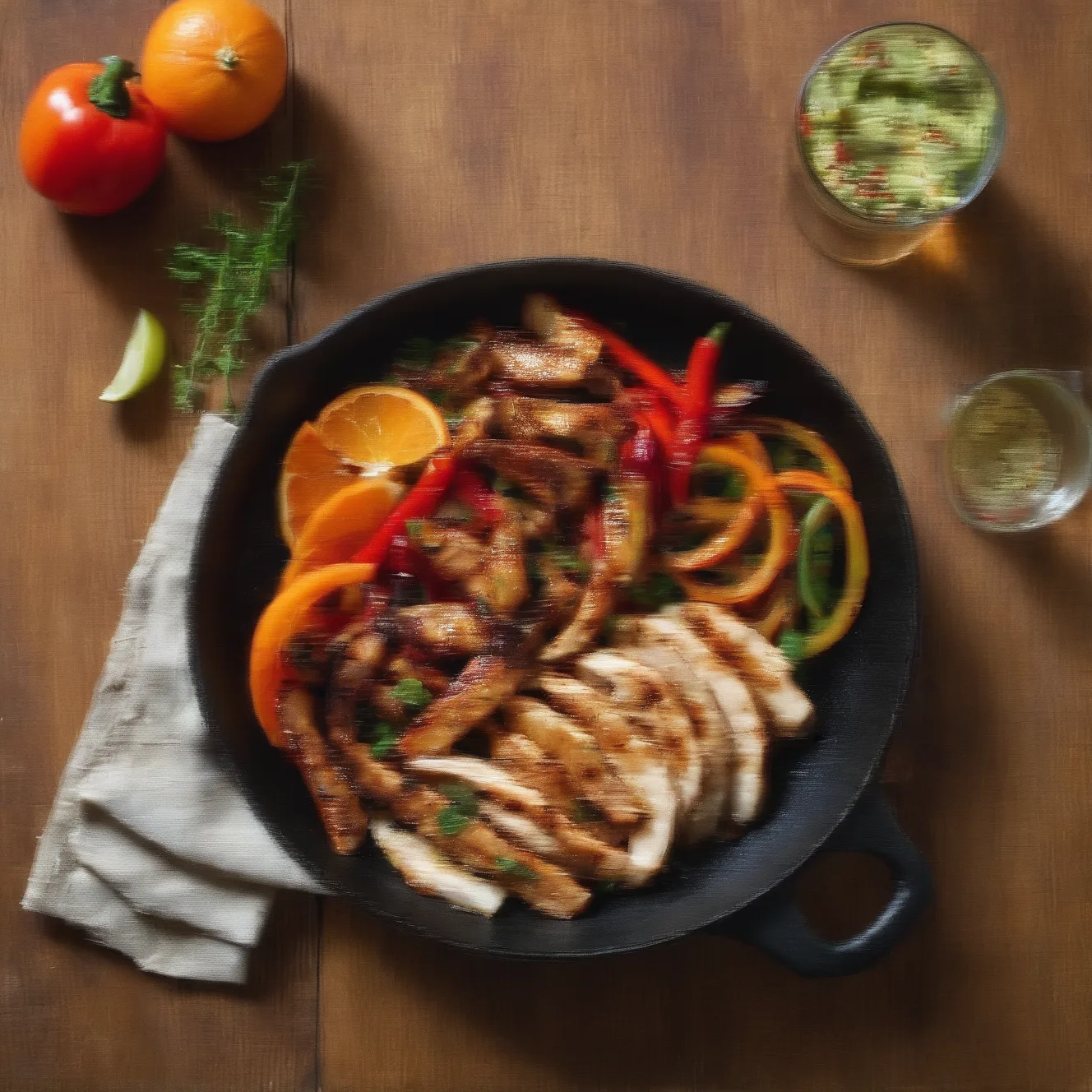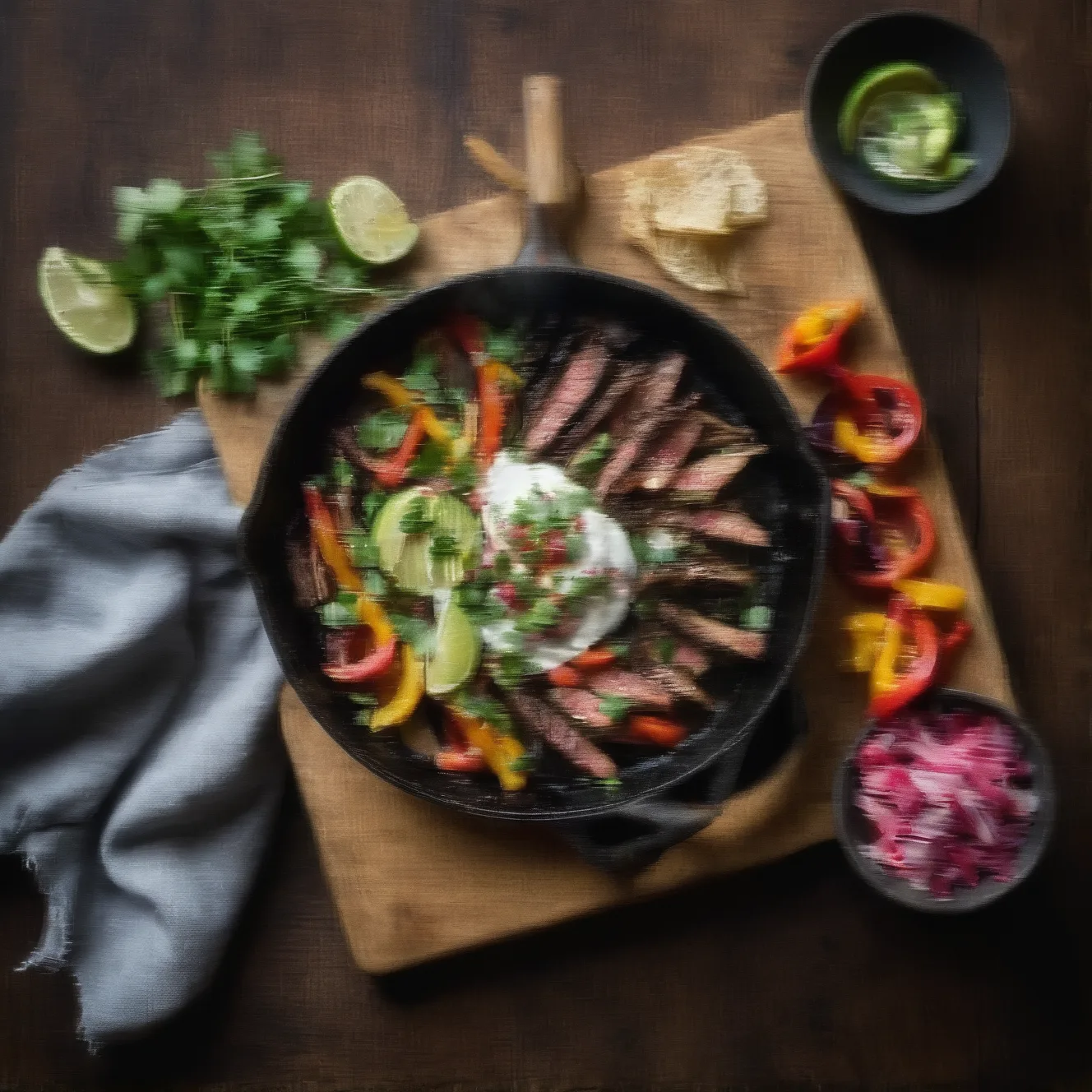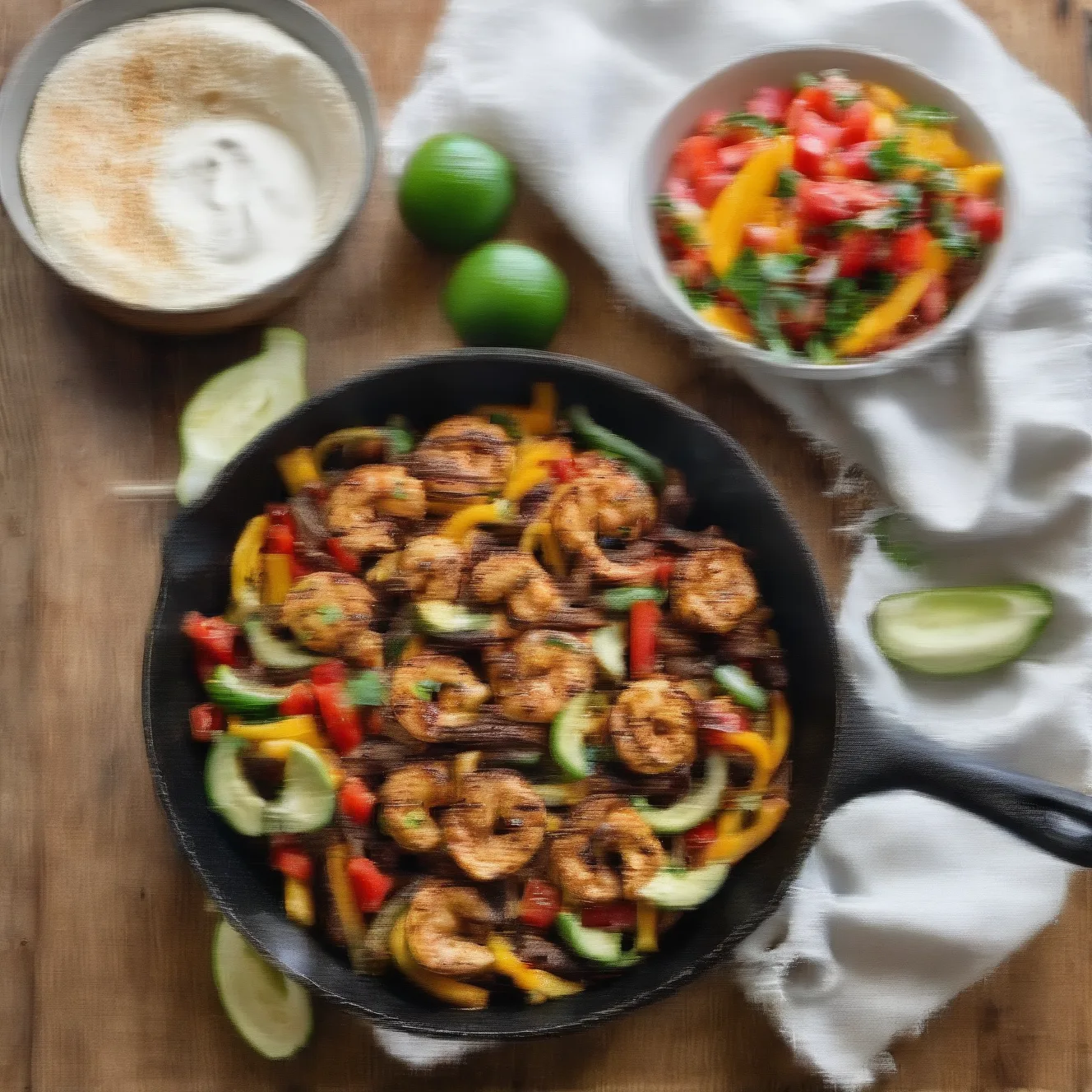
Copycat Chili’s Shrimp Fajitas
Shrimp fajitas complete the Chili’s fajita menu. The chicken version gets its character from an overnight marinade and a patient sear; the steak version from the grain-direction cut and a carefully timed medium-rare pull. The shrimp version operates on neither of those rules. It lives and dies in 4 minutes on a hot pan, and the entire recipe collapses if you leave the shrimp in the marinade too long or off heat too late.
Chili’s uses large shrimp (21–25 count) in a garlic-citrus fajita marinade lighter on cumin than their steak version and heavier on garlic and lime. The vegetables, finishing sauce, and sizzle platter setup are identical across all three. The only things that change are the protein, the marinade time, and the timing on the pan.
TL;DR
Large shrimp (21–25 count), marinated 20–30 minutes only in garlic-lime-soy-Worcestershire. Screaming-hot cast-iron, 90 seconds per side, pull at C-shape (not O). Char peppers and onions separately. Finish vegetables in a soy-lime reduction. Serve on a preheated sizzle plate with flour tortillas, pico de gallo, sour cream, cheddar, and guacamole. Shrimp + vegetables: approximately 320 calories per Chili’s nutrition data — the lightest fajita on the menu. Chili’s serves the full plate with warm flour tortillas, Mexican rice, and black beans (full plate roughly 850–1,000 calories).
The One Rule That Makes or Breaks Shrimp Fajitas
Marinade time: 20–30 minutes, not overnight.
This is opposite to the advice for chicken or steak fajitas, where more marinade time generally means more flavor. Shrimp proteins denature on contact with acid — the lime juice and vinegar that give the marinade its brightness also begin breaking down the shrimp surface immediately. Within 30 minutes the flavor is penetrated. After 45 minutes, the exterior becomes chalky. Beyond an hour, the shrimp effectively begins to cure (the same process as ceviche, which fully cooks raw shrimp chemically over several hours in citrus juice).
Set a timer. Twenty to thirty minutes is not a range to eyeball.
If you need to prep ahead: mix the dry spices with the oil and Worcestershire, coat the shrimp, and refrigerate. Add the lime juice and vinegar only in the final 20 minutes before you plan to cook. This captures the flavor contribution of the acid without the texture risk of extended exposure.
Shrimp Size: Why 21–25 Count
The number is the count per pound. Lower numbers mean larger shrimp.
21–25 count (“large”) hits the right balance for fajita cooking:
- Big enough to pick up meaningful char color on the cast-iron before the center overcooks
- Small enough to have sufficient surface area relative to mass, so the marinade reaches the interior quickly
- Consistent in size, which means they all finish at the same moment on the pan
Smaller shrimp (31–40 count, “medium”) overcook before they develop any color — they’re done before the Maillard reaction can get started. Larger 16–20 count (“extra-large” or “jumbo”) take long enough to cook through that the outside toughens. If 21–25 count is unavailable, 26–30 count works with the sear time reduced by about 30 seconds per side.
The C-Shape Rule
Shrimp gives you a clear visual when it’s done: it curls into a C-shape as the proteins tighten from heat. The progression is:
- Straight or barely curved: raw
- C-shape, opaque throughout: done — pull now
- O-shape (tightly coiled): overcooked, rubbery
The difference between C and O on a screaming-hot cast-iron is approximately 30 seconds. Shrimp also carries over — it continues to cook for about 60 seconds after leaving the heat. If you wait for a perfect O before pulling, you’ve already passed it.
Pull at C. The residual heat finishes it.
How Shrimp Fajitas Differ from Chicken and Steak
The marinade framework is shared across all three Chili’s fajitas — lime juice, soy sauce, Worcestershire, oil, and a spice blend — but the balance shifts for shrimp. Cumin drops from a leading role (where it is essential for beef) to a supporting one; garlic and lime move to the front. Shrimp has a natural briny sweetness that pairs better with bright citrus and sharp aromatics than with the earthy smokiness of heavy cumin. Liquid smoke, which appears in good chicken fajita marinades to replicate flat-top depth, is skipped entirely — shrimp’s flavor is delicate enough that it gets overwhelmed rather than complemented.
The technique differences are as important as the seasoning:
| Chicken | Steak | Shrimp | |
|---|---|---|---|
| Marinade time | 30 min–overnight | 1–4 hours | 20–30 min max |
| Cook time (protein only) | 15–20 min | 8–10 min | 3–4 min total |
| Pull cue | 165°F internal | 130–135°F internal | C-shape + opaque |
| Main technique risk | Drying out | Cutting with the grain | Overcooking |
| Calories (protein + veg, no tortillas) | ~440–470 | ~670 | ~320 |
Shrimp is the most time-sensitive protein and the most forgiving in terms of skills required. There is no grain to slice against, no internal temperature nuance, and no 4-hour window to manage. The only thing you need to watch is the clock.
The Vegetable Setup
The peppers, onions, and finishing sauce are identical across all three Chili’s fajita recipes. Cook the vegetables first (they take longer and can rest), then cook the shrimp in the same pan. This also means the shrimp picks up residual flavor from the vegetable char left on the pan surface.
For full detail on the vegetable char technique and why the finishing sauce matters, see the Chili’s Chicken Fajitas recipe. The short version: cook on the highest heat your burner produces, let the vegetables sit undisturbed for 60–90 seconds at a time, finish with a soy-lime reduction that glazes them. Crowded, stirred vegetables steam and taste flat.
Cost: Restaurant vs. Home
| Chili’s (full plate, 1 person) | Home (4-serving batch) | |
|---|---|---|
| Price | ~$15–17 | $18–26 total |
| Per serving | $16–20 | $5–7 |
| Shrimp | 21–25 count restaurant-grade | 21–25 count grocery (1.5 lbs, ~$10–14) |
| Tortillas | Included | 8-pack flour tortillas: ~$3 |
| Total with tip | $21–28 | $18–26 for four people |
Raw shrimp has a shorter shelf window than chicken or beef — cook within 1–2 days of purchase, or buy frozen and defrost under cold running water immediately before use.
The Full Chili’s Fajita Series
- Copycat Chili’s Chicken Fajitas — the soy-lime-Worcestershire marinade with liquid smoke; same vegetable technique; covers the full sizzle platter setup
- Copycat Chili’s Steak Fajitas — skirt steak, grain-direction slicing, cumin-forward marinade, medium-rare pull temperature
- Copycat Chili’s Queso — the classic dip that pairs with every fajita plate
- Copycat Chili’s Southwest Eggrolls — the most popular Chili’s starter for fajita nights
- Copycat Chili’s Molten Lava Cake — the dessert that closes Chili’s meals