


Pin It

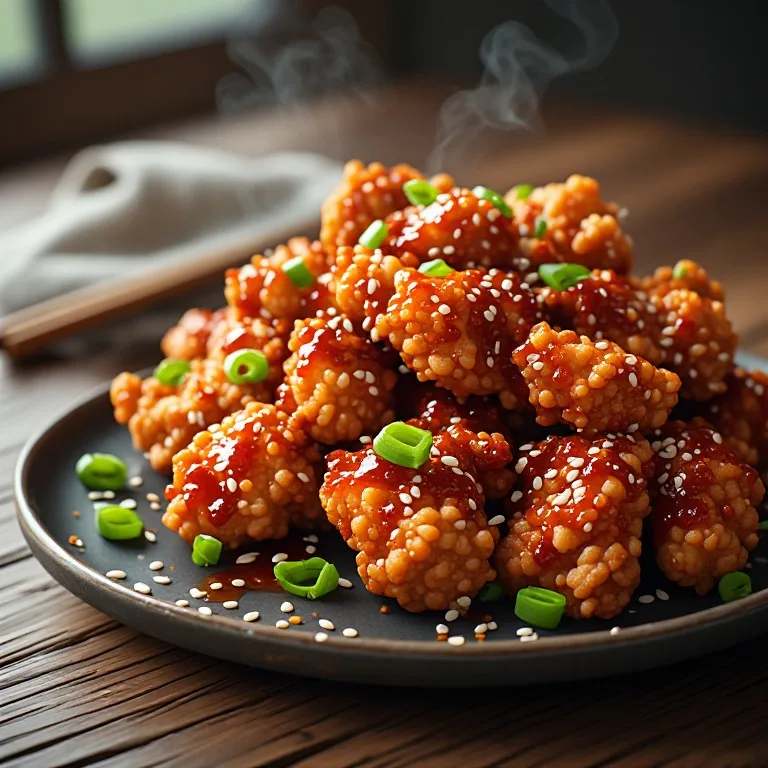
Coqodaq Korean Fried Chicken Nuggets (Rice Flour Double-Fry with Sweet Gochujang Glaze)

Coqodaq Korean Fried Chicken Nuggets (Rice Flour Double-Fry with Sweet Gochujang Glaze)
Jump to Recipe
Prep 30 min active (+ 8–24 hr brine) Cook 30 min Serves 4
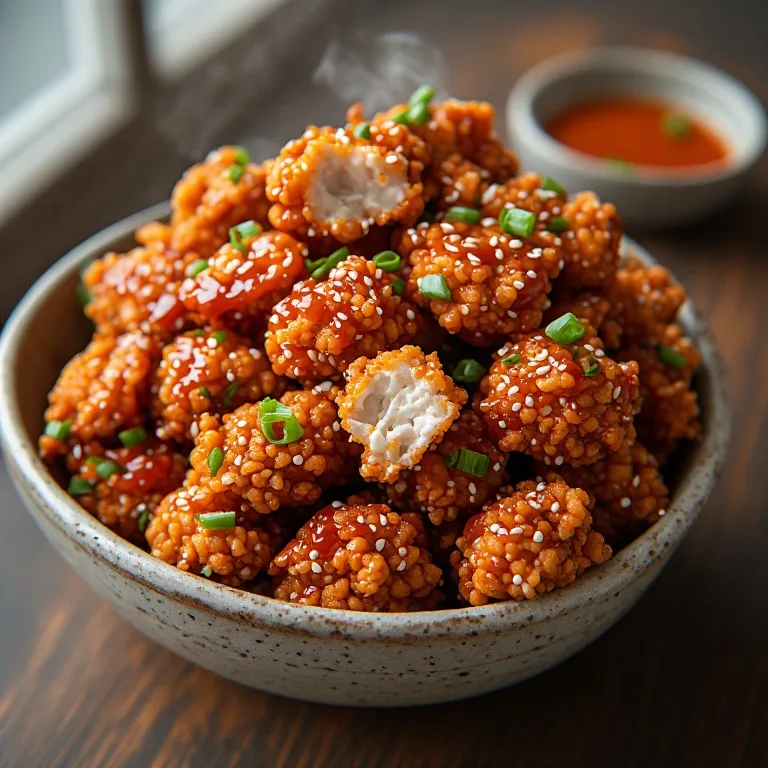
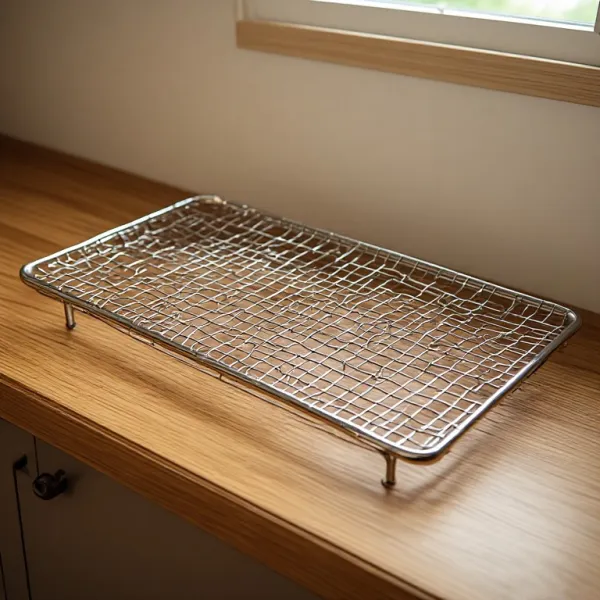
Quick answer: Brine 1.5 lbs boneless chicken thighs or breasts (cut into 2-to-3-inch pieces) in 2 cups cold water + 2 tbsp soy sauce + 1 tbsp kosher salt + 1 tsp gochugaru + 3 crushed garlic cloves + 3 slices fresh ginger — cover and refrigerate 8 to 24 hours. The brine seasons the meat from the inside out and pulls moisture into the muscle fibers so the chicken stays juicy through two rounds of frying. When ready to cook, drain and pat very dry (surface moisture blows gaps in the coating). Make the dredge: whisk 1 cup rice flour + 1/4 cup cornstarch + 1 tsp kosher salt + 1/2 tsp white pepper + 1/2 tsp garlic powder + 1 tsp baking powder in a wide bowl. Dredge each piece firmly — press the flour into all surfaces — then set on a wire rack and rest 8 to 10 minutes so the surface moisture migrates out and partially hydrates the coating, creating the thin crackly shell that is the hallmark of Korean fried chicken. Heat 2 to 3 inches of avocado oil (Coqodaq uses Zero Acre cultured sugarcane oil; avocado oil is the best home substitute at its 520°F smoke point) to 325°F in a heavy Dutch oven. Fry in small batches of 4 to 5 pieces — never crowd — for 6 to 7 minutes until pale golden and the internal temperature reads 165°F. Transfer to a wire rack and rest 5 minutes; the trapped steam escapes and the coating firms up. Raise the oil to 375°F and fry the same pieces a second time for 2 to 3 minutes until deeply golden with a hard, crackling shell. The second fry drives off the last of the interior moisture and sets the coating to a glass-like texture that stays crisp even under sauce. While the chicken fries, make the sweet gochujang glaze: whisk 3 tbsp gochujang + 2 tbsp soy sauce + 2 tbsp honey + 1 tbsp rice vinegar + 2 tsp brown sugar + 3 cloves garlic (grated) + 1 tsp sesame oil + 1 tbsp unsalted butter in a small saucepan over medium heat for 2 minutes until the butter melts and the sugar dissolves. Remove from heat. Toss the hot chicken in the warm sauce immediately after the second fry — or serve sauce on the side to preserve maximum crunch. Serve with chikin-mu (cubed Korean pickled daikon radish, sold at Korean grocery stores or easily made at home) and cold sesame-dressed noodles. Feeds 4 as an appetizer, 2 to 3 as a main.

Coqodaq Korean Fried Chicken Nuggets (Rice Flour Double-Fry with Sweet Gochujang Glaze)

Coqodaq in Manhattan's Flatiron District is Simon Kim's Michelin Bib Gourmand Korean fried chicken restaurant — opened 2024, instantly one of the city's hardest reservations. Their technique: a 24-hour brine, a gluten-free rice flour coating, and a double-fry in high-smoke-point oil for a shattering crust. This is the full method plus the sweet gochujang glaze that makes their chicken famous.

Medium Prep: 30 min active (+ 8–24 hr brine) Cook: 30 min Total: 25h 0m4 servings ~$4.50/serving
Prep30 min active (+ 8–24 hr brine)
Cook30 min
Total25h 0m
Servings
4
At home~$4.50/serving
vs
Restaurant~$20.25/serving
You save ~78%

The Story Behind the Recipe

Coqodaq opened in January 2024 in Manhattan's Flatiron District, brought to life by Simon Kim, the restaurateur behind Cote Korean Steakhouse (the world's first Michelin-starred Korean BBQ). The name is onomatopoeia — 꼬꼬댁 is the Korean phonetic spelling of a rooster's crow. Kim had spent years watching New York's food culture embrace Korean BBQ at the high end, and he believed Korean fried chicken — chimaek, the word combining fried chicken (치킨, chikin) with beer (맥주, maekju) — deserved the same treatment. He hired executive chef Seung Kyu Kim and opened a 100-seat restaurant dedicated entirely to the art of the double-fry. The Michelin Bib Gourmand recognition came quickly, as did the booking waitlists. Reservations in the first few months ran weeks out. The "Bucket List" prix fixe at $38 per person — consommé, two fried chicken preparations, pickled vegetables, cold perilla seed noodles, frozen yogurt — has been one of the best-value set menus in the city since the restaurant opened.

The three techniques that separate Coqodaq's chicken from every Korean fried chicken chain and most American fried chicken: a 24-hour proprietary brine that seasons the meat from the inside out; a gluten-free rice flour coating that creates a thinner, crispier, more shatter-resistant crust than wheat flour or potato starch; and the use of Zero Acre Farms cultured sugarcane oil, which has a smoke point near 485°F and produces no off-flavors even through repeated high-temperature frying. At home, avocado oil is the closest practical substitute. The sweet gochujang glaze — fermented Korean chili paste with honey, soy, garlic, rice vinegar, and a small knob of butter — follows the classic yangnyeom structure but is applied at precisely the right moment: tossed into the hot chicken immediately after the second fry, so the sauce flash-sets into a lacquer-like glaze rather than soaking into the crust. A restaurant dinner runs $50 to $100 per person with drinks. This recipe feeds four for about $18 total.

Nutrition Facts

Per serving (4 servings)
Calories420
Total Fat18g
Total Carbs28g
Dietary Fiber1g
Sugars10g
Protein32g
Sodium820mg

* Estimated values based on standard recipe preparation. Actual values may vary.

Ingredients

  • For the brine
  • For the chicken
  • For the rice flour dredge
  • For frying
  • For the sweet gochujang glaze
  • For the soy garlic sauce (alternative or addition)
  • For serving

Instructions

💡
Pro tip: This recipe tastes even better the next day. The flavors need time to meld together in the fridge.
❄️
Storage: Keeps in an airtight container in the fridge for up to 2 weeks. Freezer-friendly for up to 3 months.
🎃 Free Halloween cookbook — download now The Copycat Halloween Cookbook A ready-made, photo-illustrated PDF of our best halloween copycat recipes — free to download, no building required. Pay what you want to support if you love it.

Free PDF — instant download. We'll also send new seasonal copycat recipes now and then; unsubscribe anytime. Or just download it →

Coqodaq Korean Fried Chicken Nuggets (Rice Flour Double-Fry with Sweet Gochujang Glaze)

Prep time: 30 min active (+ 8–24 hr brine) Cook time: 30 min Servings: 4

Coqodaq in the Flatiron District opened in January 2024 and became one of Manhattan’s hardest reservations within months. Simon Kim — the restaurateur behind Cote Korean Steakhouse, the world’s first Michelin-starred Korean BBQ — dedicated this 100-seat restaurant entirely to Korean fried chicken. The name is 꼬꼬댁, the Korean phonetic rendering of a rooster’s crow. The restaurant holds a Michelin Bib Gourmand. The “Bucket List” set menu costs $38 per person.

The chicken itself has three distinguishing techniques: a 24-hour brine that seasons the meat all the way through, an exclusively rice flour coating that produces a thinner and more shatteringly crisp crust than wheat flour, and a double-fry — first at 325°F to cook the chicken through, then at 375°F after a 5-minute rest to set the coating to glass. At the restaurant, they fry in Zero Acre Farms cultured sugarcane oil, which has a very high smoke point and a clean neutral flavor. At home, avocado oil is the closest substitute. The signature sweet gochujang glaze is tossed onto the chicken immediately after the second fry, while the chicken is at its hottest, so the sauce flash-sets into a lacquer rather than soaking into the crust. A dinner at Coqodaq runs $50 to $100 per person with drinks. This recipe feeds four for about $18.

The Two Techniques Worth Understanding

Why rice flour instead of all-purpose flour

Rice flour is almost pure starch with minimal gluten. It absorbs less moisture than wheat flour during frying, which means the coating stays drier as it cooks and produces a thinner, more uniform shell. The result is audible: a properly done rice flour crust shatters when you bite through it rather than tearing. Wheat flour produces a thicker, chewier, more bready coating. At Coqodaq, the rice flour also makes the chicken naturally gluten-free — a practical menu benefit and a defining texture choice.

The baking powder in the dredge serves a secondary function: it produces a small amount of carbon dioxide when it contacts the moisture on the chicken surface, which creates micro-bubbles in the coating as it fries. Those bubbles set and expand the coating slightly, giving it a slightly more open, crackly texture than plain rice flour alone.

Why the double-fry works

In the first fry at 325°F, heat drives the raw moisture out of the chicken meat through the coating. Some of this steam escapes through the outer crust; some gets trapped just inside the surface, leaving the coating slightly soft and steamed from the inside. During the 5-minute rest, that trapped steam distributes evenly and the coating stabilizes. In the second fry at 375°F — now only 2 to 3 minutes — the remaining trapped moisture vaporizes rapidly. The coating contracts, crisps, and sets to a hard, crackling structure. The high temperature also produces significantly more Maillard browning in those 2 minutes than the gentler first fry produced in 7 minutes. Skip the rest period between fries and the second fry just overheats chicken that is already done without producing the texture improvement — the steam hasn’t had time to redistribute.

Cost Comparison: Coqodaq vs. At Home
Coqodaq (set menu)Homemade (4 servings)
Bucket List prix fixe$38/person—
Dinner with drinks$50–100/person—
Full batch (4 servings)$200–400 (group of 4)~$18
Per serving$50–100~$4.50

The luxury upgrades — a caviar-topped nugget around $28, Champagne pairings — are genuinely fun if you can get a reservation. This version focuses on the fried chicken itself and the core technique.

The Sweet Gochujang Glaze: What’s In It

The gochujang sauce served at Coqodaq is a yangnyeom-style glaze — the classic Korean fried chicken sauce format — built around fermented chili paste. The underlying structure used by almost every serious Korean fried chicken restaurant:

  • Gochujang (base flavor: fermented heat, umami, sweet depth)
  • Soy sauce (salt, umami)
  • Honey or rice syrup (sweetness, gloss)
  • Rice vinegar (acid balance)
  • Brown sugar (deeper sweetness, Maillard browning when it hits the hot chicken)
  • Fresh garlic (aromatic punch)
  • Sesame oil (nuttiness, finish)
  • Butter (restaurant-style gloss and richness)

The butter is the professional kitchen addition — it gives the sauce a slightly glossy finish that sets on the hot chicken surface. Without it, the sauce is still good but looks and feels slightly thinner on the finished chicken.

Soy Garlic Sauce: The Non-Spicy Version

The soy garlic preparation is Coqodaq’s other signature — the option for diners who want deeply savory without the gochujang heat. It is sweeter and stickier than the gochujang version, with garlic as the dominant note.

Make it the same way: combine 3 tbsp soy sauce + 2 tbsp honey + 1 tbsp brown sugar + 4 large garlic cloves (grated) + 1 tsp sesame oil + 1 tsp oyster sauce in a saucepan over medium heat, whisk 2 minutes, add 1/2 tsp cornstarch dissolved in 1 tsp water, whisk 1 more minute until lightly glossy. Apply immediately after the second fry, same as the gochujang version.

Both sauces work on the same batch of chicken — if serving a group, make both, split the batch, and let people choose.

The Chikin-Mu (Korean Pickled Daikon): Why It Matters

Every Korean fried chicken restaurant serves chikin-mu alongside — small cubes of daikon radish pickled in a sweet, mild vinegar brine. The purpose is textural and functional: the cool, acidic, crunchy radish cuts through the richness of the fried chicken fat and resets the palate between pieces. It is not garnish; it is part of the dish.

Pre-made chikin-mu is sold in refrigerated bags at H Mart and Korean grocery stores (look for the yellow cubes). To make at home in 1 hour: cut 1/2 lb daikon radish into 3/4-inch cubes. Combine 1/2 cup rice vinegar + 1/2 cup water + 3 tbsp sugar + 1 tsp salt in a small saucepan over medium heat, whisk until sugar and salt dissolve, remove from heat, cool 10 minutes. Pour over the radish cubes in a container, cover, and refrigerate at least 1 hour (up to 2 weeks). The color is natural from the radish; some batches dye a light yellow over time.

Coqodaq’s Cold Perilla Seed Noodles (Simplified)

The other distinctive element of the Bucket List set menu is cold perilla seed noodles — chilled noodles in a savory, nutty dressing made from ground toasted perilla seeds (들깨, deulkkae). Perilla seeds are a Korean pantry staple sold at Korean grocery stores and online; toasted sesame seeds are an acceptable substitute if unavailable (different but good).

To make the simplified version: cook 6 oz soba noodles or rice noodles to package directions. Drain and rinse under cold water until fully chilled. Dress with 2 tbsp ground toasted perilla seeds (or sesame seeds, finely ground in a spice grinder) + 1.5 tbsp soy sauce + 1 tbsp sesame oil + 1 tsp rice vinegar + 1 tsp honey + 1 tsp gochugaru (optional for heat) + 1 garlic clove (grated). Toss to coat. Serve cold alongside the fried chicken.

Tips and Variations
  • Use a mix of cuts for a more restaurant-accurate presentation. Coqodaq serves drumsticks, wings, and boneless pieces simultaneously. For a group, split 1.5 lbs chicken into a combination of bone-in wings (halved at the joint) and boneless thigh pieces. The frying times differ slightly: bone-in pieces need 8 to 9 minutes on the first fry, 3 minutes on the second; boneless pieces need 6 to 7 minutes then 2 to 3.
  • The rest period between fries is non-negotiable. Five minutes on a wire rack (not paper towels, which trap steam) is the minimum. Rushing the second fry before steam has escaped produces a puffed, soft crust that deflates and turns limp within minutes.
  • Cold oil kills the coating. If your oil temperature drops below 300°F between batches, let it fully recover to the target temperature before adding the next batch. Frying in sub-temperature oil produces a pale, greasy coating that never fully crisps in the second fry.
  • Make the sauces before the chicken hits the oil. Both the gochujang and soy garlic sauces can be made hours ahead and reheated briefly just before service. The chicken waits for no one — it should go directly from the second fry into the sauce bowl, then immediately to the table.
  • Drink pairing matters more than you’d think. Simon Kim specifically recommends Champagne or other dry sparkling wine alongside Korean fried chicken rather than the traditional beer: the aggressive carbonation and acidity of good sparkling wine cuts through rendered chicken fat in a way still beer cannot. If you do beer, a pilsner or light lager (Korean Hite or Cass) is correct; avoid heavy hoppy beers that fight with the gochujang.
Storage

Fried chicken is a same-session dish — the crust softens significantly within 1 hour at room temperature and cannot be fully revived. Leftovers reheat best in an air fryer at 375°F for 4 minutes per side or in a 400°F oven on a wire rack for 8 to 10 minutes. A microwave produces steam and destroys the crust completely. The sauces keep refrigerated for 1 week.

More from Simon Kim’s Restaurant Universe
🥗

Make It Healthier

Love Coqodaq Korean Fried Chicken Nuggets (Rice Flour Double-Fry with Sweet Gochujang Glaze) but want a lighter version? Try these simple swaps:

  • ✓Air-fry instead of deep-frying: after the brine and dredge, spray all surfaces generously with avocado oil spray, air-fry at 380°F for 10 minutes, flip and spray again, then finish at 400°F for 4 to 5 minutes — about 80% as crispy at roughly half the fat per serving.
  • ✓Use chicken breast instead of thighs for roughly 60 fewer calories and 8g less fat per serving; the 24-hour brine is especially important for breast meat, which loses moisture faster through double-frying.
  • ✓Serve the gochujang sauce on the side for dipping instead of tossing the chicken in it — eating half the sauce per piece saves about 80 calories and 15g sugar while keeping the crust crispier.
  • ✓Reduce the honey in the glaze to 1 tablespoon and add 1 tablespoon of water to maintain the right consistency — saves about 45 calories per serving without changing the sauce flavor significantly.

Frequently Asked Questions

What is Coqodaq and why is it famous?

Coqodaq is a Korean fried chicken restaurant in Manhattan's Flatiron District, opened in January 2024 by restaurateur Simon Kim, who also owns Cote Korean Steakhouse (the world's first Michelin-starred Korean BBQ). The name is onomatopoeia — 꼬꼬댁 is the Korean phonetic rendering of a rooster's crow. The concept draws on chimaek culture: the Korean tradition of eating fried chicken alongside cold beer or soju, which Kim elevated to fine-dining precision. The restaurant earned Michelin Bib Gourmand recognition (awarded for excellent food at moderate prices) and became one of the Flatiron's hardest reservations within months of opening. Their 'Bucket List' set menu at $38 per person runs from chicken consommé with red ginseng through two preparations of fried chicken, house pickles, cold perilla seed noodles, and frozen yogurt. A luxury option — a single chicken nugget with ocean trout roe — can run $16 per piece. The signatures are the rice flour double-fry technique, the 24-hour proprietary brine, and three sauce options: Original (seasoned salt), Soy Garlic, and Sweet Gochujang.

What makes rice flour different from all-purpose flour or potato starch for fried chicken?

Rice flour creates a distinctly different texture than wheat flour or potato starch, and the difference is audible: a good rice flour crust cracks and shatters when you bite through it rather than flexing and tearing. Rice flour is almost pure starch (very low gluten content) and it absorbs less moisture than wheat flour, which means the coating stays drier during frying and browns faster — producing a thinner, crispier, less bready shell. Wheat flour creates a thicker coating that is chewier and more bread-like; it also absorbs oil more readily. Potato starch produces a very thin, glass-like crust similar to rice flour (many Korean fried chicken recipes use potato starch or a blend), but rice flour browns slightly differently — it produces a finer, more uniform texture with a paler gold color that turns deep golden in the second fry. Coqodaq's exclusive use of rice flour also makes their chicken naturally gluten-free, which has become a selling point and part of their marketing. For the home version, use 100% rice flour with a small amount of cornstarch added — the cornstarch contributes additional binding and helps the coating cling to the chicken through the first fry without flaking off into the oil.

Why brine the chicken for 24 hours? Is it necessary?

Coqodaq's 24-hour brine is one of the two techniques that most distinguish their chicken from generic Korean fried chicken chains. A brine (salt + aromatics dissolved in water) works by osmosis: salt draws moisture out of the surface of the chicken, then as it dissolves and the salt concentration equilibrates, the liquid reabsorbs into the meat — carrying garlic, ginger, soy sauce, and spice flavor deep into the muscle fibers rather than just coating the surface. Brining also changes the protein structure slightly: the salt partially denatures the muscle proteins, which holds onto water better during cooking. The practical result is chicken that stays noticeably juicier through the high heat of two frying cycles than unbrined chicken, which loses more moisture to steam and can turn dry by the second fry. An 8-hour brine produces most of the flavor benefit; 24 hours gets full penetration and the juiciest result. If you are cooking today without time to brine, substitute by dry-brining: toss the chicken pieces with 1.5 tsp kosher salt and the aromatics and refrigerate uncovered for 1 to 2 hours — the moisture stays in the chicken and the surface dries, which also helps the coating adhere. Full brine is better; dry-brine is acceptable in a time crunch.

What does the double-fry do, and what goes wrong if I skip the second fry?

The double-fry is not a quirk — it's the reason Korean fried chicken has a categorically different texture from single-fried chicken, and skipping the second fry produces a disappointing result. In the first fry (325°F, 6 to 7 minutes), the heat drives the raw moisture out of the chicken meat through the coating — the steam moves from the inside out. This moisture passes through the rice flour coating and partially escapes, but some gets trapped just inside the outer crust, creating a thin layer of slightly steamed, less-than-crispy coating on the exterior. The chicken is cooked through, but the crust is soft and fragile. In the resting period between fries (5 minutes on a wire rack), the residual steam in the crust distributes evenly and the coating stabilizes slightly. In the second fry (375°F, 2 to 3 minutes), the now-sealed but slightly soft crust goes back into very hot oil and the last of that trapped moisture is driven out rapidly — the coating contracts, crisps, and sets to a hard, crackly shell. The high temperature of the second fry also produces significantly more Maillard browning in 2 minutes than the first fry produced in 7. The result: deep golden color, a crust that shatters instead of flexes, and a structure that holds its crispness under sauce. A single-fried Korean chicken piece at the same internal doneness will have a softer, paler crust that goes limp quickly and doesn't hold up under a glaze.

What is gochujang and where can I find it?

Gochujang (고추장) is a Korean fermented chili paste — thick, deep red, made from gochu (Korean chili peppers), glutinous rice, fermented soybeans, and salt. It has been fermented and aged, which gives it a depth and complexity no fresh chili paste or simple hot sauce replicates: umami from the fermentation, a low-level heat that builds gradually rather than hitting immediately, and a natural sweetness from the glutinous rice. For this recipe, gochujang provides the backbone of the sauce — it is not just heat, it is the base flavor. The most widely available brands in the US are Haechandle, CJ, and O'Food; all are sold at H Mart, 99 Ranch Market, Whole Foods (in the international aisle), and most Asian grocery stores. Korean grocery stores also carry the premium Sunchang brand (from the region historically most famous for gochujang production) if you want to replicate closer to restaurant quality. The paste keeps refrigerated for 6 to 12 months after opening. Do not substitute with Sriracha, sambal oelek, or harissa — they are entirely different flavor profiles. If gochujang is unavailable, the closest approximation is 2 parts red miso + 1 part Korean red pepper flakes (gochugaru) + 1 part honey, but the depth will be noticeably different.

What is Coqodaq's 'Bucket List' menu and how much does it cost?

The Bucket List is Coqodaq's signature prix fixe experience, priced at $38 per person. It is named for the idea that eating perfect fried chicken should be on everyone's list. The sequence at the time of the restaurant's opening: chicken consommé with red ginseng (a light, clarified broth that primes the palate), two preparations of fried chicken (typically one Original and one glazed, served with the house dipping sauces), house-made pickled vegetables (chikin-mu, the traditional Korean pickled daikon), cold perilla seed noodles (a chilled noodle dish dressed in ground toasted perilla seeds and a light soy dressing — a distinctive Coqodaq signature), and soft-serve frozen yogurt to finish. Champagne pairings are offered and encouraged — Simon Kim's theory is that dry sparkling wine cuts through fried chicken fat better than beer. For those who want to go beyond the set menu, individual luxury add-ons include a single caviar-topped fried chicken nugget that runs around $28. At home, this recipe produces roughly the equivalent of the fried chicken and sauces portion of the set menu. The cold perilla seed noodles recipe is included in the Tips section below.

How do I keep the crust crispy after I add the gochujang sauce?

Speed and temperature are everything here. The gochujang sauce will gradually soften the rice flour crust — this is unavoidable once moisture contacts the coating. The professional kitchen solution, which you can replicate at home: toss the chicken in warm (not cold) sauce immediately after pulling it from the second fry while the chicken is still at its hottest. Hot chicken in warm sauce means the liquid in the sauce flash-evaporates off the surface rather than soaking in, and the glaze sets almost like a lacquer over the crust. If the sauce is cold or room temperature when it meets hot chicken, the temperature contrast causes condensation on the crust surface, which starts softening the coating immediately. Second: don't overcoat. Use just enough sauce to lightly glaze each piece — 1 to 1.5 teaspoons per nugget — rather than drowning them. Third option: serve the sauce on the side as a dip, which is the traditional Korean fried chicken presentation (chimaek restaurants in Korea typically serve sauces in a separate bowl rather than coating the pieces). This keeps the crust at peak crunch for 15 to 20 minutes. Pre-sauced chicken will soften noticeably after 10 minutes at room temperature — plan to serve immediately.

Can I air-fry instead of deep-frying?

Yes, and the result is surprisingly good — about 80% as crispy as the deep-fried version with roughly half the oil content. After the brine and dredge, spray the coated chicken pieces thoroughly with avocado oil spray or brush lightly with neutral oil — the coating needs oil contact to brown, and without it the rice flour stays pale and powdery. Air-fry at 380°F for 10 minutes, flip each piece, spray or brush again with oil, and continue at 400°F for an additional 4 to 5 minutes until deep golden. You can replicate the double-fry logic in an air fryer: first run at 380°F for 10 minutes, rest 3 minutes, then second run at 400°F for 4 to 5 minutes. This produces a notably crispier crust than a single air-fry pass. The air fryer cannot replicate the exact texture of oil-submerged frying — the crust is crisper on the exposed faces and slightly drier overall — but for an everyday weeknight preparation it is a very good result. Do not use parchment in the basket; the direct perforated basket contact produces better browning.

What is the soy garlic preparation and how is it different from the gochujang version?

Coqodaq's soy garlic is one of the three offered sauces and is the non-spicy option — milder, deeply savory, and more immediately accessible to diners who are new to gochujang heat. The structure: soy sauce + honey or rice syrup for sweetness + brown sugar for body + lots of garlic (raw and cooked) + a small amount of sesame oil + oyster sauce or fish sauce (for umami depth) + sometimes a small amount of cornstarch dissolved in water to give it gloss and body. The sauce is slightly sweeter and stickier than the gochujang version, with garlic as the dominant flavor rather than fermented chili. To make at home: combine 3 tbsp soy sauce + 2 tbsp honey + 1 tbsp brown sugar + 4 large garlic cloves (grated on a Microplane) + 1 tsp sesame oil + 1 tsp oyster sauce in a small saucepan over medium heat, whisk 2 minutes until sugar dissolves, add 1/2 tsp cornstarch dissolved in 1 tsp water, whisk 1 more minute until lightly glossy. Toss the hot chicken in the warm sauce the same way as the gochujang version. The two sauces are genuinely different dishes — worth trying side by side if you are serving a group.

Love this recipe? Share it!

Free PDF: our 12 most-wanted copycat recipes — instant download.

Made it? Buy us a coffee

Every recipe here is free, with no paywalls. If this one was a hit at your table, a small tip keeps new copycats coming.

$

Coqodaq is a trademark of its owner, used here only to describe the dish this recipe recreates. This is an independent copycat written in our own words — Copycat Spices is not affiliated with, endorsed by or sponsored by Coqodaq.

Ratings & Reviews

—
No ratings yet

Rate this recipe

Click a star to rate

Leave a Review

0/500

CS

Copycat Spices Editorial

Researched + fact-checked. Every recipe on Copycat Spices is built from published sources — official ingredient lists, brand-published recipes, interviews and food-science references — and fact-checked before it goes live, then written as clear, step-by-step instructions for home cooks of all skill levels.

Learn more about our mission →