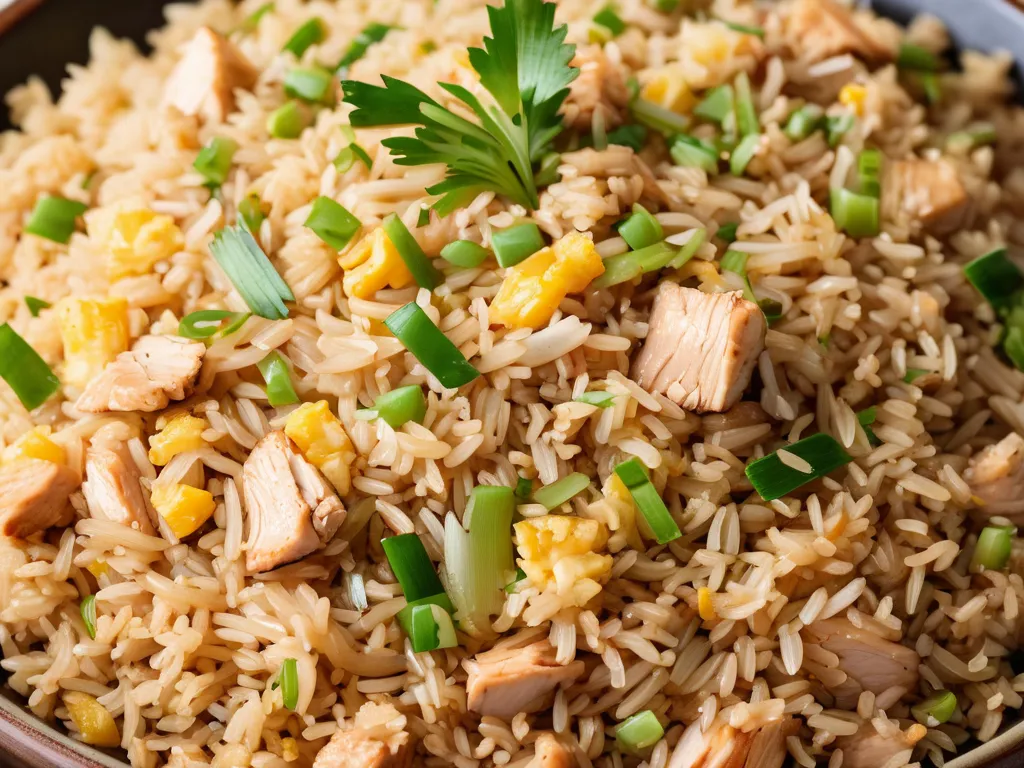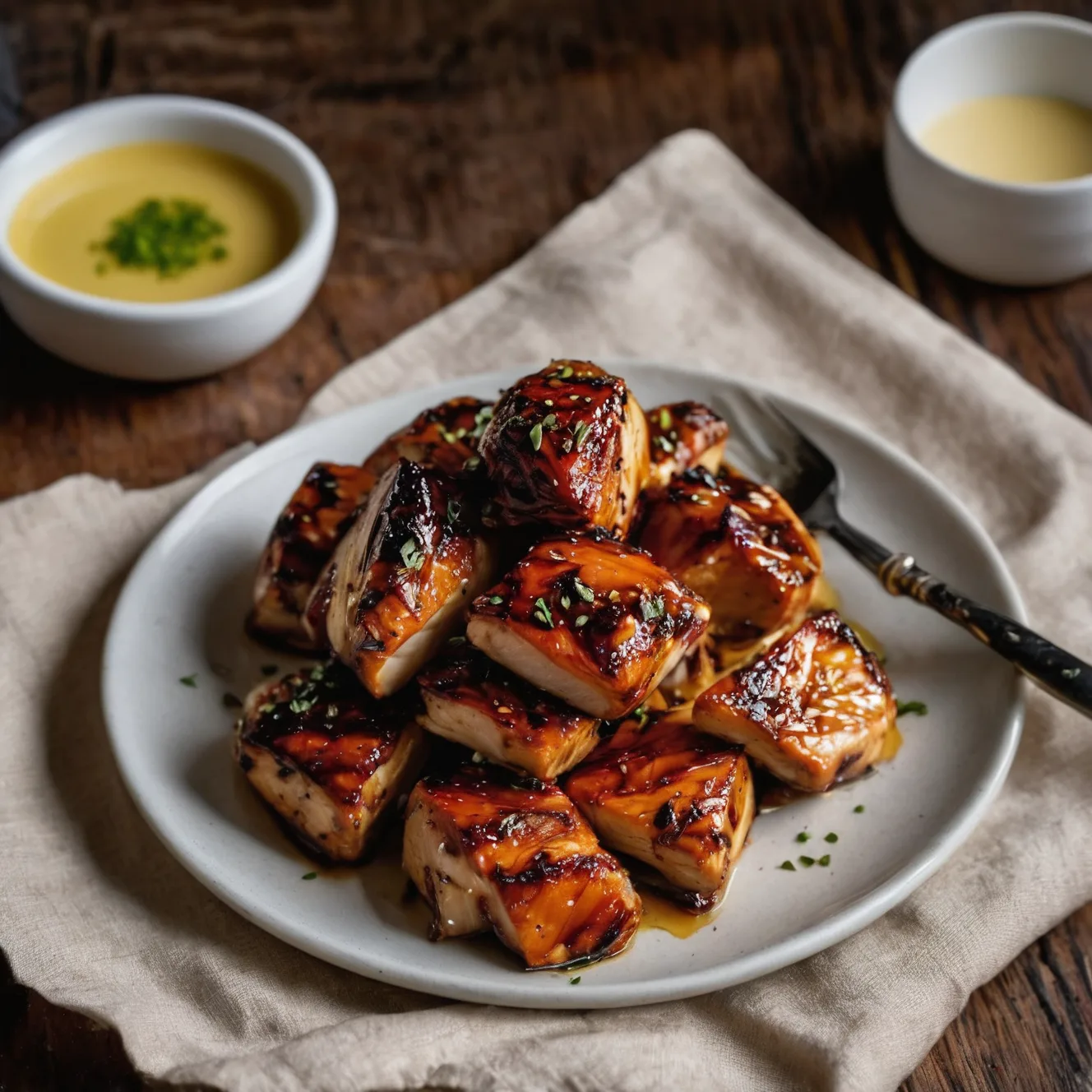
Copycat Benihana Hibachi Chicken
Prep time: 10 min | Cook time: 12 min | Servings: 4
Benihana hibachi chicken starts as plain boneless breast, hits a 500°F flat steel griddle for less than two minutes, and comes off with a dark soy-garlic crust that tastes like it spent an hour in a marinade. No marinade. No elaborate prep. The flavor is built entirely in the pan — the hard sear, a quick toss through foaming garlic butter, and a soy sauce deglaze that reduces to a sticky glaze in ten seconds flat.
This recipe replicates that result on a home stove. You need a cast iron skillet, high heat, and the discipline to leave the chicken alone while it sears. The sauces — a sharp mustard sauce and a bright ginger sauce — are both included below and take five minutes to make. Todd Wilbur included both in his Top Secret Recipes Benihana clone, and the proportions are confirmed.
Why Make It at Home?
A Benihana Hibachi Chicken dinner runs about $26 per person (2026 prices). Add the included soup, salad, rice, and vegetables, plus tax and a 20% tip, and two people are spending $65-$70. This recipe makes the same chicken for about $18-$20 in ingredients — under $5 per serving. Pair it with Benihana copycat fried rice (another $3 per serving) and you have the full spread for under $8 per person, which is roughly an 80% savings.
The other advantage: you control the chicken quality. Benihana’s teppanyaki kitchens run high volume and use standard commodity chicken. At home, you can select a better piece of breast meat, trim it yourself, and cook it to the exact doneness you want rather than a standard the chef is calibrating across six guests simultaneously.
What Makes Benihana’s Hibachi Chicken So Good
Extreme heat is the non-negotiable variable. Benihana’s teppanyaki grills run at 500°F or higher. At that temperature, the exterior of the chicken develops a Maillard crust — the brown, deeply savory layer that forms when proteins and sugars react to high heat — in under 90 seconds. The interior barely has time to climb past 160°F. You get a caramelized crust and a still-juicy center.
On a home stove, you can approximate this with a fully preheated cast iron skillet at maximum heat. The critical mistake is adding the chicken before the pan is truly hot. If the oil does not shimmer and lightly smoke when you add it, the pan is not hot enough. Adding chicken to an undersized or underthermed pan causes it to release liquid and steam in its own juices, which produces soft, gray, bland chicken — exactly the opposite of what you want.
The garlic butter does three things. It adds dairy richness. The milk solids in the butter brown on the hot surface and create a nutty layer the oil alone cannot replicate. And the garlic cooks in the fat rather than directly on the dry surface, which means it goes golden and fragrant rather than bitter and burned. Twenty seconds is enough.
The soy sauce deglaze concentrates fast. When soy hits the 500°F surface, the water flashes off immediately and the amino acids and sugars reduce into a thick, caramelized glaze. Pour it on the pan — not on the meat — and toss the chicken through it within ten seconds. That is the dark, sticky coating you see coming off the teppanyaki grill.
The Dipping Sauces
Both Benihana dipping sauces are served tableside — the mustard sauce and the ginger sauce. Despite what many copycat recipes say, the mustard sauce is the primary pairing for chicken (and beef). Todd Wilbur’s Top Secret Recipes confirmed this designation. The ginger sauce is traditionally for vegetables and seafood.
Mustard sauce: Soy sauce, water, Japanese or dry mustard, a splash of heavy cream, and garlic powder. The cream rounds out the sharpness of the mustard and gives it a slightly rich finish. Oriental/Japanese-style mustard (which you can find at any Asian grocery store) is sharper than American mustard and closer to the original. If you use dry mustard powder, mix it with a small amount of water first to form a paste, then add the remaining ingredients. Refrigerate for at least 20 minutes before serving.
Ginger sauce: Benihana published their own recipe — yellow onion, fresh grated ginger, lemon juice, unseasoned rice vinegar, and low-sodium soy sauce, all blended until smooth. No garlic. No white vinegar. No sugar. The blending is essential; you need the onion and ginger fully pureed for the sauce to have a smooth, pourable consistency. A mini blender handles this in 30 seconds. Benihana chefs make it fresh daily; rest it for at least an hour before serving. The full standalone copycat is at Copycat Benihana Ginger Dipping Sauce.
Restaurant Technique vs. Home Technique
Benihana chefs cook proteins differently than most copycat recipes suggest. The authentic teppanyaki method is to sear whole pieces (or large strips) on the flat griddle, then dice them into bite-size portions on the hot surface using the spatula’s edge. This produces better crust coverage because the larger surface contacts the griddle longer.
For home cooking, pre-cutting to 1-inch cubes is easier to manage on a home burner and produces a good result. Just make sure the cubes are dry and not crowding the pan. Two batches in a 10-inch skillet is better than one overcrowded batch every time.
Serving the Full Benihana Spread at Home
The restaurant experience includes soup, salad, vegetables, fried rice, and the teppanyaki protein. If you want to recreate the spread:
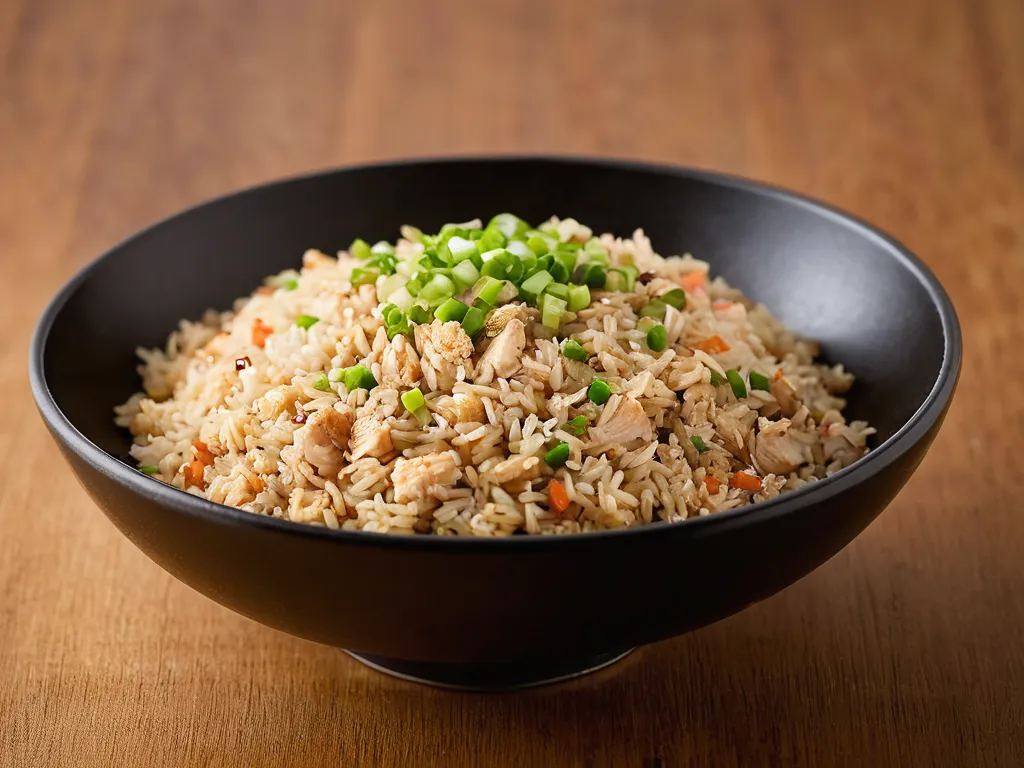
- Fried rice: Benihana-style fried rice — covers the butter technique, egg-well method, and all protein additions
- Yum yum sauce: Copycat Benihana yum yum sauce — the pink creamy sauce most people assume is a secret
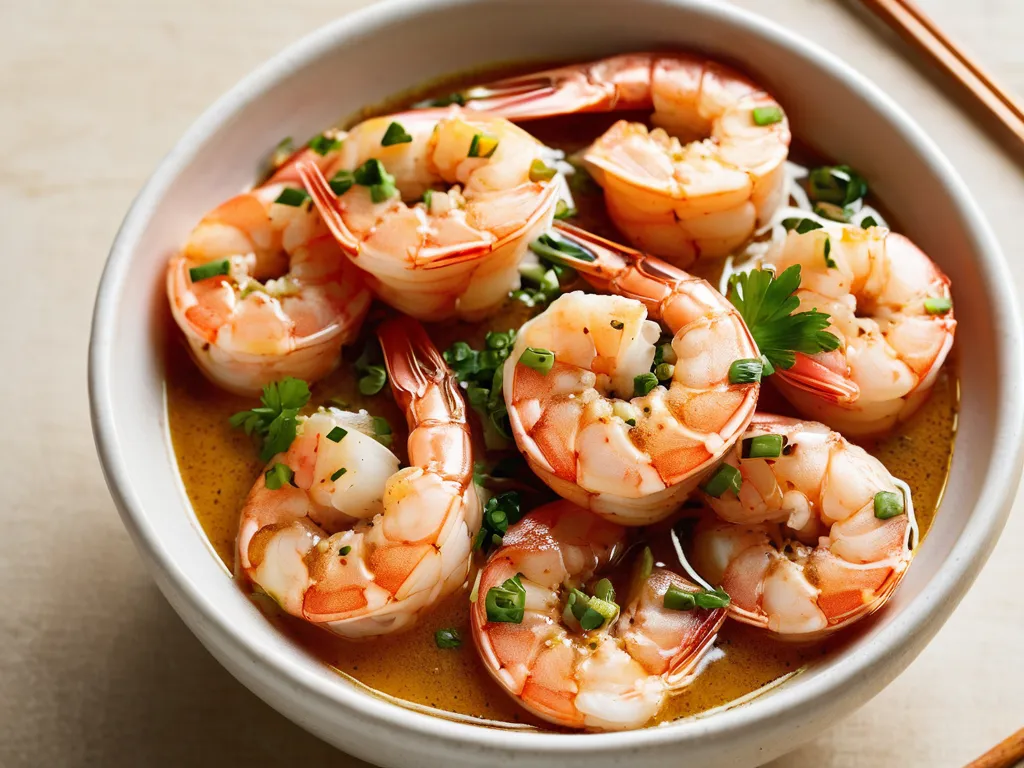
- Garlic butter shrimp: Benihana garlic butter shrimp — for the surf-and-turf combination plate
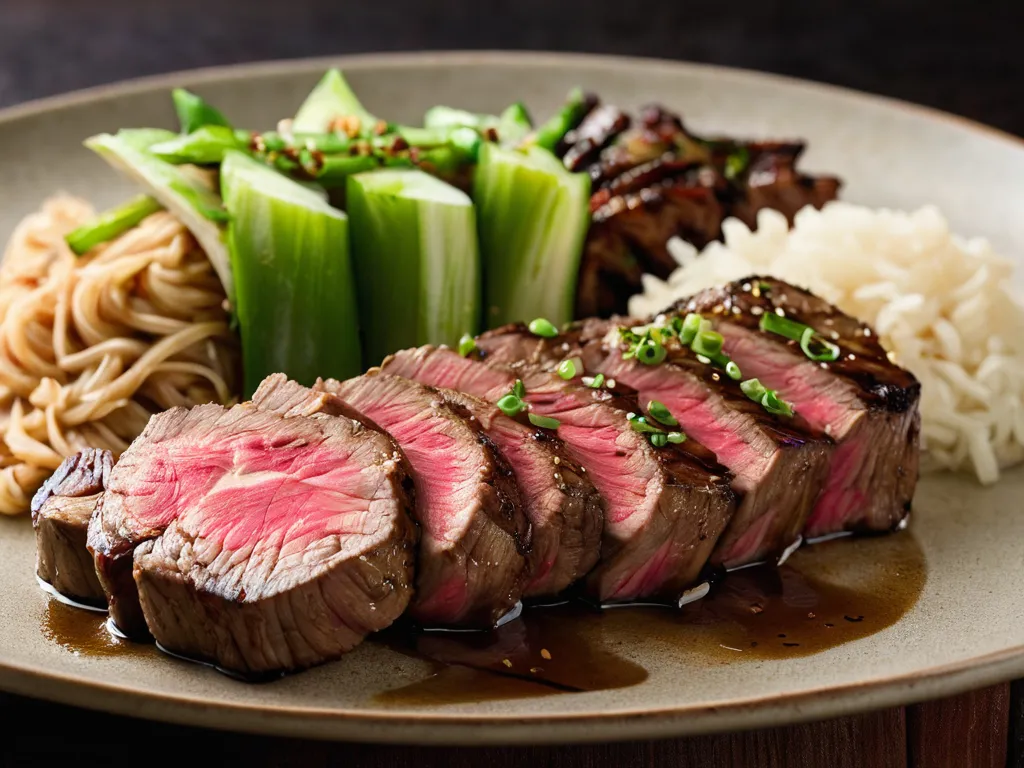
- Hibachi steak: Copycat Benihana hibachi steak — the beef side of the combination plate
The standard combination order at Benihana is steak and chicken, or steak and shrimp. If you want to do both proteins at home, cook them sequentially in the same pan. Steak first (higher temperature needed), set aside, then chicken. Deglaze together at the end.
Tips & Variations
- Keep the chicken dry. Pat it with paper towels immediately before it goes in the pan. Surface moisture is the enemy of a good sear — it converts to steam before the surface temperature can build a crust.
- Don’t move it. Ninety seconds undisturbed on the first side. This is harder than it sounds when you can hear and smell the sear happening, but moving the chicken breaks the developing crust before it can form.
- Season lightly. The soy sauce deglaze is high-sodium. Salt the chicken before cooking but leave room — you can always add more at the table, but you can’t take it away.
- Thigh upgrade. Boneless thighs are juicier and more forgiving on high heat. The flavor is richer. Benihana uses breast, but many people prefer the result with thigh at home.
- Add hibachi vegetables. Zucchini, yellow onion, and mushrooms cook in the same pan in the same butter. Add them before the chicken (they take longer), remove, then cook the chicken. Return everything together for the soy deglaze.
Storage & Reheating
Hibachi chicken is best eaten immediately — it takes ten minutes to make, so there is rarely a reason to reheat it. If you have leftovers, refrigerate in an airtight container for up to 2 days.
Reheat in a hot skillet for 30-45 seconds per side, not in a microwave. The microwave unevenly heats the pieces and makes the exterior rubbery. A brief skillet reheat warms it through without significant additional cooking. Cold leftover hibachi chicken also works sliced thin over rice or in a grain bowl — the garlic butter and soy glaze hold up well cold.
The dipping sauces last in the refrigerator for up to 5 days (mustard sauce) and 5 days (ginger sauce). Both improve after 24 hours as the flavors meld.