


The Three Things Most Galbi Recipes Get Wrong
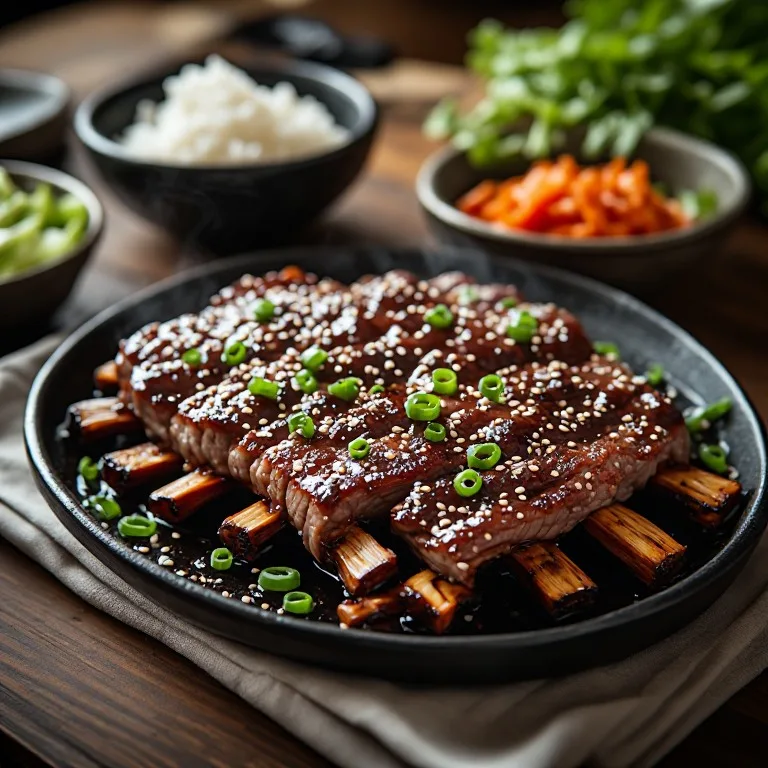
1. The wrong cut. Galbi means flanken-cut short ribs — sliced perpendicular to the rib bones in strips about 1/4 inch thick, with three or four cross-sections of bone per strip. This is completely different from the English-cut short ribs sold at most American grocery stores, which are thick individual-bone sections designed for braising. If you put English-cut short ribs on a hot grill, the exterior chars and the interior stays raw — they need hours of low, moist heat to break down the connective tissue. Flanken-cut galbi is already thin enough to cook through in 4 to 5 minutes total. Most American recipe writers get this wrong because flanken-cut ribs aren’t the default at large grocery chains; you have to ask a butcher or go to a Korean grocery store, where they’re always in stock and labeled correctly.
2. Skipping the enzymatic tenderizer. A soy-garlic-sesame marinade makes beef taste good. A soy-garlic-sesame-Asian pear marinade changes the texture of the beef. Asian pear contains naturally occurring proteolytic enzymes that disassemble myosin, the structural protein responsible for muscle toughness. Given several hours of contact, those enzymes work through the meat’s fiber structure and produce a silky, yielding quality that you cannot achieve through seasoning alone. The pear flavor is subtle in the finished dish — the pear is there as a biological tool, not as a dessert note. Most home recipes include pear as an optional garnish or omit it entirely; the Cote version depends on it.
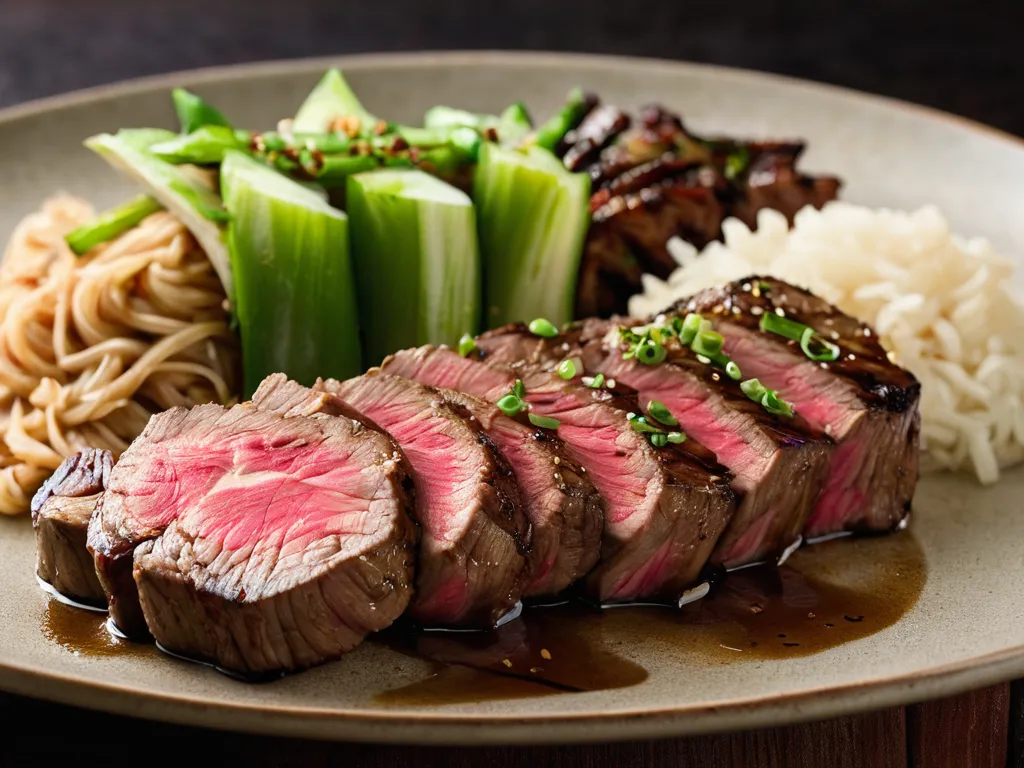
3. A pan that isn’t hot enough. The marinade contains brown sugar and the pear adds its own natural sugars. When those hit a properly smoking-hot cast-iron pan, they caramelize almost instantly into a lacquered, mahogany crust — the characteristic appearance and flavor of restaurant-quality galbi. When the pan is only medium-hot (the temperature most people run their stove), those same sugars steam rather than caramelize: the ribs turn pale, slightly sticky, and flat. Four to five minutes of dry preheating on the highest flame, with no oil in the pan, is not optional.
About Cote
Simon Kim opened Cote at 16 West 22nd Street in New York’s Flatiron District in 2017. He had previously operated Piora, a French-influenced tasting menu restaurant in the West Village. Cote was a deliberate pivot: Kim wanted to serve the Korean food he grew up with — specifically the galbi and grilled beef of Korean BBQ — at the quality level of a serious New York steakhouse, with USDA Prime beef, precision-sourced and properly dry-aged cuts, and a wine program thoughtful enough to earn a Michelin star for itself.
In 2019, the Michelin Guide awarded Cote its first star, making it the first and, as of 2026, only Michelin-starred Korean BBQ restaurant in the world. The inspectors cited the quality of the beef, the banchan program, and the integration of a conventional fine-dining experience with the communal format of Korean BBQ — a format that, at most Korean BBQ restaurants, is deliberately casual and participatory.
The signature offering is the Butcher’s Feast (around $82 per person as of 2026): four cuts of USDA Prime beef, a kimchi stew kept simmering at the table throughout the meal, a steamed egg soufflé, banchan, and a soft-serve finish. There’s also a higher-end Steak Omakase (around $225 per person) and a Japanese A5 wagyu add-on. Galbi is almost always one of the Butcher’s Feast cuts.
The Marinade: What Every Ingredient Does
Soy sauce provides the base salinity and significant umami depth from its glutamates. Low-sodium Kikkoman (1/3 cup for 2 lbs of meat) delivers flavor without making the ribs aggressively salty after cooking — the reduction that happens in the hot pan concentrates salt as the moisture evaporates, so starting with moderate soy is correct.
Brown sugar (3 tablespoons) serves two purposes: it balances the salt and acid, and its molasses content caramelizes at lower temperatures than white sugar, producing those deep brown edges faster. Cote uses USDA Prime beef partly for its marbling, but also because the fat in a well-marbled rib renders into the pan and mingles with the caramelized sugar glaze.
Toasted sesame oil adds the nutty, roasted aroma that is non-negotiable in Korean galbi. Use toasted (dark amber-colored), not raw sesame oil — the flavor is entirely different, and raw sesame oil has almost no aroma in a marinade.
Asian pear (half a pear, grated, juice and pulp together) is the enzymatic tenderizer. The proteolytic enzymes in Asian pear act gently over 4 to 12 hours, producing noticeably more tender meat than the same cut marinated without it. Use a ripe pear — the enzyme concentration is higher in a pear at peak ripeness.
Garlic and ginger are the aromatic backbone. Six cloves of garlic grated on a Microplane (not pressed; a press leaves coarser particles that can burn in the hot pan) and one tablespoon of fresh ginger produce a clean, deep aromatic note without harshness.
Mirin (optional but recommended) adds a slight lacquered sheen to the finished ribs. It’s a sweet rice wine with about 14% sugar — a tablespoon in the marinade produces a glossier caramelization without making the ribs taste sweet.
Cooking Without a Korean BBQ Grill
Cote cooks on induction grills at each table — flat, very hot, with a centrally placed grill grate for fat drainage and smoke capture. At home, you are not trying to simulate this exactly; you are trying to produce the same surface temperature and caramelization.
A 12-inch cast-iron skillet preheated dry over high heat for 5 full minutes reaches a surface temperature above 450°F — hot enough for the Maillard reaction to proceed rapidly on thin flanken-cut ribs. The key discipline is not moving the ribs once they hit the pan. Contact = caramelization. Picking them up to check, sliding them around, or stacking them breaks that contact and lowers the surface temperature.
One practical note: the marinade will smoke significantly in a hot cast-iron pan. Turn on your range hood exhaust before starting and open a window. This is expected and not a problem.
The Banchan Setup
Part of what makes Cote’s experience difficult to replicate at home is the banchan program — the rotating array of small vegetable and fermented preparations served alongside the beef. A simplified but authentic banchan setup for a home galbi dinner:
Baechu kimchi (napa cabbage kimchi): Buy a jar of well-fermented kimchi from a Korean grocery store — at least 2 to 3 weeks old, deeply sour and effervescent. Freshly made kimchi doesn’t have the depth that works alongside grilled beef.
Sigeumchi namul (seasoned spinach): Blanch a bunch of spinach in boiling water for 30 seconds, cool immediately in ice water, squeeze completely dry, then toss with a teaspoon of sesame oil, a clove of minced garlic, and salt to taste. Serve at room temperature. This takes 10 minutes and is one of the most important banchan to have.
Kongnamul (bean sprout salad): Blanch bean sprouts 2 minutes, drain, toss with sesame oil, scallion, garlic, salt. Slight crunch alongside the tender galbi.
Ssam jang: Stir together 2 tablespoons doenjang (fermented soybean paste), 1 tablespoon gochujang, 1 teaspoon sesame oil, 1 teaspoon sugar, and 1 clove minced garlic. This is the dipping paste for the wraps.
The point of the banchan is not to fill up — it’s to offer palate-cleansing bites between the rich, caramelized beef, and to give the meal a variety of textures and flavor profiles the galbi alone doesn’t have.