

Pin It

Lucali Pizza (Brooklyn's Hardest Reservation, Made at Home)

Lucali Pizza (Brooklyn's Hardest Reservation, Made at Home)
Jump to Recipe
Prep 30 min active (overnight–72 hr ferment) Cook 12 min Serves 2 pizzas (serves 4)
Quick answer: Mix 400g bread flour (or 00 flour) with 240g water (60% hydration, matching Iacono's published ratio), 2g active dry yeast dissolved in the water, 1.5 tsp fine sea salt, and 1.5 tsp extra virgin olive oil. Knead 10 minutes until smooth. Divide into two balls, coat with olive oil, seal in airtight containers, and refrigerate overnight or up to 72 hours. Two hours before baking, take dough out to warm to room temperature. Put a baking steel on the upper-middle rack and preheat your oven to its maximum — 550°F if possible — for a full 60 minutes. For the sauce: cook a 28-ounce can of crushed San Marzano tomatoes in 2 tbsp olive oil with 2 smashed garlic cloves for 30 to 45 minutes over low heat, stirring occasionally, until reduced and sweet. Season with salt and remove garlic before using. Pat 4 oz of fresh mozzarella pieces dry for 20 minutes before topping. On a floured surface, press one dough ball flat, then roll with an empty wine bottle from the center outward — rotating the dough after each pass — until you have a thin, roughly 15-inch round. Transfer to a floured pizza peel, spoon a thin layer of the cooked sauce, scatter mozzarella, and slide onto the steel. Bake 10 to 12 minutes until the bottom is charred and the cheese bubbles. Add fresh basil and a drizzle of olive oil immediately after pulling from the oven. Bring your own wine — that is the full Lucali experience.

Shop the tools

Gear matched to this recipe. These are Amazon affiliate links — we may earn a small commission if you buy, at no extra cost to you.

As an Amazon Associate, Copycat Spices earns from qualifying purchases. Product images are generic illustrations, not the exact item listed.

Lucali Pizza (Brooklyn's Hardest Reservation, Made at Home)

Make Lucali's legendary Brooklyn pizza at home: Mark Iacono's published dough recipe, the cooked San Marzano sauce simmered 30–45 minutes, three cheeses, and the wine bottle rolling technique — baked on a steel at 550°F for real char.

Intermediate Prep: 30 min active (overnight–72 hr ferment) Cook: 12 min Total: 72h 42m2 pizzas (serves 4) servings ~$4.50/serving
Prep30 min active (overnight–72 hr ferment)
Cook12 min
Total72h 42m
Servings
2
At home~$4.50/serving
vs
Restaurant~$20.25/serving
You save ~78%

The Story Behind the Recipe

Make Lucali's legendary Brooklyn pizza at home: Mark Iacono's published dough recipe, the cooked San Marzano sauce simmered 30–45 minutes, three cheeses, and the wine bottle rolling technique — baked on a steel at 550°F for real char.

Nutrition Facts

Per serving (2 pizzas (serves 4) servings)
Calories510
Total Fat17g
Total Carbs68g
Dietary Fiber3g
Sugars5g
Protein23g
Sodium710mg

* Estimated values based on standard recipe preparation. Actual values may vary.

Ingredients

  • Dough (makes 2 pizza balls — adapted from Mark Iacono's published formula)
  • Cooked San Marzano sauce
  • Per pizza (three-cheese blend)

Instructions

💡
Pro tip: This recipe tastes even better the next day. The flavors need time to meld together in the fridge.
❄️
Storage: Keeps in an airtight container in the fridge for up to 2 weeks. Freezer-friendly for up to 3 months.
🎃 Free Halloween cookbook — download now The Copycat Halloween Cookbook A ready-made, photo-illustrated PDF of our best halloween copycat recipes — free to download, no building required. Pay what you want to support if you love it.

Free PDF — instant download. We'll also send new seasonal copycat recipes now and then; unsubscribe anytime. Or just download it →

Copycat Lucali Pizza (Brooklyn’s Hardest Reservation, Made at Home)

Prep time: 30 min active (overnight to 72 hr ferment) Cook time: 12 min Servings: 2 pizzas (serves 4)

Lucali opened in 2006 at 575 Henry Street in Carroll Gardens, Brooklyn. Mark Iacono had no restaurant experience — he rented the space that had been his childhood candy store, bought a wood-burning oven, and taught himself to make pizza. The menu has exactly two items: pizza and calzone. The restaurant is cash only, seats about 30 people, takes no reservations, and asks you to sign a waitlist at the door and come back when your name is called. There is no alcohol license — bring your own bottle. The nearest wine shop is a five-minute walk.

New York magazine has named it the best pizza in New York. Jay-Z and Beyoncé are regulars. Taylor Swift and Travis Kelce were spotted there in 2023. The wait on a Friday night is frequently two hours. None of this has changed in nearly twenty years.

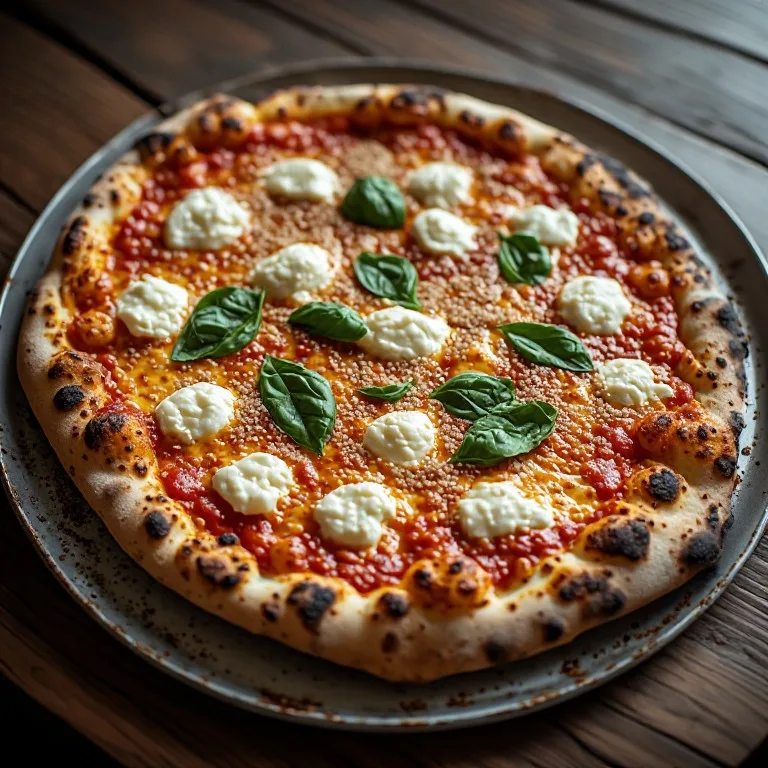
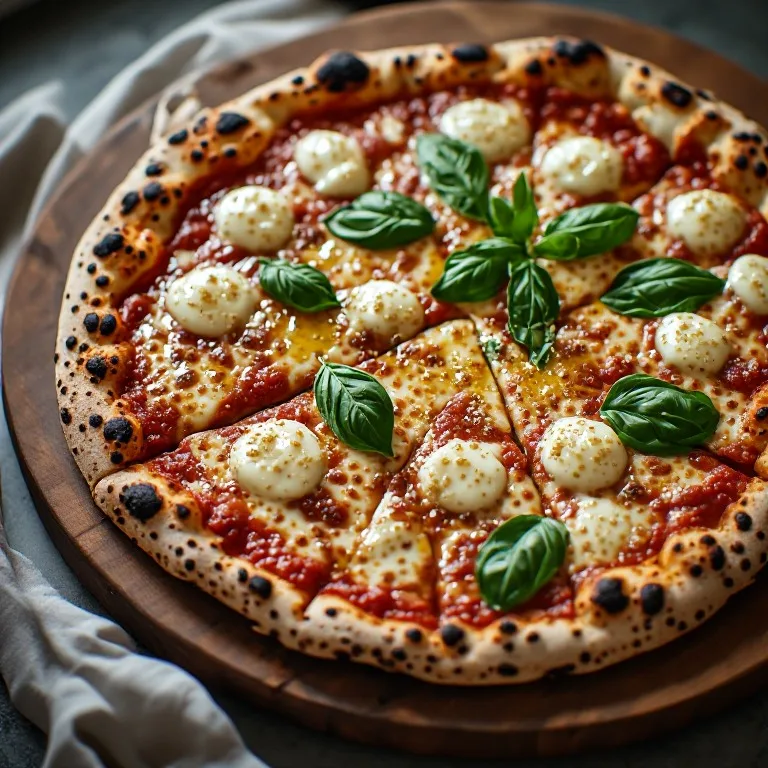
The pizza itself is very thin — reviewers consistently describe the center as “wafer-thin, like a saltine” — with charred spots on the bottom and a crust that crunches before giving way to a slightly chewy interior. The sauce is a cooked San Marzano tomato sauce simmered for 30 to 45 minutes before it touches the pizza. The cheese is a three-variety blend, not just a mozzarella layer. Fresh basil goes on after the pizza leaves the oven.

This recipe is adapted from Mark Iacono’s own published dough formula (he shared it on Good Morning America in 2023) and uses the techniques that define the original: a long cold ferment, wine bottle rolling, and a baking steel preheated for a full hour.


The Three Things Most Copycat Recipes Get Wrong

1. They say the sauce is raw

Many Lucali copycat recipes online instruct you to apply uncooked, hand-crushed San Marzano tomatoes directly to the pizza. This is not what Lucali does. The sauce is cooked — simmered in olive oil for 30 to 45 minutes until the excess water evaporates, the raw acidity mellows, and the tomatoes reduce into something concentrated and sweet. The cooking step is what turns good tomatoes into a great pizza sauce. Skip it and the sauce tastes bright and acidic in a way that clashes with the cheese rather than supporting it.

2. They use only mozzarella

Lucali uses a three-cheese blend. The fresh mozzarella is the primary cheese, but Pecorino Romano is grated over the top, and ricotta may appear in small amounts. The Pecorino adds salt and sharpness that mozzarella alone does not deliver — mozzarella melts beautifully but has very mild flavor. The combination is what gives the pizza a richness that home versions with only one cheese struggle to replicate.

3. The oven isn’t ready

The most common reason a home pizza fails to replicate a restaurant version is that the baking surface is not hot enough. Lucali’s wood-burning oven runs at 700 to 900°F. Your home oven maxes out at 500 to 550°F. That gap cannot be fully closed, but you can get meaningfully closer by using a baking steel — which conducts heat far more aggressively than a stone — and preheating it for a full 60 minutes after the oven reaches temperature. An under-preheated steel produces a pale, soft pizza bottom. A fully preheated steel produces char.


The Dough: From Iacono’s Published Recipe

Mark Iacono shared his dough formula on Good Morning America in 2023 — one of the very few times the recipe has been made public. His published batch is 3½ lbs flour to 33.6 oz water (about 60% hydration), 0.3 oz yeast, and 2 tbsp each of salt and olive oil, kneaded and cut into eight 10-ounce balls. The formula below is scaled down from those 8 balls to 2:

  • 400g bread flour or 00 flour — the type is not specified in his original, but 00 flour produces a silkier, more extensible dough; bread flour produces a chewier, sturdier one. Both work.
  • 240g warm water — about 100°F; warm enough to activate yeast but not hot enough to kill it. This is the ~60% hydration his published ratio works out to.
  • 2g active dry yeast — dissolved in the warm water before adding flour.
  • 1.5 tsp fine sea salt
  • 1.5 tsp extra virgin olive oil — added to the water with the yeast; gives the dough a small amount of fat that helps with extensibility and browning.

One thing to know up front: Iacono’s published method is same-day and fast. You dissolve the yeast and oil in the water, mix in about 25% of the flour until smooth, add the salt (he dissolves it in a little of the water first), then the rest of the flour, knead roughly 10 minutes, cover, and rest just 45 minutes at room temperature before shaping and baking. There is no overnight rise in the recipe he published.

You have two good options from there:

  • Same-day (authentic to his published recipe): knead, rest 45 minutes, shape, bake. Fastest, and exactly what the GMA recipe specifies.
  • Cold ferment (what most serious home pizza bakers do for deeper flavor): divide into oiled, sealed balls and refrigerate 24 to 72 hours, then warm at room temperature for 2 hours before shaping. The long, slow ferment develops noticeably more flavor and a more extensible, easier-to-stretch dough.

The step-by-step recipe below uses the cold ferment because it is more forgiving and tastes better — but the 45-minute same-day version is the one Iacono actually published, so use whichever fits your schedule. This dough is deliberately lean and cracker-thin; for a soft, sweet crust built on bread flour and honey instead, our Papa John’s pizza dough recipe goes the other way.


The Sauce: Cooked, Not Raw

In a large number of Lucali-copycat recipes — and in some food media coverage — the sauce is described as raw crushed San Marzano tomatoes applied directly. This is incorrect. Lucali’s sauce is cooked, and the cooking time (30 to 45 minutes) is long enough to fundamentally change the character of the tomatoes from bright and acidic to deep, sweet, and reduced.

The process: crushed San Marzano tomatoes in olive oil with garlic cloves over low heat, simmered until the sauce has reduced by roughly a third and the raw tomato edge has mellowed. Fresh basil goes in for the last five minutes. The garlic is removed before the sauce goes on the pizza.

San Marzano tomatoes matter here. DOP-certified San Marzano tomatoes (grown in the volcanic soil of the Sarnese-Nocerino region near Mount Vesuvius) are sweeter and less acidic than standard canning tomatoes. The DOP label is the relevant marker. Brands: La Valle, Bianco DiNapoli, and Cento San Marzano are all reliable and widely available.

Apply the sauce thinly — 3 to 4 tablespoons spread across a 15-inch round. The restraint is part of the technique. More sauce means more moisture, which works against the crackly, thin crust that defines this style.


Building and Baking

Once the dough is warmed, the steel is fully preheated, and the sauce is cooked and cooled slightly, the assembly is fast. Stretch the dough to about 15 inches (it will not be round — that is fine), apply the sauce in a thin layer, distribute the three cheeses, and slide it onto the steel.

At 550°F with a properly preheated steel, the pizza bakes in 10 to 12 minutes. Cues: the bottom is deeply charred when you lift a corner with a spatula; the cheese has melted, bubbled, and developed gold-brown patches; the rim has visible char spots. Switching to the broiler for the final 2 minutes adds top char without meaningfully extending bake time.

Fresh basil lands on the pizza the moment it comes out of the oven. At this temperature the leaves wilt pleasantly from the residual heat; if you add them before baking they incinerate. Extra virgin olive oil follows. Cut and serve immediately — the thin crust begins softening within a few minutes of sitting.


More Famous NYC Restaurant Copycats

If you’re recreating the impossible-reservation places at home, these are next:

🥗

Make It Healthier

Love Lucali Pizza (Brooklyn's Hardest Reservation, Made at Home) but want a lighter version? Try these simple swaps:

  • ✓Reduce the mozzarella to 2 oz per pizza and increase the Pecorino Romano to 1.5 oz — you get more flavor per gram of cheese with the aged hard cheese, so the overall quantity (and calories) can drop without the pizza feeling lean.
  • ✓Skip the ricotta dollops — they are optional and save about 30 calories per serving with no meaningful difference in flavor.
  • ✓Add a handful of fresh arugula on top after baking for something green and peppery that costs nothing in calories and contrasts well with the richness of the cheese.

Frequently Asked Questions

Why does Lucali use a wine bottle instead of a rolling pin?

Mark Iacono, who opened Lucali in 2006 with no restaurant experience and taught himself to make pizza, rolls his dough using an empty wine bottle. The wine bottle has a gentle taper at the neck and weighs less than a rolling pin, which means the pressure it exerts is lighter and more controllable. That matters for a very thin dough: a standard rolling pin applied with normal force can deflate the gas bubbles that form during fermentation and can tear the gluten structure if the dough is at all cold or underdeveloped. The bottle encourages a slower, more thoughtful stretching motion. Practically: you place the bottle on the center of the dough and roll outward toward the edge, rotate the dough a quarter turn, and repeat. The result is a very thin, even round with no torn spots. You can use a rolling pin if you work lightly, or stretch the dough entirely by hand — but an empty wine bottle is the Lucali-specific technique.

Is Lucali's sauce cooked or raw?

Cooked. Lucali's sauce is a tomato sauce simmered for 30 to 45 minutes before it goes on the pizza — not raw crushed tomatoes applied directly. Mark Iacono emphasizes the sauce as one of the two or three most important elements of the pizza, and the quality of the tomatoes and the cooking time are both part of that. The sauce uses San Marzano tomatoes cooked in olive oil until reduced and sweet, with the excess water evaporated. What makes it taste different from generic pizza sauce is the quality of the tomatoes and the restraint in how much gets applied — a thin layer on a thin crust, not a thick pool. Contrary to some copycat recipes online, do not simply crush raw San Marzano tomatoes and use them directly: the 30-minute simmer changes the flavor character meaningfully.

What cheeses does Lucali use?

A three-cheese blend — not just mozzarella. The exact cheeses are not publicly named by the restaurant, but reviewers and home copycatters who have studied the pizza closely generally identify fresh mozzarella as the primary cheese, an aged Italian hard cheese (likely Pecorino Romano or aged Parmesan, grated fine), and possibly fresh ricotta in a smaller amount. The combination gives the pizza more depth and a slightly creamier texture than a single mozzarella would. For a reliable home approximation: use 3 oz of fresh whole-milk mozzarella (torn and dried), 1 oz of finely grated Pecorino Romano, and optionally a few small dollops of whole-milk ricotta. The Pecorino adds salt and sharpness that mozzarella alone does not provide.

What flour does Lucali use for the dough?

Mark Iacono's published dough recipe (from a 2023 GMA appearance) calls simply for flour — the type is not specified as 00 or bread flour. Home bakers who have worked from that recipe use bread flour (about 13% protein) or 00 flour (11–13% protein, more finely milled). Either produces a good pizza. 00 flour makes a slightly silkier, more extensible dough that stretches thin without tearing — the classic choice for Italian-style thin crust. Bread flour produces a slightly chewier, more structured crust. Both are correct here. All-purpose flour (10–11% protein) works but tends to tear during stretching and produces a softer, less crisp result.

How do you get a reservation at Lucali?

Lucali at 575 Henry Street in Carroll Gardens, Brooklyn is essentially walk-in only. You arrive before it opens (typically 5 PM, Wednesday through Sunday), sign a paper waitlist at the door, and return when your name is called — often 1 to 2 hours later on weekends. Use that time to walk to a nearby wine shop; Lucali is BYOB with no corkage fee. A limited number of reservations occasionally appear on Resy but they vanish within minutes of release. The restaurant is cash only, seats about 30 people, and serves only two things: pizza and calzone. Lucali also has a location in Miami Beach.

What is Lucali's calzone like?

The calzone has become nearly as famous as the pizza — it accounts for roughly 40% of orders. It is a five-cheese stuffed calzone with fresh basil folded inside, baked until the exterior is golden and crisp. A side of marinara comes with it for dipping. Small and large sizes are available. The folded crust has the same thin, charred character as the pizza but with a different texture inside — creamy, cheese-filled, and rich. If you want to try the calzone at home, use the same dough recipe, fold in a mixture of ricotta, mozzarella, Pecorino, and basil, crimp the edges tightly, and bake on the hot steel at the same temperature.

Is Lucali's pizza Neapolitan?

No. Lucali's pizza is frequently described as Neapolitan-inspired but is actually closer to a Roman-influenced New York style. True Neapolitan pizza is no more than about 35 cm (roughly 12 to 14 inches) across, baked at around 900°F for 60 to 90 seconds, to the standard of the Associazione Verace Pizza Napoletana. Lucali's pizzas are larger (approximately 18 inches), baked for several minutes in a wood-fired oven, and have a distinctly different crust character — described by reviewers as 'wafer-thin and crunchy like a saltine' in the center, charred on the bottom, with a rim that is crisper and less pillowy than a classic Neapolitan cornicione. The flavor philosophy is shared (high-quality tomatoes, fresh cheese, minimal toppings, olive oil) but the execution is New York.

Love this recipe? Share it!

Free PDF: our 12 most-wanted copycat recipes — instant download.

Made it? Buy us a coffee

Every recipe here is free, with no paywalls. If this one was a hit at your table, a small tip keeps new copycats coming.

$

Lucali is a trademark of its owner, used here only to describe the dish this recipe recreates. This is an independent copycat written in our own words — Copycat Spices is not affiliated with, endorsed by or sponsored by Lucali.

Ratings & Reviews

—
No ratings yet

Rate this recipe

Click a star to rate

Leave a Review

0/500

CS

Copycat Spices Editorial

Researched + fact-checked. Every recipe on Copycat Spices is built from published sources — official ingredient lists, brand-published recipes, interviews and food-science references — and fact-checked before it goes live, then written as clear, step-by-step instructions for home cooks of all skill levels.

Learn more about our mission →