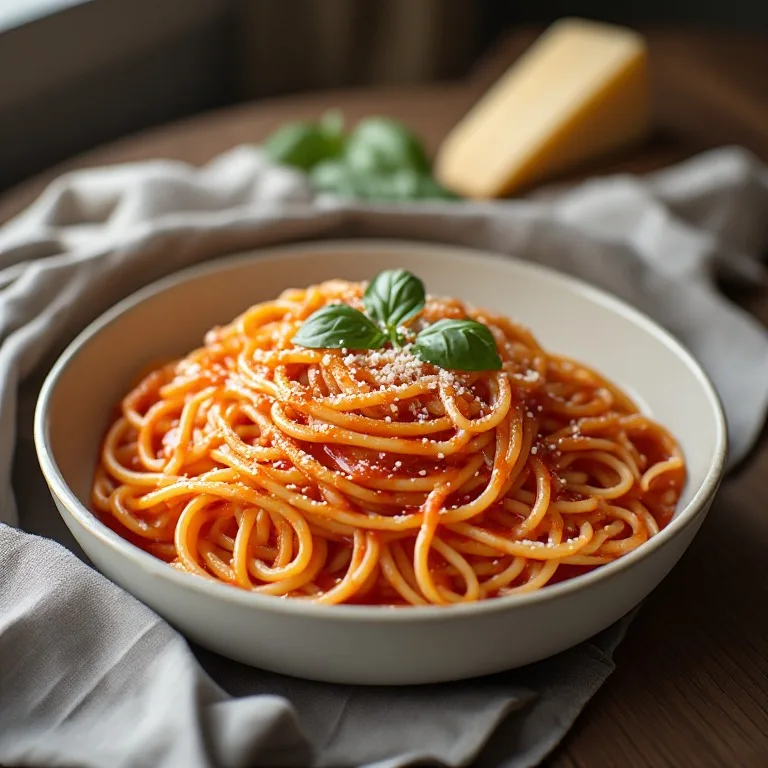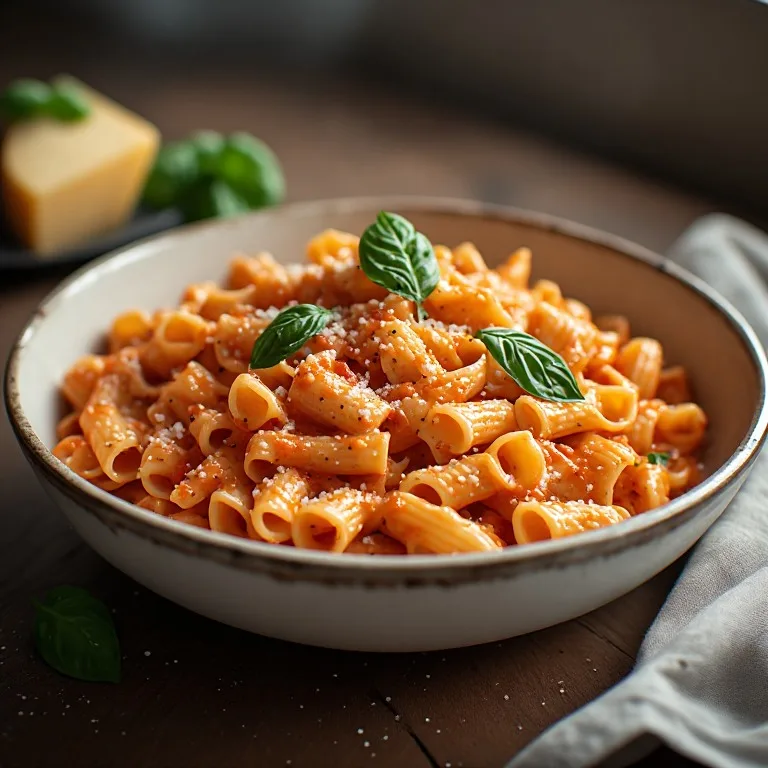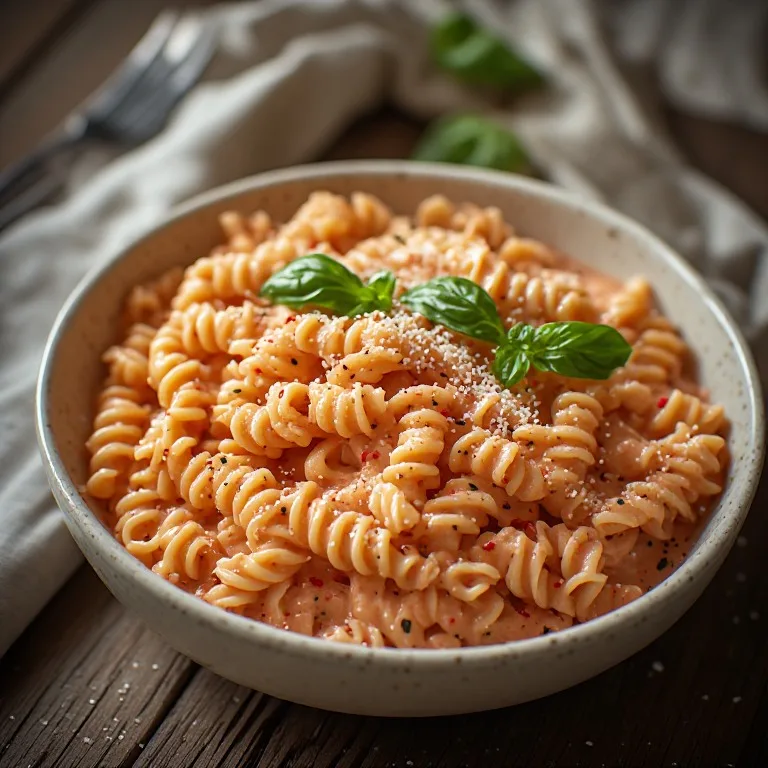



Copycat Jon & Vinny’s Spicy Fusilli (The Famous LA One, Made at Home)
Prep time: 10 min Cook time: 25 min Servings: 4
Jon Shook and Vinny Dotolo opened Jon & Vinny’s in 2015 at 412 N Fairfax Ave in Los Angeles. The two chefs had already built a reputation with Animal, the whole-animal nose-to-tail restaurant that opened on the same strip in 2008, and Son of a Gun, their seafood-focused follow-up in West Hollywood. Jon & Vinny’s was a deliberate pivot toward something more personal — an Italian-American café built around a wood-fired oven, house-made pasta, and a playlist, designed as the kind of restaurant they wanted to eat at themselves.
The restaurant earned a Michelin Bib Gourmand designation — the Guide’s recognition for exceptional food at moderate prices — and became one of the most consistently beloved dining rooms in Los Angeles. It is also, reliably, one of the hardest reservations to get. The dining room is small, the food never slips, and the regulars treat it like a neighborhood spot they cannot imagine living without.
The spicy fusilli became the restaurant’s signature pasta almost immediately after opening. It is a deceptively simple dish: fusilli tossed in a spicy vodka cream sauce built on shallots and tomato paste. The recipe requires no unusual equipment and no difficult technique. What it requires is understanding what makes the version at Jon & Vinny’s different from the vodka pasta you have eaten everywhere else — and two of those differences are easy to overlook.
How It Differs from Carbone’s Spicy Rigatoni Vodka
The two dishes share a format — spicy vodka cream pasta — and are frequently compared because both became famous in roughly the same era. The differences are real and worth knowing.
Carbone builds its sauce on yellow onion and Calabrian chili paste: a bolder, more assertive base with a rustic quality and a fruity heat. The result is a pasta that tastes like it belongs in a midcentury Italian-American red-sauce institution — because that is exactly what Carbone was designed to evoke.
Jon & Vinny’s builds on shallots. The shallot base is softer and more delicate — closer to French technique than southern Italian, which makes sense for a California restaurant. The heat comes from red pepper flakes, which are sharp and direct rather than fruity and layered. The cream ratio is higher. The finished sauce is silkier, lighter, and a bit more refined.
Neither is better. They are just different dishes dressed in the same genre.
The Three Techniques Most Copycat Versions Get Wrong
1. Using garlic where there should be shallots
Most copycat recipes substitute yellow onion and multiple garlic cloves for the shallot base. This seems like a minor swap, but it changes the character of the entire sauce. Shallots cook down to a sweeter, more dissolved background note that recedes behind the tomato paste and cream. Yellow onion stays more present. Garlic, in volume, sharpens everything. The Jon & Vinny’s sauce is not garlicky — it is delicate and silky, with the heat coming from the pepper flakes rather than the alliums. Use shallots, keep the garlic to two cloves, and do not brown either of them.
2. Not caramelizing the tomato paste to brick-red
This step is easy to rush because the paste already looks cooked — it is already red, already concentrated, already a paste. But tomato paste that has been added to a pan and stirred for 90 seconds is not the same ingredient as tomato paste that has been pressed against a hot pan for 5 minutes and allowed to go brick-red.
The transformation is visible and audible. The color deepens from bright orange-red to a darker, more muted brick. The smell shifts from sharp and acidic to rounded and slightly sweet — the same caramelization that happens to onion sugars is happening to the sugars in the paste. You will hear a faint crackling from the paste browning on the pan bottom. Let that happen. That layer of caramelized paste, dissolved back into the sauce by the vodka, is where most of the dish’s depth lives.
3. Skipping the cold butter emulsification at the end
The finishing technique at Jon & Vinny’s — and at most Italian-American restaurants that achieve a glossy, thick sauce — is a technique called mantecatura: vigorous tossing of cold butter into hot pasta with starchy pasta water off direct heat. The cold fat hits the hot, starch-laden liquid and emulsifies, coating every surface of every piece of pasta in a thin, even, glossy layer rather than pooling in the bowl.
Most home recipes skip this or do it wrong — adding softened or melted butter at the end, which does not emulsify in the same way. The butter must be cold. The toss must be aggressive. The pasta water provides the starch that holds the emulsion together. Without this step, the sauce is still good; it just does not have the restaurant’s characteristic coating.
Cost Comparison: Home vs. Restaurant
Jon & Vinny’s Spicy Fusilli runs approximately $22 to $24 per plate at the restaurant — which makes it one of the more accessible items on a menu that otherwise skews moderate-to-expensive by Los Angeles standards.
| Jon & Vinny’s | Homemade (4 servings) | |
|---|---|---|
| Per plate | ~$22–24 | — |
| Full batch (4 plates) | ~$88–96 | ~$28–32 |
| Per serving | ~$23 | ~$7–8 |
| Savings per plate | — | ~$15 |
The sauce ingredients — shallots, garlic, tomato paste, vodka, cream, butter — are all standard grocery territory. The largest variables are pasta quality and Parmesan: bronze-die cut fusilli runs slightly more than supermarket standard, and a wedge of Parmigiano-Reggiano costs more than the green can. Both are worth it here.
Tips & Variations
- Shallot quality matters more than you think. Old, sprouting shallots have a sharper, more bitter quality that carries into the sauce. Use fresh, firm shallots. If you cannot find good shallots, the closest substitute is the white and light green parts of two scallions, finely sliced — softer and milder than onion, closer to the shallot character.
- Bronze-die fusilli makes a meaningful difference. The rough, slightly chalky surface created by bronze-die extrusion catches sauce in the spiral’s coils in a way that smooth Teflon-extruded pasta does not. De Cecco and Barilla Collezione are widely available; Rustichella d’Abruzzo is the premium option. Worth the extra dollar.
- Reduce the cream by half for a more tomato-forward sauce. The standard recipe with 1 cup of cream produces a warm, soft sauce. If you prefer the tomato paste to be more prominent — a sharper, more acidic profile — use 1/2 cup of cream and increase the pasta water. This produces a sauce closer in style to alla vodka’s Italian origins than its American restaurant counterpart.
- Add sausage or shrimp for a more substantial plate. The Jon & Vinny’s version is pasta-only, but fennel sausage removed from its casing and browned in the pan before the shallots — then set aside and folded back in at the end — is a natural addition. So is 12 oz of large shrimp, seared 90 seconds per side in olive oil in a separate pan and added at the finish.
- The sauce holds; the dressed pasta does not. Make the sauce entirely in advance and refrigerate for up to 3 days. When ready to serve, reheat the sauce over low heat with a splash of water, cook fresh fusilli, and toss. Do not dress pasta you plan to store — the sauce absorbs completely into the spirals and the texture becomes sodden.
Storage & Reheating
Store leftover dressed pasta in an airtight container in the refrigerator for up to 2 days. To reheat: add the pasta to a saucepan with 2 tablespoons of water or broth, cover, and warm over medium-low heat, stirring occasionally. If the sauce looks broken after reheating, pull the pan off heat and stir in a small piece of cold butter — this re-emulsifies the separated sauce. Do not reheat in the microwave; the cream sauce will separate and go oily.
If you are cooking ahead, store the sauce separately from the pasta. Reheat the sauce gently, cook fresh fusilli the day of, and toss together. This produces a noticeably better result than reheated dressed pasta.
More Famous Italian-American Restaurant Pastas
- Copycat Carbone Spicy Rigatoni Vodka — the same vodka pasta genre from the hardest reservation in New York City, built on yellow onion and Calabrian chili instead of shallots and red pepper flakes
- Copycat Via Carota Cacio e Pepe — another beloved NYC Italian pasta from an equally difficult table, and a completely different technique
- Copycat Don Angie Pinwheel Lasagna — the beautiful Instagram-famous individual lasagna portions from the West Village Italian restaurant with a 7-week wait for a table