


Copycat Locanda Verde Sheep’s Milk Ricotta (NYC’s Most Imitated Brunch Toast, Made at Home)
Prep time: 10 min | Cook time: 10 min | Serves: 6
Andrew Carmellini opened Locanda Verde in 2009 in Tribeca’s Greenwich Hotel, and the sheep’s milk ricotta has been on the menu since. It’s simple enough to look trivial and distinctive enough that the versions people make at home rarely quite match it. Carmellini published the base recipe in his cookbook Urban Italian: Simple Recipes and True Stories from a Life in Food; on the restaurant menu it reads “Sheep’s Milk Ricotta — truffle honey, thyme, burnt orange toast.” The gap between a good home version and the real thing comes down to a few specific things most recipes skip.
The one technique that makes it taste like Locanda Verde: whip it
The mistake nearly everyone makes is spooning ricotta straight from the tub onto toast. Carmellini’s recipe doesn’t do that. It beats the ricotta together with whole milk — in a stand mixer with the paddle, or by hand with a whisk — until the mixture is light, fluffy and cloud-like. This is the move.
Whipping changes two things at once. The texture goes from dense and slightly grainy to airy, loose and spreadable — close to whipped cream cheese. And the flavor reads cleaner and creamier, because you’ve aerated it and loosened it with milk rather than serving a compact scoop. It takes 2 to 3 minutes. If you do nothing else differently, do this.
Bring the ricotta to room temperature first (30 to 45 minutes on the counter); cold ricotta whips stiffer and tastes muted. Beat the fine sea salt in near the end.
It’s savory first, sweet second
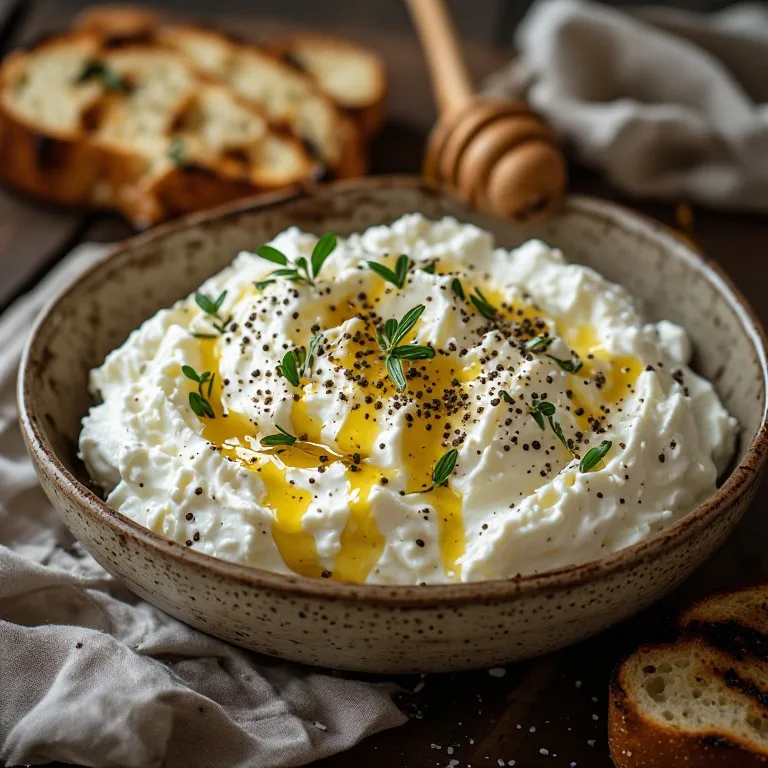
The other thing home versions get wrong is treating this as a sweet dish — ricotta and honey, full stop. Carmellini’s base is savory. After whipping, you sprinkle the top with coarse sea salt, coarsely ground black pepper, fresh thyme leaves and dried oregano, then drizzle with good extra-virgin olive oil. That herbal, peppery, olive-oil-rich base is the whole personality of the dish.
The truffle honey on the restaurant’s brunch plate goes over that savory base — it’s a counterpoint, not the main event. That’s exactly why the plated version tastes balanced instead of like dessert. Skip the herbs and the salt and you’ve made sweet ricotta toast, not this.
Truffle honey, not orange blossom
The restaurant’s signature finish is truffle honey (miele al tartufo) — honey infused with real truffle, sold at Eataly, specialty shops, and online. Its earthy, savory-sweet edge is what plays against the tangy sheep’s milk ricotta. If you can’t find it, a good floral honey (wildflower or orange blossom) works, and you can add a very small amount of real truffle oil or a shaving of fresh truffle to approximate it — but be wary of cheap truffle oil, most of which is synthetic (flavored with 2,4-dithiapentane) and tastes perfumey. The cookbook base recipe, worth remembering, uses no honey at all and finishes only with olive oil, salt, pepper and herbs. Both versions are legitimate; the honey is the restaurant’s plated flourish.
Use sheep’s milk ricotta if you can
Carmellini calls sheep’s milk ricotta his secret ingredient, and it’s a real difference. Sheep’s milk ricotta (ricotta di pecora) is richer, higher in fat, and noticeably tangier than the cow’s milk version, with a gentle gamey depth. Look for it at Whole Foods, Eataly, or a cheese shop — Bellwether Farms is a reliable brand. If you can only get cow’s milk ricotta, use a genuinely fresh whole-milk one (Calabro, BelGioioso, or made in-store at an Italian market) and whip it exactly the same way. Avoid the gummy, stabilizer-heavy supermarket tubs; they whip poorly and taste flat.
The bread: “burnt orange toast”
On the menu, the bread is called “burnt orange toast.” That’s the restaurant’s name for thick country bread grilled or broiled until it’s deeply charred — a dark, burnt-orange color, not just golden. The char is deliberate: a little smoky bitterness against the rich, mild ricotta.
To do it at home, brush thick slices of sourdough or country loaf with olive oil and grill on a hot cast-iron pan (or under the broiler) until they take on real color and crisp edges. Some home cooks also rub the cut face of a fresh orange across the warm toast for a citrus aroma — orange does pair nicely here — but that’s an optional touch, not part of Carmellini’s published recipe.
Recipe
See the full ingredients and step-by-step instructions in the card above.
The sequence that matters: room-temperature ricotta, whipped with whole milk until cloud-like, seasoned savory on top (salt, pepper, thyme, oregano, olive oil), truffle honey if you want the brunch version, and bread grilled dark. Serve while the ricotta is loose and the bread is warm.
Make it part of a NYC brunch spread
At Locanda Verde the ricotta lands at the start of brunch while larger plates come. Do the same at home: whip the ricotta ahead, set out the salt, pepper, herbs, olive oil and truffle honey, and grill and plate the bread in batches as people sit down. A bowl of whipped ricotta, the charred bread, a soft egg, and a simple arugula salad make a complete brunch without much more work. In fig season, a few slices of fresh fig on top is exactly what the restaurant does.