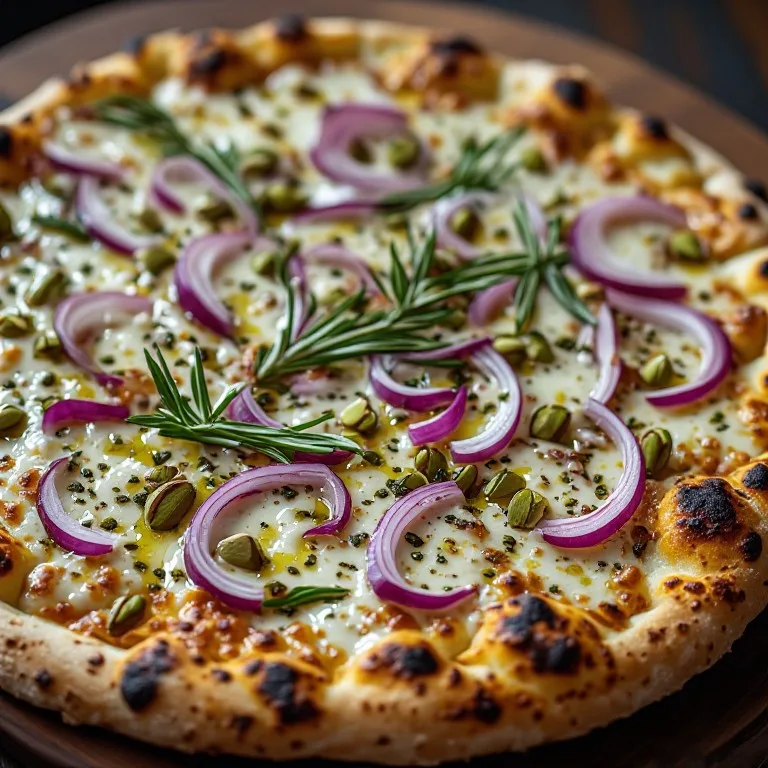


The Rosa is the pizza that made people fly to Phoenix. No tomato sauce — just cold-fermented dough, grated Parmigiano-Reggiano, thinly sliced red onion tossed in olive oil, whole rosemary needles, and a handful of crushed Arizona pistachios added in the final two minutes of the bake so they toast rather than burn. Chris Bianco has served this exact combination since the 1990s, and it has not changed because nothing about it needs to.
What You Need to Know Before You Start
The dough takes 48 to 72 hours to ferment in the refrigerator. This is not optional — the long cold fermentation is what gives Bianco’s crust its complex flavor and its extensible, blistery texture. Plan accordingly. Everything else takes under an hour.
A pizza steel or stone, preheated for 60 minutes at 550°F, is the other non-negotiable. Without it, the undercarriage of the pizza will be pale and soft rather than charred and crackling. If you don’t own one, the back of a heavy sheet pan is a workable substitute but will produce a noticeably different result.
The Dough: Why Cold Fermentation Matters
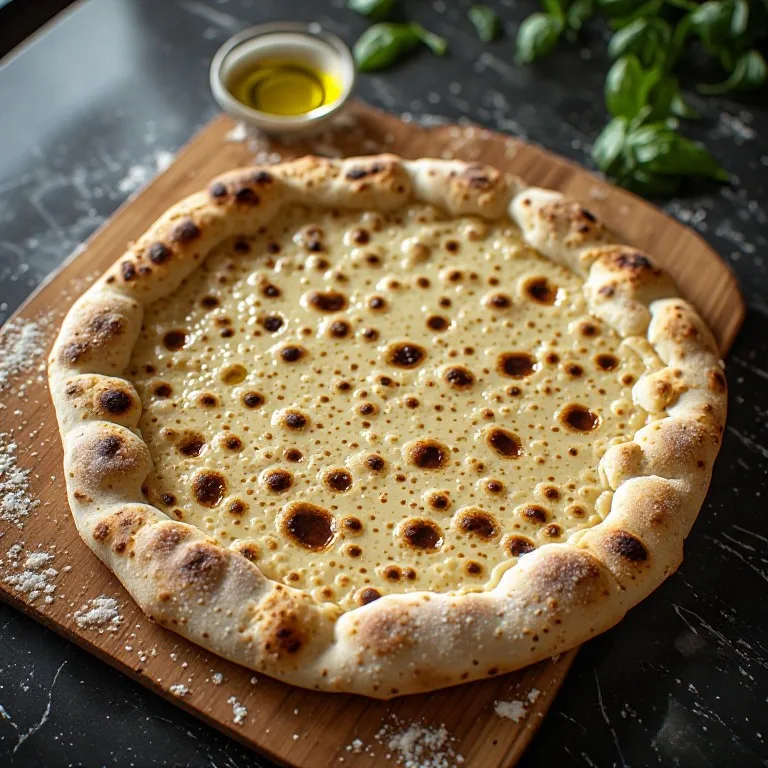
Bianco’s dough is a simple formula — flour, water, salt, a small amount of instant yeast — and all its complexity comes from time in the refrigerator. At 38°F, yeast activity slows dramatically while the enzymes in the flour continue working: they break down starches into sugars (which caramelize in the oven) and proteins into amino acids (which contribute to browning and flavor). The organic acids produced during the extended fermentation give the crust a mild, yeast-forward tang that you cannot reproduce in a 4-hour room-temperature dough.
The cold also develops gluten structure gradually. After 48 hours of slow fermentation, the dough is extensible and relaxed — it stretches without fighting back and tears less easily. Pull the dough from the refrigerator, rest it 10 minutes to let the gluten relax slightly, and it will stretch to 12 inches with patient coaxing.
Use bread flour for the most chew, or a 50/50 blend of bread flour and Italian 00 flour for a slightly more tender result. All-purpose flour works in a pinch but produces a crust with less structure. Do not use self-rising flour.
The Toppings: Order Matters
Apply toppings in this order, and only this order:
1. Parmigiano-Reggiano first, directly on the dough. Freshly grated on a Microplane — not the green-can pre-grated variety. The cheese melts into the dough as the pizza bakes, forming the base that everything else sits on. About ¾ cup (2 oz) grated very fine covers a 12-inch pizza.
2. Red onion, pre-oiled, over the parm. Toss the sliced onion with olive oil and sea salt before it goes on the pizza — the oil coating prevents the onion from burning at the edges before it has time to wilt, and the salt begins drawing out moisture so it collapses rather than steaming. Slice thin: no thicker than ⅛ inch. Thick slices won’t cook through in 12 minutes at home-oven temperatures.
3. Rosemary needles, whole, scattered over the onion. Strip them from the stems. Keep them whole — chopped rosemary releases too much volatile oil too quickly and can taste soapy; whole needles release flavor more slowly and stay aromatic without dominating.
4. Pistachios in the last two minutes only. This is the move that separates a properly made Rosa from a burned one. See the FAQ below.
A Note on Oven Temperature and Timing
Bianco bakes in a wood-burning oven at temperatures approaching 700°F. Your home oven maxes out at 500 to 550°F. That difference means your pizza will take 11 to 12 minutes rather than 4 to 5. At home-oven temperatures, the top and bottom of the pizza cook more slowly and more evenly — which is why the onion caramelizes rather than chars and why the Parmesan has time to develop a golden-brown color rather than simply melting.
If your oven has a broiler in the main cavity (not a separate drawer), you can activate the broiler in the last 90 seconds of baking to get aggressive charring on the crust edge. Watch it constantly if you do this; 90 seconds under a broiler is the difference between beautiful leoparding and a scorched rim.