


Pin It

Texas Roadhouse Portobello Mushroom Chicken

Texas Roadhouse Portobello Mushroom Chicken
Jump to Recipe
Prep 20 min (plus 4 hr marinade) Cook 25 min Serves 4
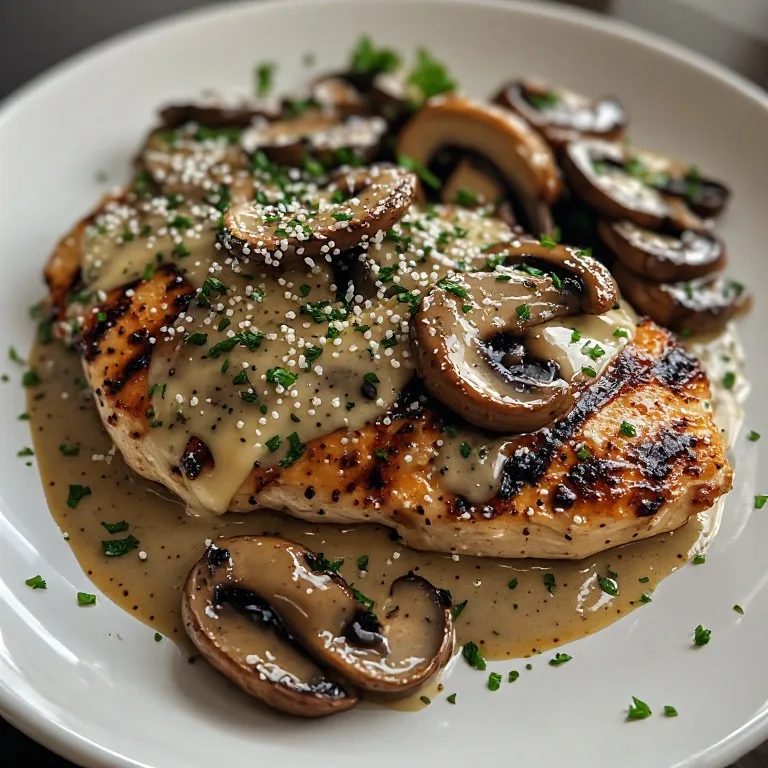
Quick answer: Texas Roadhouse Portobello Mushroom Chicken is a marinated, charbroiled chicken breast from the Chicken Specialties menu, topped with a portobello mushroom cream sauce and two-cheese finish: a slice of melted Monterey Jack and a sprinkle of Parmesan. It is not Swiss cheese and it is not just mushroom slices — the restaurant serves a glossy portobello sauce that clings to the chicken, with the cheese broiled on top for a golden, restaurant-quality finish. At the restaurant the dish runs about $14.99–$17.49 with two Legendary Sides; four home servings cost about $18–22 total, or roughly $5 per person. Prep time is about 20 minutes active work plus at least 4 hours of marinade time (overnight is better).

Shop the tools

Gear matched to this recipe. These are Amazon affiliate links — we may earn a small commission if you buy, at no extra cost to you.

As an Amazon Associate, Copycat Spices earns from qualifying purchases. Product images are generic illustrations, not the exact item listed.

Texas Roadhouse Portobello Mushroom Chicken

Texas Roadhouse Portobello Mushroom Chicken copycat: overnight-marinated grilled chicken, a scratch portobello cream sauce, and the two-cheese finish (Monterey Jack + Parmesan) most people get wrong — at home for about $5 a serving versus $16.

Medium Prep: 20 min (plus 4 hr marinade) Cook: 25 min Total: 4h 45m4 servings ~$4.50/serving
Prep20 min (plus 4 hr marinade)
Cook25 min
Total4h 45m
Servings
4
At home~$4.50/serving
vs
Restaurant~$20.25/serving
You save ~78%

The Story Behind the Recipe

Texas Roadhouse Portobello Mushroom Chicken copycat: overnight-marinated grilled chicken, a scratch portobello cream sauce, and the two-cheese finish (Monterey Jack + Parmesan) most people get wrong — at home for about $5 a serving versus $16.

Nutrition Facts

Per serving (4 servings)
Calories430
Total Fat20g
Total Carbs7g
Dietary Fiber1g
Sugars3g
Protein58g
Sodium560mg

* Estimated values based on standard recipe preparation. Actual values may vary.

Ingredients

  • Overnight marinade
  • Portobello sauce
  • Two-cheese finish

Instructions

💡
Pro tip: This recipe tastes even better the next day. The flavors need time to meld together in the fridge.
❄️
Storage: Keeps in an airtight container in the fridge for up to 2 weeks. Freezer-friendly for up to 3 months.
🎃 Free Halloween cookbook — download now The Copycat Halloween Cookbook A ready-made, photo-illustrated PDF of our best halloween copycat recipes — free to download, no building required. Pay what you want to support if you love it.

Free PDF — instant download. We'll also send new seasonal copycat recipes now and then; unsubscribe anytime. Or just download it →

Copycat Texas Roadhouse Portobello Mushroom Chicken

Prep time: 20 min active (plus 4–12 hr marinade) Cook time: 25 min Servings: 4

Texas Roadhouse lists the Portobello Mushroom Chicken under Chicken Specialties — six items that don’t get the traffic of the steak section but consistently rank among the highest-protein, best-value plates in the restaurant. This one runs $14.99–$17.49 with two Legendary Sides. Four home servings cost about $18–22 total.

The dish works because of three things: an overnight marinade that seasons the chicken from within rather than just the surface, a scratch portobello cream sauce built in the same pan the chicken cooked in, and a two-cheese broil finish that most copycat recipes either skip or get wrong. The chicken does not sit naked under a pile of sautéed mushrooms; it sits under a cohesive portobello sauce with Monterey Jack melted on top and Parmesan sprinkled over that. The cheese matters and the order it goes on matters.

Cost Comparison: Home vs. Restaurant
Texas RoadhouseHomemade (4 servings)
Portobello Mushroom Chicken + 2 sides~$14.99–$17.49 per person—
Feed 4 people~$60–70~$18–22 total
Per serving~$15–17~$5

The chicken accounts for most of the home cost: four boneless skinless breasts run about $12–16 at a grocery. Two portobello caps cost about $3–4. Monterey Jack and Parmesan add another $2–3. The marinade uses pantry staples.

The Cheese That Trips Everyone Up

Most people who make a mushroom chicken at home reach for Swiss cheese. Swiss is the classic pairing for mushrooms in European cooking — fondue, croque monsieur, schnitzel. But Texas Roadhouse uses Monterey Jack, not Swiss.

Monterey Jack has a milder, butterier flavor than Swiss with less of the nutty sharpness that can compete against an earthy mushroom sauce. It also has a superior melt for this application — it goes smooth and glossy under the broiler rather than stretching or releasing excess oil. The Jack slice sits over the portobello sauce and acts as a neutral, creamy binder that holds the sauce to the chicken without asserting a strong cheese flavor of its own.

The Parmesan goes on top, after the broil. It adds a salty, granular sharpness that cuts through the richness and signals to your palate that this dish is done — a finisher, not a melted layer. Pre-shredded Parmesan from a canister is worth avoiding here: it contains cellulose and anti-caking agents that prevent clean melting and produce a grainy texture. Freshly grated from a block takes 90 seconds and produces a noticeably better result.

Why a Scratch Portobello Sauce, Not Condensed Soup

The most common shortcut in copycat versions of this dish is condensed cream of mushroom soup thinned with water or milk. It produces a pale, gluey sauce with a specific tinned-vegetable flavor that reads clearly as Campbell’s, not restaurant.

The scratch sauce in this recipe takes about 10 minutes and uses four ingredients: butter, garlic, chicken stock, and a small amount of cream. The technique is straightforward — sauté the portobello slices until genuinely golden (not grey), deglaze with stock and let it reduce, finish with cream to bind. The result is a glossy sauce that clings rather than pools, with a clean mushroom flavor that isn’t fighting with salt and stabilizers.

One technique detail that matters: do not crowd the mushrooms and do not stir continuously. Portobello releases a large amount of moisture as it cooks. If you move it constantly, that moisture steams the mushrooms rather than evaporating away from them. Leave the slices undisturbed in the pan for 2–3 minutes per side and let the liquid cook off — you will see the mushrooms reduce in size and develop a golden color on the pan-contact surface. That color is flavor. Grey mushrooms are the result of crowding or constant stirring.

The chicken fond left in the pan after searing is the sauce’s base. Don’t wash the pan between steps — the browned bits that scrape up when you add the butter are what gives the sauce its savory depth.

The Overnight Marinade

The restaurant marinates and charbroils the chicken — the marinade is what makes the finished breast more than just a seasoned surface. A basic olive oil and spice rub seasons the outside; a soy-Worcestershire marinade penetrates the muscle fibers and seasons the chicken through its full thickness.

The components in the marinade each do specific work:

  • Soy sauce provides salt and glutamates that penetrate deeply; it is the backbone of the savory flavor
  • Worcestershire adds layered umami (anchovies, tamarind, molasses base) and a slight sweetness
  • Brown sugar caramelizes on the grill into char marks similar to what the restaurant’s charbroiler produces
  • Smoked paprika adds color and a faint char-adjacent flavor
  • Fresh garlic disperses into the surface during the soak and chars slightly during cooking

Four hours is the functional minimum. Overnight (8–12 hours) is better — not because the chicken marinates more deeply past a certain point (it doesn’t; the penetration plateaus), but because an overnight soak means a more fully relaxed texture in the finished breast. If you are pressed for time, even 30–60 minutes is better than no marinade at all; the surface flavor will still benefit.

The Broil Step

This is the step most home copycat versions omit or rush. Adding the Monterey Jack to a hot pan off heat and hoping it melts from residual heat produces an uneven, partially-melted result with patches of warm but solid cheese alongside runny spots. The broiler solves this uniformly.

Set the broiler to high. Position the rack so the dish sits about 6 inches below the broiler element — not the top position (too close; the cheese burns before it melts) and not the middle (too far; it takes longer and the mushroom sauce starts to dry at the edges). At 6 inches under a high broiler, the Jack slice reaches full melt and light golden in 60–90 seconds. Watch it the entire time. Pull immediately when the surface is uniformly melted with a few golden spots at the edges.

If you don’t have a broiler-safe dish, the final assembly can be done in the same cast iron skillet: tent the skillet loosely with aluminum foil and set it over very low heat for 3–4 minutes to melt the cheese via trapped steam. The broiler finish is better and more consistent, but the foil method works in a pinch.

What Sides Work

Texas Roadhouse serves this with two choice Legendary Sides. The portobello cream sauce functions as a gravy, which makes certain side pairings particularly strong:

  • Copycat Texas Roadhouse Mashed Potatoes — the portobello sauce pools around the potatoes and doubles as a gravy; this pairing is the most restaurant-accurate full plate
  • Seasoned rice — absorbs the sauce the same way as potatoes; a lower-calorie option that doesn’t compete with the mushroom flavor
  • Copycat Texas Roadhouse Green Beans — the bacon-forward preparation adds smokiness that contrasts well with the earthy portobello sauce
  • Steamed broccoli — the cleanest pairing for a protein-forward plate; the broccoli cuts through the cream and cheese richness
  • House salad, dressing on the side — the highest-protein, lowest-calorie full-plate option alongside the 58-gram protein chicken
Tips & Variations

For the mushrooms: Leave the dark gills on — they add flavor and body to the sauce. Some copycat recipes scrape them off for a cleaner presentation, but the gills are where most of the mushroom’s flavor is concentrated. If you prefer a cleaner-looking sauce, scrape the gills with a spoon before slicing.

For a lighter sauce: Replace the heavy cream with the same amount of freshly grated Parmesan, stirred into the reduced stock off heat. The starch in the Parmesan thickens the sauce through emulsification rather than fat; the result is a slightly sharper, leaner sauce with less richness but better cheese integration.

For the marinade: The soy sauce provides most of the salt. If you substitute regular soy sauce for low-sodium, reduce the quantity to 1 tablespoon and taste before adding more — the marinade will be noticeably saltier and the finished dish will approach the restaurant’s 1,030mg sodium per serving rather than the roughly 560mg this recipe produces.

For meal prep: The marinade and mushroom sauce can both be made 2–3 days ahead. The sauce keeps refrigerated and reheats gently over low heat with a splash of stock if it thickens too much. The chicken should be grilled fresh; marinated breasts can sit in the marinade for up to 24 hours before cooking.

Serving the sodium picture: Texas Roadhouse’s published nutrition shows 1,030 milligrams of sodium for this dish — higher than it looks for a simple grilled chicken plate. This homemade version runs about 560mg per serving with low-sodium soy sauce and measured seasoning. The difference is worth noting if sodium management is part of your goal.

See also: Copycat Texas Roadhouse Herb Crusted Chicken — the same restaurant’s dill-basil-oregano herb crust with caramelized lemon, the other prominent chicken specialty; Copycat Texas Roadhouse Grilled Salmon — Norwegian salmon with lemon pepper compound butter, the same high-heat technique applied to seafood; Copycat Texas Roadhouse Steak Seasoning — the full proprietary steak rub and why the chicken uses a fundamentally different marinade; Copycat Texas Roadhouse Rolls — the honey-yeast rolls served warm to every table.
🥗

Make It Healthier

Love Texas Roadhouse Portobello Mushroom Chicken but want a lighter version? Try these simple swaps:

  • ✓Replace the heavy cream in the mushroom sauce with an extra tablespoon of freshly grated Parmesan — it thickens the sauce through emulsification rather than fat, trimming about 40 calories per serving.
  • ✓Use low-sodium soy sauce in the marinade (which this recipe already calls for) and skip the salt in the sauce — sodium drops from the restaurant's 1,030mg to closer to 400–450mg per serving.
  • ✓One Monterey Jack slice per breast is the right portion — do not double the cheese. The sauce itself provides richness and the Parmesan finish adds flavor; the Jack slice is structure, not the main flavor driver.
  • ✓Pair with steamed broccoli and a house salad (dressing on the side) instead of mashed potatoes to keep the full plate under 600 calories while preserving the dish's 58-gram protein anchor.

Frequently Asked Questions

What cheese does Texas Roadhouse use on Portobello Mushroom Chicken?

The restaurant uses Monterey Jack cheese — not Swiss, which is the most common assumption people make about a mushroom chicken dish. A single slice of Monterey Jack goes on the chicken and is broiled until melted and lightly golden, then finished with a sprinkle of Parmesan on top. Monterey Jack has a milder, creamier melt than Swiss and doesn't compete with the earthy portobello sauce; it acts as a neutral binder between the chicken and the mushroom topping. Using Swiss produces a sharper, more assertive flavor that works against the dish's balance.

What is the portobello mushroom sauce at Texas Roadhouse?

It is a pan sauce built from sliced portobello mushrooms sautéed in butter with garlic, deglazed with chicken stock, and finished with a small amount of cream or Parmesan to bind it into a glossy sauce that coats the back of a spoon. It is not condensed cream of mushroom soup thinned with water — a common shortcut in copycat recipes that produces a gluey, salty paste rather than a clean mushroom sauce. The scratch version takes about 10 minutes and the flavor difference is significant: cleaner mushroom depth, better cling, and a sauce that reads as grilled-restaurant rather than casserole.

Do you need to marinate the chicken?

The restaurant marinates and charbroils the chicken — the marinade is a key part of the flavor, and it shows in the finished dish. A minimum of 4 hours works, but an overnight soak (8–12 hours) produces meaningfully better results: more tender chicken, deeper savory flavor throughout the breast, and a surface that sears faster and develops better char marks. The marinade is built from olive oil, soy sauce, Worcestershire, garlic powder, onion powder, smoked paprika, a small amount of brown sugar (caramelizes into char marks), and minced garlic. If you are short on time, even a 1-hour marinade is better than none, but the chicken will be blander and less restaurant-like.

How do you melt the cheese properly on this dish?

Broil it. Place the assembled dish — chicken with mushroom sauce and the Monterey Jack slice on top — under a broiler set to high for 60–90 seconds, watching the whole time. The Jack slice should be fully melted and just beginning to bubble at the edges with a light golden blush on the surface, not brown or crisp. Sprinkle the Parmesan after pulling from the broiler — it does not need additional heat. Trying to melt the cheese from residual pan heat produces uneven, patchy results; the broiler is the reliable method. Keep the rack at a middle position (about 6 inches from the element), not the top rack, to avoid burning before the cheese melts.

Is Texas Roadhouse Portobello Mushroom Chicken healthy?

It is one of the leaner entrées on the Texas Roadhouse chicken menu — 430 calories and 58 grams of protein — but the sodium is higher than the grilled presentation suggests: approximately 1,030 milligrams per serving. That is a significant figure for what looks like a simple grilled chicken dish, and it is something to watch if you are managing sodium intake. The protein-to-calorie ratio (58g protein / 430 calories) is excellent and makes this one of the most protein-dense chicken entrées on the menu. The homemade version brings sodium down to roughly 500–600mg per serving depending on how much salt you add to the marinade and sauce.

Can I use a different mushroom?

You can, but portobello produces the best result and most closely matches the restaurant dish. Portobello mushrooms (which are simply mature cremini mushrooms) have a dense, meaty texture that holds up to sautéing and to the brief broiler pass without going limp, and a deeper, earthier flavor than button mushrooms or a generic blend. Baby bellas (which are cremini) are the closest substitute if large portobellos are not available — chop them roughly the same way. Shiitake adds a stronger, more intense umami note that is noticeable but not wrong. Button mushrooms produce a blander sauce; white button is the weakest choice for this dish.

What sides pair well with this?

Texas Roadhouse serves it with two Legendary Sides. The best home pairings depend on what you want the plate to do. Mashed potatoes work particularly well because the portobello cream sauce doubles as a gravy that pools around the potatoes. Seasoned rice absorbs the sauce the same way and is a lower-calorie option. Steamed broccoli or a house salad keeps the full plate protein-forward — both are good if the goal is a high-protein, lower-carb meal. Green beans (the Texas Roadhouse bacon-forward style) add a smokiness that contrasts nicely with the earthy mushroom sauce.

Why does my chicken dry out on the grill?

Two causes, usually together. First, the chicken isn't at uniform thickness — the thin tail cooks faster than the thick center, and by the time the center hits 165°F the edges are already dried out. Pound the breasts to an even 3/4-inch thickness before marinating. Second, the marinade is not long enough to penetrate deeply — a short marinade seasons only the surface, so the interior cooks without flavor or moisture protection. A 4–8 hour marinade lets the salt, acid, and oil penetrate into the muscle fibers, which holds moisture through the cook. An instant-read thermometer pulled at exactly 165°F prevents overcooking on the back end.

Love this recipe? Share it!

Free PDF: our 12 most-wanted copycat recipes — instant download.

Made it? Buy us a coffee

Every recipe here is free, with no paywalls. If this one was a hit at your table, a small tip keeps new copycats coming.

$

Texas Roadhouse is a trademark of its owner, used here only to describe the dish this recipe recreates. This is an independent copycat written in our own words — Copycat Spices is not affiliated with, endorsed by or sponsored by Texas Roadhouse.

Ratings & Reviews

—
No ratings yet

Rate this recipe

Click a star to rate

Leave a Review

0/500

CS

Copycat Spices Editorial

Researched + fact-checked. Every recipe on Copycat Spices is built from published sources — official ingredient lists, brand-published recipes, interviews and food-science references — and fact-checked before it goes live, then written as clear, step-by-step instructions for home cooks of all skill levels.

Learn more about our mission →