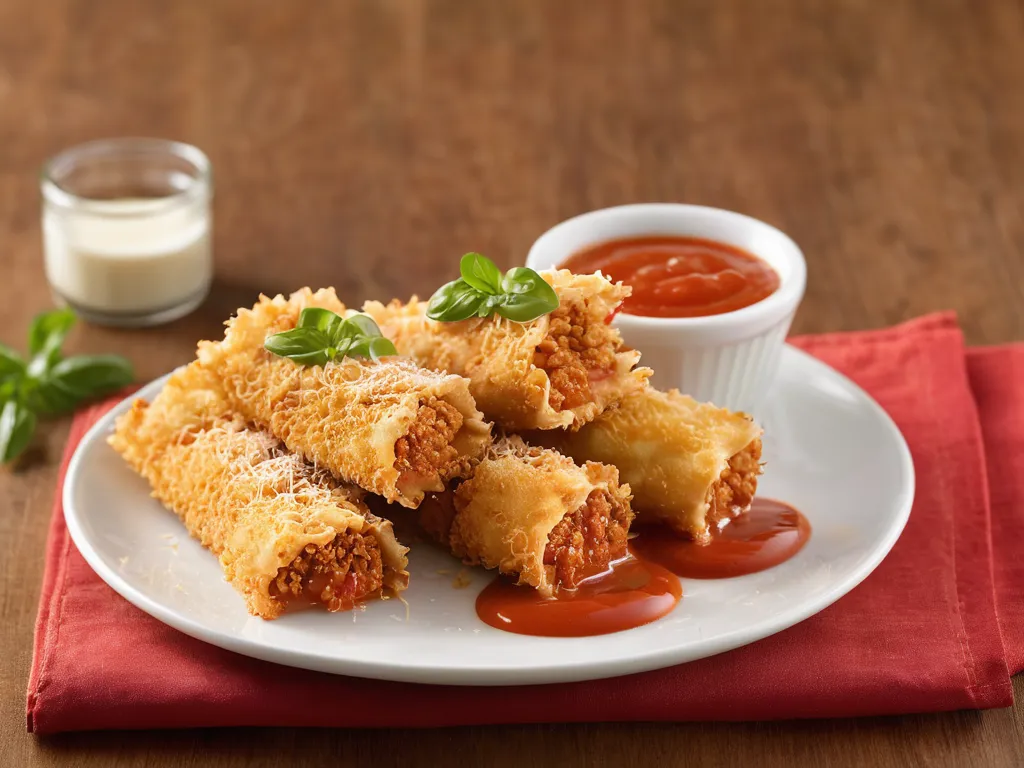
Copycat Olive Garden Lasagna Fritta (Five-Cheese Fried Lasagna Rolls)
Prep time: 40 min | Freeze time: 1–2 hours | Cook time: 15 min | Makes: 12 rolls (6 appetizer servings)
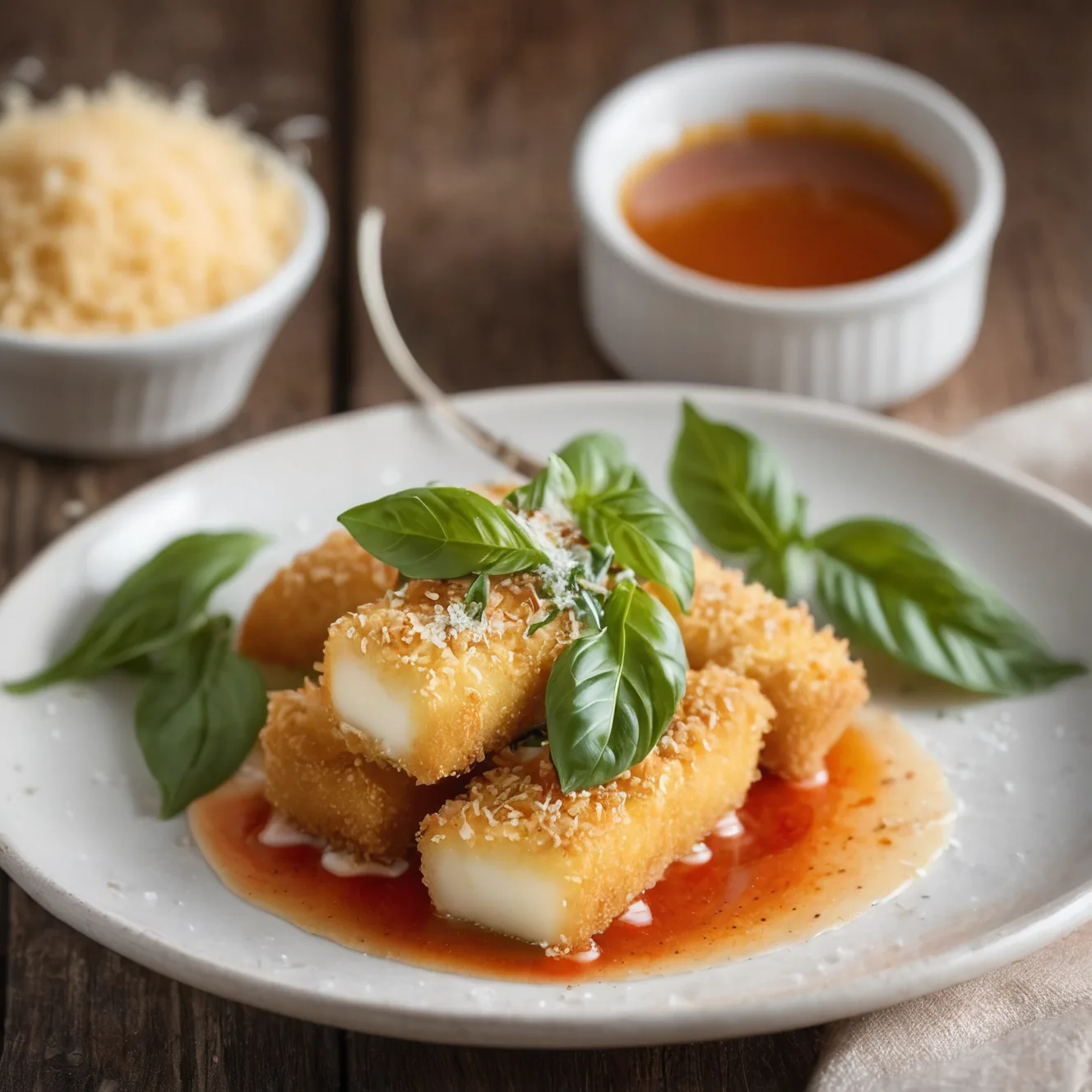
Olive Garden’s Lasagna Fritta is breaded, deep-fried lasagna: a five-cheese filling wrapped in pasta, coated in Parmesan breadcrumbs, fried golden, and served over Alfredo. The restaurant currently finishes it with its house meat sauce (pan-seared beef and Italian sausage) and grated Parmesan on top. A full order runs about 1,130 calories, 76 grams of fat, and 1,800 milligrams of sodium.
The filling itself is meat-free — ricotta, Romano, mozzarella, Asiago, and Parmesan. This copycat rolls each noodle into a cylinder, which is the most reliable way to make it at home, and it fixes the mistake that ruins most attempts: the rolls have to be frozen before frying, not just refrigerated, or the cheese leaks into the oil. Below is the full method, plus how to plate it OG-style (Alfredo base, meat sauce on top) or lighter and vegetarian (marinara instead).
Why Roll Them Into Cylinders
The restaurant serves breaded, fried lasagna pieces. At home, rolling each noodle into a cylinder is the most forgiving version of that, and it’s worth understanding why.
If you build a flat lasagna, chill it, and cut it into blocks, the cut edges of each block are exposed — the filling is in direct contact with hot oil on two sides. The cheese at those edges begins to melt and seep before the breading on the broad faces can set. You lose filling into the oil, the interior ends up as a reduced version of what you started with, and the crust on the cut edges comes out thinner than the rest.
A rolled cylinder has no exposed edges. The filling is sealed inside a tube of pasta, and the seam is pressed shut. The pasta and breading form a continuous barrier around the outside. When you drop it into 350°F oil, heat travels uniformly from outside to center — the crust sets before the interior ever reaches a temperature that would make the cheese run. The roll holds its shape through the entire frying time and delivers the same amount of filling you put in.
The cylinder format also makes each piece consistent: one noodle’s worth of filling, the same diameter and the same ratio of filling to breading, so every roll cooks in the same amount of time. If you’d rather have smaller, squarer pieces closer to the restaurant’s look, fold each noodle into thirds instead of rolling — the freeze-then-fry steps don’t change.
The Five-Cheese Filling
The filling mirrors Olive Garden’s five-cheese lasagna, and each cheese contributes something the others don’t:
Ricotta is the base. Whole-milk ricotta provides the mild, slightly grainy texture that gives the interior its “this is lasagna” quality. The critical technique with ricotta is draining: straight from the tub, it’s wet enough to make the filling loose. A wet filling won’t spread as cleanly, won’t hold its shape as well when rolled, and increases the chance of moisture oozing during frying. Drain it in a fine-mesh strainer for at least 30 minutes, longer if you have time.
Romano is the sharpness. Pecorino Romano is saltier and more pungent than Parmesan — it has a distinctive animal sharpness that Parmesan doesn’t. In this otherwise mild blend, Romano is what keeps the filling from tasting flat. Use finely grated Romano rather than coarse shreds; it distributes more evenly.
Mozzarella is the stretch and melt. Low-moisture shredded mozzarella (not fresh) is the right choice. Fresh mozzarella releases water as it heats, which would destabilize the filling. Shredded low-moisture mozzarella melts smoothly and creates the pull when you bite through the roll.
Asiago is the complexity. Asiago is an Italian cow’s-milk cheese with a mild, slightly nutty character — sharper than mozzarella but softer than Romano. It melts smoothly and adds a distinct Italian dairy note that neither mozzarella nor Romano provides alone. Use the softer fresh Asiago (labeled “Asiago Pressato” or “fresh Asiago”) rather than aged Asiago, which is firmer and harder to shred. Avoid pre-shredded bags of any of these — the anti-caking agents in commercial pre-shreds prevent smooth melting.
Parmesan is the seasoning. Finely grated Parmesan distributes throughout, adding saltiness and a clean sharp finish. It also adds structure — Parmesan’s protein content helps the mixture hold together when rolled.
The egg yolk (not a whole egg) binds the mixture just enough. A whole egg adds too much moisture; the yolk alone provides the binding without thinning the filling.
The Breading: Two Layers of Protection
The breading is a standard Italian-style dredge — flour, egg wash, seasoned breadcrumbs — but the execution of each step matters.
The flour layer creates a dry surface for the egg wash to adhere to. Without it, the egg wash slips off the pasta and the breadcrumbs follow. Shake off the excess — a thick flour layer creates a gummy barrier between the pasta and the crust that fries into a raw, dense coating.
The egg wash is the glue layer. Beat the eggs until they’re fully uniform with no streaks of white. Incomplete beating means uneven adhesion.
The breadcrumb layer is where the crust comes from. A 50/50 blend of Italian seasoned breadcrumbs and panko gives the best result: the Italian breadcrumbs provide seasoning, adhesion, and a fine particle size that coats every surface; the panko provides the open, coarse structure that fries to a distinct crunch rather than a uniform golden shell. The panko creates micro-air-pockets in the crust that stay crispy longer than an all-Italian-breadcrumb coating. The Parmesan in the mix browns quickly and adds a slightly richer, darker color at the hot spots. Press the breadcrumbs firmly — a light pat leaves gaps.
After breading, return the rolls to the freezer for 10 minutes before frying. This final chill sets the egg wash and breadcrumbs against each other and re-firms the filling after the handling of the breading process.
Frying Temperature Is Not a Suggestion
350°F is the correct oil temperature for Lasagna Fritta. Here’s why the number matters:
At 325°F, the crust takes longer to set. Longer frying time means more oil absorption and a greasier result. The filling also has more time to soften before the crust protects it, which raises the chance of a seam opening.
At 350°F, the crust begins to set within 60 seconds and is fully browned in 4–5 minutes. That’s fast enough that the filling’s temperature only reaches the point where it flows slightly at the very end — not enough to escape.
At 375°F, the exterior browns before the pasta is heated through. The crust looks done but the center is cold, and the pasta and filling snap apart when you bite rather than holding together.
Use an instant-read thermometer clipped to the side of the pot. Oil temperature drops sharply when rolls are added — fry 2–3 at a time and let the oil recover between batches rather than crowding the pot. Crowded oil recovers slowly, and the rolls end up sitting at 310–320°F for most of their cook time, absorbing more oil than necessary.
The Sauces: Alfredo Base, Meat Sauce (or Marinara) on Top
Olive Garden plates Lasagna Fritta over Alfredo. The current menu tops the fried lasagna with the restaurant’s house meat sauce — made with pan-seared beef and Italian sausage — plus grated Parmesan. Older versions, and most copycat recipes, use marinara instead of meat sauce, which keeps the dish vegetarian and lighter. Either way, the Alfredo is the foundation on the plate, not a side dip.
That layering is what makes the dish work. The Alfredo’s richness clings to the bottom of each roll as you pick it up; the tomato or meat sauce hits the top. Every bite has the cheese filling in the center, the crispy breading on the outside, and both sauces — one rich, one bright — in the tasting sequence.
The Alfredo for this application should be slightly thinner than pasta Alfredo — you want it to pool and spread, not cling to a noodle. Butter, cream, and Parmesan are the three components. Keep it warm on the lowest heat; Alfredo breaks at a boil. The pinch of nutmeg is standard Italian technique — at 1/4 teaspoon it’s imperceptible as nutmeg but adds a faint warming quality to the finish.
The tomato sauce is a quick one: crushed San Marzano tomatoes, garlic, olive oil, basil, 15 minutes at a simmer. To replicate the current restaurant topping, brown half a pound of a beef-and-sausage blend first, drain the fat, and simmer the tomatoes on top to make a meat sauce. For a vegetarian plate, leave it as marinara. Spoon it over the rolls rather than drowning them — the goal is contrast to the Alfredo base, not a pool of sauce.
If you’re only making one sauce, make the Alfredo — it’s the one that distinguishes this appetizer from every other fried pasta dish.
Make-Ahead Strategy
Lasagna Fritta is work, so staging it is worth planning:
Up to two weeks ahead: Roll the cylinders, wrap so they don’t stick, and freeze. Frozen unbreaded rolls hold well.
1–2 hours before serving: Pull the rolls from the freezer, bread them while still frozen, then return the breaded rolls to the freezer for 10 more minutes. Make both sauces and keep them warm, or refrigerate to reheat.
At service: Bring the oil to 350°F and fry in batches. Fry and serve immediately — fried Lasagna Fritta lose their crunch within 20 minutes as steam from the filling softens the crust from inside.
More Olive Garden Favorites to Try
Lasagna Fritta is the appetizer — round out the meal with these:
- Olive Garden Breadsticks — the garlic-butter yeast rolls that arrive before every course, with the exact soft-then-crisp texture from the oven finishing step
- Copycat Olive Garden Chicken Alfredo — the Alfredo base you’ll make for the plating above also works as the full pasta course; the same Parmesan-butter-cream sauce
- Olive Garden Zuppa Toscana — the sausage-and-kale soup served as an alternative to salad; the dish OG regulars often order alongside breadsticks
- Olive Garden Italian Salad Dressing — the proprietary house dressing that makes the unlimited salad worth eating
See all Olive Garden copycat recipes →