
Pin It

Di Fara Pizza (Dom DeMarco's Three-Cheese Brooklyn Legend)

Di Fara Pizza (Dom DeMarco's Three-Cheese Brooklyn Legend)
Jump to Recipe
Prep 30 min (plus 24–48 hr cold ferment) Cook 10 min Serves 4
Quick answer: Make the dough: combine 2 cups bread flour, 1 tsp salt, 1/2 tsp instant yeast, 1 tsp sugar, 1 tbsp olive oil, and 190ml cold water. Mix until smooth, form into a ball, cover, and refrigerate 24–48 hours. When ready: preheat your oven to its maximum (550°F / 287°C) with a pizza steel or stone on the top rack for at least 60 minutes — do not shortcut this. Remove the dough 2 hours before baking to warm up. Stretch it to 14 inches on a floured peel. Apply the sauce: spread 1/2 cup hand-crushed San Marzano tomatoes (salted, drained of excess liquid). Then, in order: grate 1 oz Grana Padano over the sauce, then lay 4 oz thinly sliced block whole-milk mozzarella (Grande brand or similar) over that. Slide onto the steel and bake 5–6 minutes until the crust chars and blisters. At the 4-minute mark, scatter 3 oz torn fresh fior di latte or fresh mozzarella over the top. Pull the pie. Immediately cut a small bunch of fresh basil leaves with scissors directly over the hot pizza. Drizzle 2 tablespoons of the best extra-virgin olive oil you have in a slow spiral from a height. Rest 1 minute before slicing. The home version costs under $12 for a pie that sells for $32 in Midwood.

Shop the tools

Gear matched to this recipe. These are Amazon affiliate links — we may earn a small commission if you buy, at no extra cost to you.

As an Amazon Associate, Copycat Spices earns from qualifying purchases. Product images are generic illustrations, not the exact item listed.

Di Fara Pizza (Dom DeMarco's Three-Cheese Brooklyn Legend)

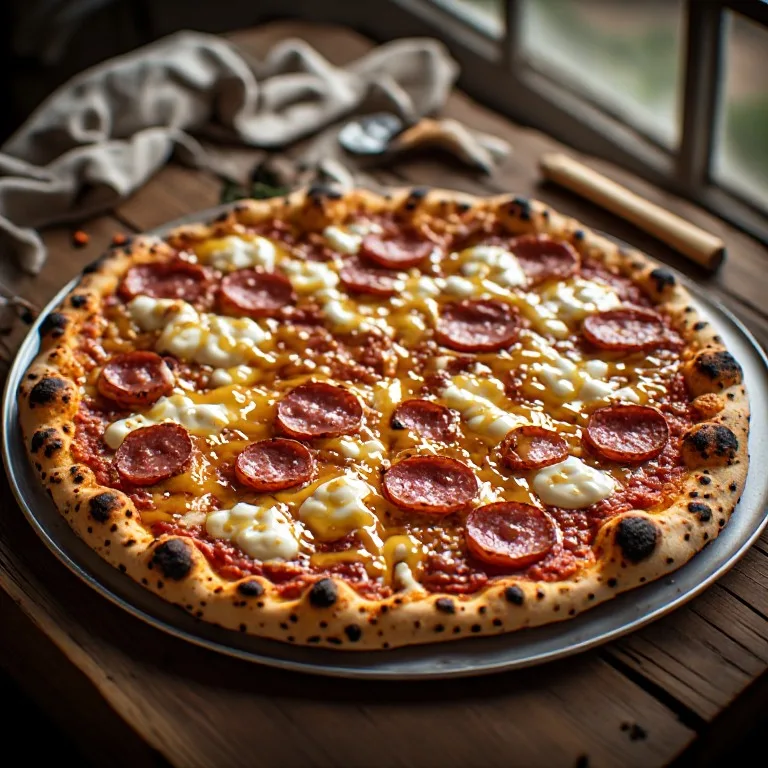
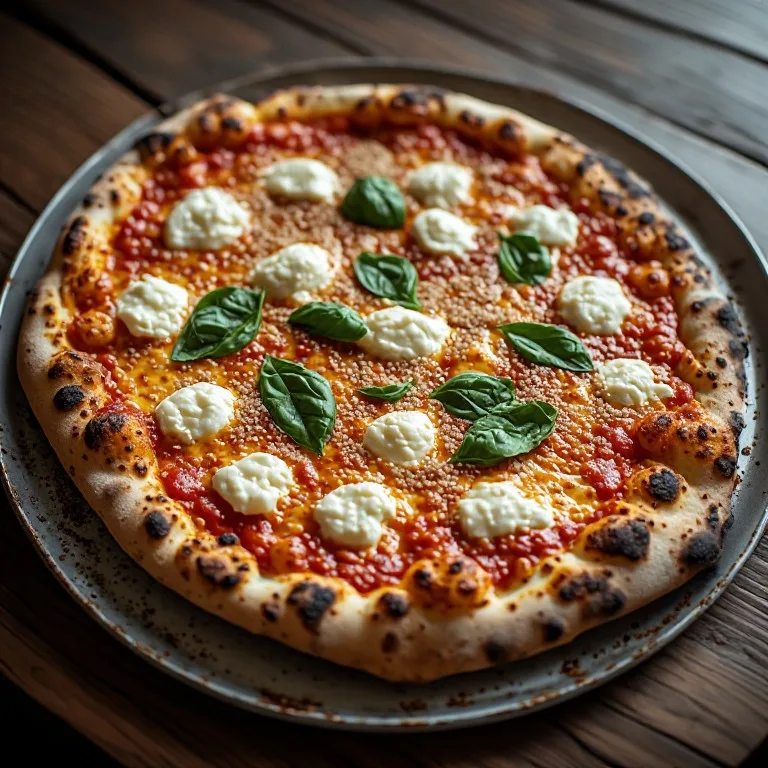
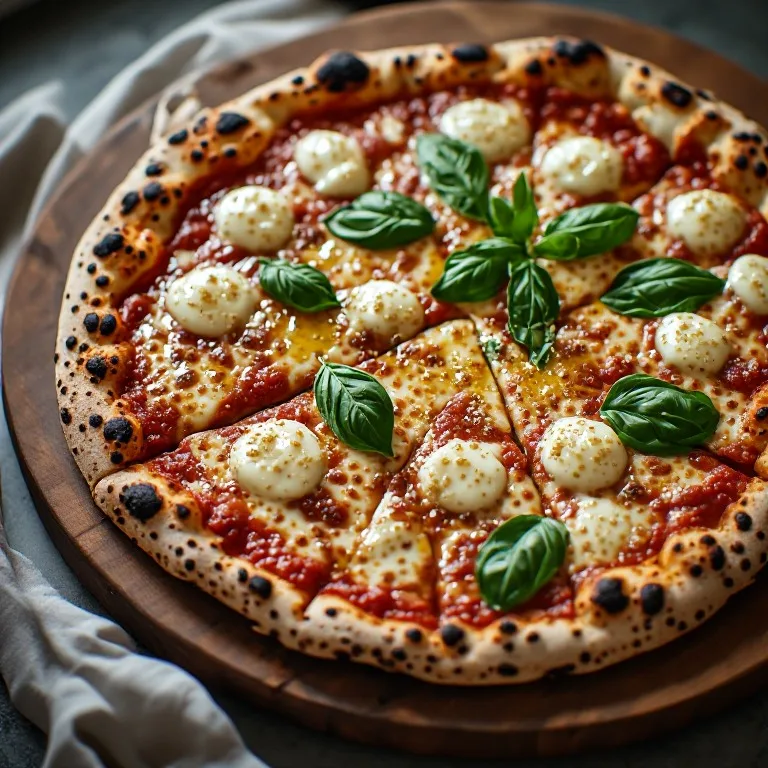
The Di Fara pizza from Midwood, Brooklyn, made at home: slow cold-fermented dough, hand-crushed San Marzano sauce, Grana Padano grated under block mozzarella plus fresh fior di latte added late, baked at maximum heat on a steel, finished with scissors-cut fresh basil and a drizzle of good olive oil. A whole pie at Di Fara costs around $32. The home version costs under $12.

Medium Prep: 30 min (plus 24–48 hr cold ferment) Cook: 10 min Total: 48h 40m4 servings ~$4.50/serving
Prep30 min (plus 24–48 hr cold ferment)
Cook10 min
Total48h 40m
Servings
4
At home~$4.50/serving
vs
Restaurant~$20.25/serving
You save ~78%

The Story Behind the Recipe

Domenico DeMarco opened Di Fara at 1424 Avenue J in Midwood, Brooklyn in 1965, the year after he arrived from Caserta, in the Campanian region of Italy near Naples. For nearly six decades he made almost every pizza himself — cutting the fresh basil with scissors, drizzling the olive oil from a height, running the dough by hand — which is how one small pizzeria came to be called, by Eater, New York Magazine, and GQ, one of the best pizza places in New York City. Dom died on March 17, 2022, at age 85. His family kept the restaurant open: it still stands at 1424 Avenue J, still takes no reservations, still accepts only cash, and still closes when the day's dough runs out. On a Saturday, the wait can reach two hours. A whole pie costs around $32; a slice around $6.

The method Dom built is distinct from a standard New York slice in ways that are easy to learn. Di Fara uses three cheeses applied in a specific sequence: Grana Padano grated directly over the sauce first (not on top of the mozzarella), then sliced block whole-milk mozzarella, then fresh fior di latte added in the last two minutes of baking so it melts without weeping. The fresh basil goes on after the pie exits the oven — the heat wilts it without cooking it to black. The olive oil goes on last, from height, and you use a genuinely good bottle. The cold-fermented dough and a seriously preheated baking steel do the rest.

Nutrition Facts

Per serving (4 servings)
Calories480
Total Fat20g
Total Carbs52g
Dietary Fiber3g
Sugars4g
Protein22g
Sodium680mg

* Estimated values based on standard recipe preparation. Actual values may vary.

Ingredients

  • Dough (makes one 14–16" round pie, serves 2–4)
  • Sauce
  • Cheese (applied in order)
  • Finishing

Instructions

💡
Pro tip: This recipe tastes even better the next day. The flavors need time to meld together in the fridge.
❄️
Storage: Keeps in an airtight container in the fridge for up to 2 weeks. Freezer-friendly for up to 3 months.
🎃 Free Halloween cookbook — download now The Copycat Halloween Cookbook A ready-made, photo-illustrated PDF of our best halloween copycat recipes — free to download, no building required. Pay what you want to support if you love it.

Free PDF — instant download. We'll also send new seasonal copycat recipes now and then; unsubscribe anytime. Or just download it →

Di Fara Pizza (Dom DeMarco’s Three-Cheese Brooklyn Legend, Made at Home)

Prep time: 30 min (plus 24–48 hr cold ferment) Cook time: 10 min Servings: 4

Domenico DeMarco made pizza at 1424 Avenue J in Midwood, Brooklyn from 1965 until he died in March 2022, at age 85. He cut the fresh basil with scissors. He drizzled the olive oil from a height. His family kept the place open, still makes the pizza his way, and the line outside on a Saturday still runs down the block.

The recipe that has held that line for 60 years is not complex. It is specific.

What Makes This Pizza Different

Three things separate a Di Fara pie from every other New York pizza:

The cheese sequence. Block whole-milk mozzarella is the structural cheese, but the Grana Padano is grated directly over the sauce first — under the mozzarella, not on top. That layer of aged Italian cheese seasons the sauce from underneath and adds a savory depth that most pizzas lack. Fresh fior di latte goes on at the very end of baking, in the last 90 seconds, so it barely melts. You get three distinct textures: the stretch of the block mozz, the creamy softness of the fresh cheese, and the salty-sharp underpinning of the Grana Padano.

The finishing. After the pie exits the oven — not before — a small bunch of fresh basil is cut with scissors directly over the hot pizza. The steam from the pie wilts the basil without burning it. Then good extra-virgin olive oil is drizzled from a height, letting it spiral across the surface. These two steps are the moves Dom was famous for, and they are not optional decoration — they are a large part of why the pizza tastes the way it does.

The dough. A cold-fermented, relatively high-hydration dough that develops flavor over 24 to 48 hours in the refrigerator. It produces a crust that is extensible, slightly bready, and capable of charring at the edges while staying chewy at the interior — a specific texture that is not Neapolitan and not a standard New York slice, but a Midwood-specific category that belongs to DeMarco alone.

Cost Comparison: Di Fara vs. Home
Di FaraHomemade
Whole pie~$32under $12 in ingredients
Per serving (1/4 pie)~$8~$3
LocationMidwood, BrooklynYour kitchen

The economics are not the point. The point is that the technique is learnable, the ingredients are mostly available at any good grocery store, and the result — with a preheated baking steel and a 48-hour ferment — is genuinely excellent pizza.

The Dough: Why Cold Fermentation Matters

Most home pizza dough is made and baked the same day. It works, but the resulting crust is one-dimensional — bready without complexity, and prone to tearing when you try to stretch it thin.

Cold fermentation slows the yeast down so that instead of simply converting sugars to carbon dioxide for leavening, the yeast and naturally occurring enzymes have time to work on the flour’s starches and proteins. The result is a dough with:

  • Better flavor — organic acids accumulate over 24–48 hours, adding depth that reads as something approaching a very mild sourdough
  • Better extensibility — the long ferment relaxes the gluten network so the dough stretches without springing back or tearing
  • Better crust color — fermented dough contains more residual sugars that Maillard-react at high heat, producing a deeper golden-brown to charred-edge color faster

You need nothing special for cold fermentation — just a covered bowl in the refrigerator. Mix the dough the night before the night you plan to bake. That is the entire commitment. That same overnight cold rest rewards sweeter, enriched styles too — it is one of the secrets behind our copycat Papa John’s pizza dough.

The Cheese Sequence in Detail

Di Fara applies cheese in a specific order that looks wrong to anyone who has only ever made pizza the standard way. The standard way is: sauce, then mozzarella, then other toppings on top. Di Fara’s order:

  1. Sauce first — thin layer of hand-crushed San Marzano, just salt and olive oil
  2. Grana Padano over the sauce — finely grated, a light even layer. This is the step most people leave out. The Grana Padano seasons the sauce and adds an aged-cheese character from underneath.
  3. Block mozzarella — thinly sliced (1/8 inch) from a block of whole-milk low-moisture mozzarella, laid in a single layer
  4. Fresh fior di latte — added in the last 90 seconds of baking, after the block mozz has fully melted. The fresh cheese is soft enough to barely melt; it retains its creamy, milky quality rather than breaking into grease.

The Grana Padano that goes under the mozzarella is easy to overlook. Do not overlook it.

The Steel Preheat: The Step You Cannot Shortcut

Di Fara uses a commercial gas deck oven. The floor of a deck oven is a thick ceramic or stone slab preheated for hours before service. When a shaped pizza hits that surface, heat transfers instantaneously to the dough — the bottom begins crisping before the top has even started to color.

At home, the equivalent is a pizza steel on the top rack of your oven, set to maximum temperature (typically 550°F), heated for a full 60 minutes. Not 30 minutes. Not 45.

The reason is thermal mass. A cold steel simply absorbs your dough’s moisture before it can crisp. A saturated steel dehydrates and crisps the bottom of the dough in the first seconds of contact, while the ambient oven heat and any broiler element you engage handles the top. At 60 minutes, a baking steel holds enough heat to do this properly. At 30, it does not.

If you want something close to Di Fara’s crust at home, this is the non-negotiable step.

The Finishing: Basil and Olive Oil After Baking

Most home recipes call for fresh basil as a garnish after the pizza cools slightly. At Di Fara the basil is cut — with scissors, not a knife — directly over the hot pie as soon as it exits the oven, the move Dom did on nearly every pizza for decades. The difference is meaningful: the heat from the pizza warms the basil just enough to release its volatile aromatics while leaving the leaves bright green rather than black. It perfumes the entire pizza rather than sitting on top of it.

The olive oil is the same principle. A drizzle of good extra-virgin olive oil over a finished pizza — not baked in, but applied after — brings fragrance that cooked oil cannot. Di Fara uses a good Italian olive oil applied from height so it distributes in a fine spiral. Use the best olive oil you have. This is one place where a $20 bottle of olive oil from Liguria or Sicily beats a $6 bottle from a generic source.

Frequently Asked Questions

What makes Di Fara pizza different from a standard New York slice?

Several things. First, the cheese sequence: Grana Padano goes on over the sauce before the mozzarella — not on top — and fresh fior di latte is added in the last two minutes of baking rather than at the start. Second, the finishing: fresh basil cut with scissors after the pie exits the oven, and a drizzle of good extra-virgin olive oil. These are applied after baking, not before, and they change the flavor entirely — the basil stays bright rather than burning, and the olive oil perfumes the whole pie rather than disappearing into the crust. Third, the dough: Di Fara uses a cold-fermented, relatively high-hydration dough that produces a crust with more complexity than a typical same-day pizza dough.

Why three cheeses? What does each one contribute?

The three cheeses serve different functions. Block whole-milk low-moisture mozzarella is the structural cheese — it melts smoothly, stretches in sheets, and holds the slice together without releasing too much water. Grana Padano, grated directly over the sauce before the mozzarella, adds savory depth and a slight sweetness; it seasons the sauce from underneath rather than sitting on top where it would brown too fast. Fresh fior di latte added late barely melts, holding its milky, delicate flavor instead of breaking into grease. Together they provide richness, stretch, depth, and freshness that any single cheese cannot.

Do I need a pizza steel or can I use a sheet pan?

A pizza steel or thick baking stone is strongly recommended. The 60-minute preheat saturates the steel with heat so it can transfer that heat to the dough in seconds — the same function Dom’s deck oven performs. Sheet pans do not retain enough heat: the dough sits on cold metal and steams rather than crisps. If you do not have a steel, a cast-iron skillet or griddle preheated in the same way is the next best option. A baking steel is the single piece of equipment most worth buying if you make pizza at home more than once a month.

Can I skip the cold ferment?

You can use a same-day room-temperature ferment of 1.5 to 2 hours, but the crust will be blander and less extensible. The 24-hour cold ferment requires nothing special — just advance planning. The 48-hour version is noticeably better. Mix the dough on Thursday evening and bake Saturday for a result that genuinely rewards the wait.
🥗

Make It Healthier

Love Di Fara Pizza (Dom DeMarco's Three-Cheese Brooklyn Legend) but want a lighter version? Try these simple swaps:

  • ✓Use 3 oz block mozzarella instead of 4 oz and reduce the finishing olive oil to 1 tablespoon — you save about 80 calories per serving while the three-cheese character of the recipe stays intact.
  • ✓The sauce is already light — San Marzano tomatoes with just salt and olive oil have no added sugar or filler. Serve the pizza with an arugula salad dressed only with lemon and olive oil for a complete, relatively light dinner.
  • ✓Skip the fresh mozzarella (fior di latte) and use slightly more Grana Padano in its place — Grana Padano has roughly half the fat of fresh mozzarella and adds savory depth that stands on its own.
  • ✓Make two smaller, thinner pies from the same dough ball. Thinner crust means less bread per serving; topped generously with sauce and finished properly, a thinner Di Fara–style pie is still deeply satisfying and cuts roughly 100 calories per serving.

Frequently Asked Questions

What makes Di Fara pizza different from a standard New York slice?

Several things. First, the cheese sequence: Grana Padano goes on over the sauce before the mozzarella — not on top — and fresh fior di latte is added in the last two minutes of baking rather than at the start. Second, the finishing: fresh basil cut with scissors after the pie exits the oven, and a drizzle of good extra-virgin olive oil from height. These are applied after baking, not before, and they change the flavor entirely — the basil stays bright rather than burning, and the olive oil perfumes the whole pie rather than disappearing into the crust. Third, the dough: Di Fara uses a cold-fermented, relatively high-hydration dough that produces a crust with more complexity than the typical day-of pizza dough. The result is not Neapolitan (no wood oven, thicker crust) and not a standard NY slice (less greasy, more layered), but a specific style that belongs to DeMarco and Midwood.

Why does Di Fara use three cheeses? What does each one contribute?

The three cheeses serve different functions. Block whole-milk low-moisture mozzarella (Di Fara uses Grande, a commercial brand trusted by many celebrated pizzerias) is the structural cheese — it melts smoothly, stretches in sheets, and holds the slice together without releasing too much water. Grana Padano, grated directly over the sauce before the mozzarella, adds savory depth and a very slight sweetness; it seasons the sauce from underneath rather than sitting on top where it would brown too fast. Fresh fior di latte (cow's-milk fresh mozzarella from Campania) is added late — in the last 90 seconds to 2 minutes of baking — so it barely melts, holding its milky, delicate flavor instead of breaking into grease. The three cheeses together provide richness, stretch, depth, and freshness that any single cheese cannot.

Do I need a pizza steel or can I use a sheet pan?

A pizza steel or thick baking stone is strongly recommended. The point of preheating for 60 minutes at maximum temperature is to saturate the steel with heat so it can transfer that heat to the dough in seconds — the same function Dom's gas deck oven performs. Sheet pans do not retain enough heat for this: the dough sits on cold metal and steams rather than crisps, and you will not get the charred bubbles or the crackly-yet-chewy crust. If you do not have a steel, a cast iron skillet or griddle preheated in the same way is the next best option. Sheet pans work but produce a fundamentally softer, paler pizza. For a baking steel, the Baking Steel brand and KettlePizza's Baking Steel Deck are both excellent.

How long does the cold ferment need to be, and can I skip it?

The cold ferment can range from 24 hours (minimum, produces a mild, slightly bready crust) to 72 hours (maximum in most home fridges before the yeast exhausts; produces a more complex, almost sourdough-adjacent crust with better color and more extensibility). The sweet spot is 48 hours — enough fermentation to build real flavor without the dough becoming difficult to handle. You can skip the cold ferment and use a same-day room-temperature ferment of 1.5 to 2 hours, but the resulting crust will be blander and less extensible. The 24-hour cold ferment is not difficult to plan — you mix the dough the night before the night before you plan to bake, which is easier than it sounds.

Is Di Fara still open in 2026?

Yes. Di Fara Pizza remains open at 1424 Avenue J in Midwood, Brooklyn. Founder Domenico 'Dom' DeMarco died on March 17, 2022, at age 85, but his family kept the restaurant running and continues to make the pizza his way. The restaurant still operates on cash only, with no reservations, and still closes when the day's dough runs out. Hours have historically been variable — call ahead or check their most recent social media before making the trip, especially on weekdays.

What brand of block mozzarella does Di Fara use, and can I substitute pre-shredded?

Di Fara uses Grande whole-milk low-moisture mozzarella, a commercial-grade block cheese trusted by many of the country's celebrated pizzerias precisely because it melts cleanly without releasing too much water. For home cooks, Grande can be ordered online or found at restaurant supply stores. Polly-O whole-milk mozzarella (available at most supermarkets) is the closest widely available alternative. Do not use pre-shredded mozzarella — it contains anti-caking agents (cellulose powder) that prevent smooth melting, create an uneven, grainy texture, and mute flavor. Buy a block and slice or tear it yourself. Low-moisture (the kind sold in blocks) is what you want; fresh mozzarella in water is the fior di latte that goes on at the end, not the main cheese.

Can I use all-purpose flour instead of bread flour?

You can, but bread flour is worth seeking out for this recipe. Bread flour has a higher protein content (typically 12–14%) than all-purpose (10–12%), which means more gluten development — the network that gives the crust its chew and allows it to stretch thin without tearing. Di Fara's crust is known for being chewy and extensible with a crackly exterior; that character comes from high-gluten flour and long fermentation working together. King Arthur Bread Flour is available in most supermarkets. A blend of 50% bread flour and 50% 00 flour (a very fine-milled Italian flour often sold at Whole Foods or specialty stores) is another excellent option that splits the difference between the chewiness of bread flour and the delicacy of 00.

Love this recipe? Share it!

Free PDF: our 12 most-wanted copycat recipes — instant download.

Made it? Buy us a coffee

Every recipe here is free, with no paywalls. If this one was a hit at your table, a small tip keeps new copycats coming.

$

Di Fara Pizza is a trademark of its owner, used here only to describe the dish this recipe recreates. This is an independent copycat written in our own words — Copycat Spices is not affiliated with, endorsed by or sponsored by Di Fara Pizza.

Ratings & Reviews

—
No ratings yet

Rate this recipe

Click a star to rate

Leave a Review

0/500

CS

Copycat Spices Editorial

Researched + fact-checked. Every recipe on Copycat Spices is built from published sources — official ingredient lists, brand-published recipes, interviews and food-science references — and fact-checked before it goes live, then written as clear, step-by-step instructions for home cooks of all skill levels.

Learn more about our mission →