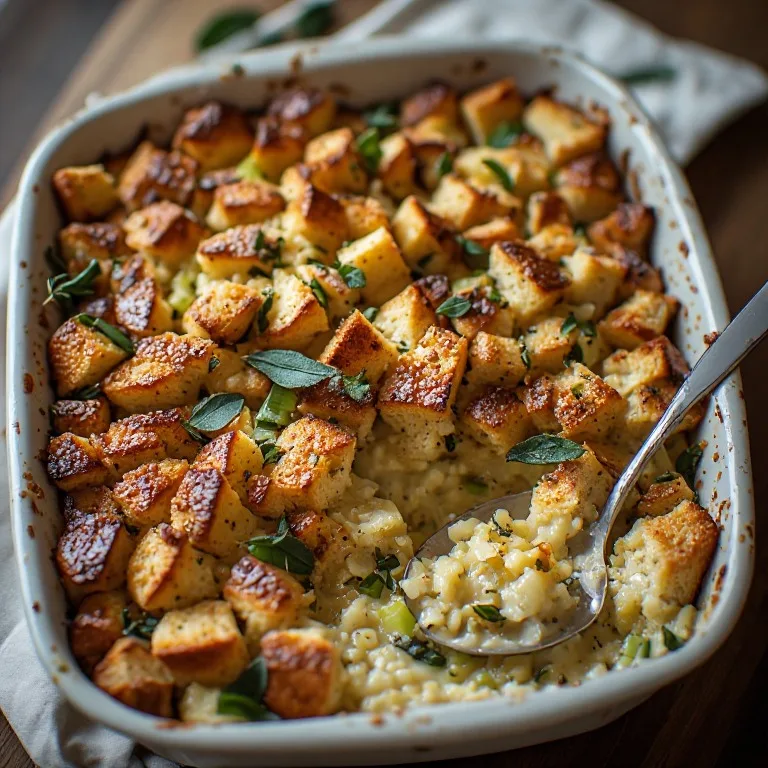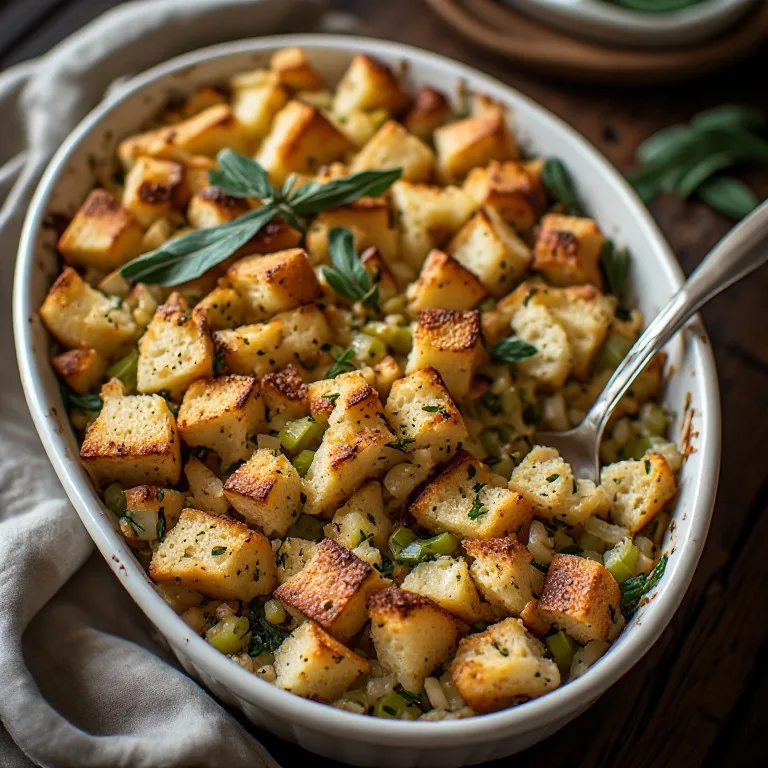


Pepperidge Farm Herb Seasoned Stuffing is the sage-forward, large-cube stuffing mix that has sat at Thanksgiving tables for more than 50 years. This homemade version makes the exact dry seasoned bread cube mix, then walks through the prepared stuffing — the classic with celery, onion, butter, and chicken broth — including a make-ahead method that actually improves the result.
The distinction that matters most: Pepperidge Farm uses large, oven-dried bread cubes, not the fine crumble Stove Top uses. The size difference means a 40-minute bake rather than a 5-minute stand in boiling water, and it produces stuffing with actual textural contrast — a golden, slightly crisp exterior on the top layer and a moist, tender interior. The herb profile is sage first, then thyme and rosemary, with celery salt doing the background work.
Pepperidge Farm vs. Stove Top vs. Homemade: At a Glance
| Pepperidge Farm Herb Seasoned | Stove Top | This Homemade Version | |
|---|---|---|---|
| Bread form | Large ~1/2-inch dried cubes | Fine, crumb-like pieces | Large ~1/2-inch dried cubes |
| Cooking method | 40-min oven bake | 5-min stand in boiling water | 40-min oven bake |
| Texture | Crisp top, tender interior | Uniformly soft throughout | Crisp top, tender interior |
| Herb profile | Sage-forward + thyme, rosemary | Lighter, more commercial | Sage-forward + thyme, rosemary |
| Sodium (prepared) | ~540mg per 1/3-cup dry serving | Higher baseline | ~590mg, or ~400–450mg with low-sodium swaps |
| Cost | ~$4–6 per 14-oz bag | ~$2–3 per 6-oz box | ~$3–4 in ingredients |
| Make-ahead | Not designed for it | No | Yes — up to 24 hours, improves texture |
Why Cube Size Matters
The difference between Pepperidge Farm and Stove Top isn’t primarily the herbs — it’s the cube size and the cooking method it requires. Large cubes (1/2 inch) absorb broth gradually through a slow oven bake, keeping their structure long enough to develop a surface crust while the interior stays soft. Fine crumbs absorb everything instantly, producing a uniform texture from edge to center. Neither is objectively better; they’re different dishes. But if you want the stuffing that crisps at the edges and stays pillowy in the middle, you need large cubes and an oven.
Getting the Drying Right
The most common failure in homemade stuffing is underdried bread. If the cubes have any flexibility or softness when they come out of the oven, they haven’t dried enough — they’ll absorb the butter and broth unevenly, with some parts disintegrating and others staying rubbery. The 225°F oven for 45–60 minutes is the reliable method. You can also air-dry overnight on sheet pans at room temperature. The test: snap a cube in half. It should break cleanly and audibly, with no soft center. An overnight sit in a loose pile on the counter (not in a bag) is enough for day-old bread; fresh bread from the bag needs at least an hour in the oven.
Make-Ahead Stuffing
The standard Thanksgiving problem: the oven is occupied by the turkey, and stuffing needs to bake. The make-ahead method solves this. Prepare the stuffing completely through the mixing step (bread cubes tossed with the broth-and-vegetable mixture), transfer to the buttered baking dish, cover tightly with plastic wrap, and refrigerate up to 24 hours. On the day, remove 30 minutes before baking, then bake covered for 30 minutes and uncovered for 15–20 minutes. The extra 5 covered minutes account for the cold starting temperature. The overnight rest also allows the bread cubes to absorb the broth more evenly than a same-day bake — many people find the texture is actually better.
Variations
Sausage stuffing: Brown 1/2 lb bulk sausage before the vegetable sauté, drain excess fat, and add back in with the broth. Oyster stuffing: Roughly chop 8 oz fresh or jarred oysters and fold them into the tossed stuffing just before transferring to the baking dish — they firm up during the oven bake. Cranberry-walnut: Fold in 1/2 cup dried cranberries and 1/2 cup toasted chopped walnuts with the broth mixture.
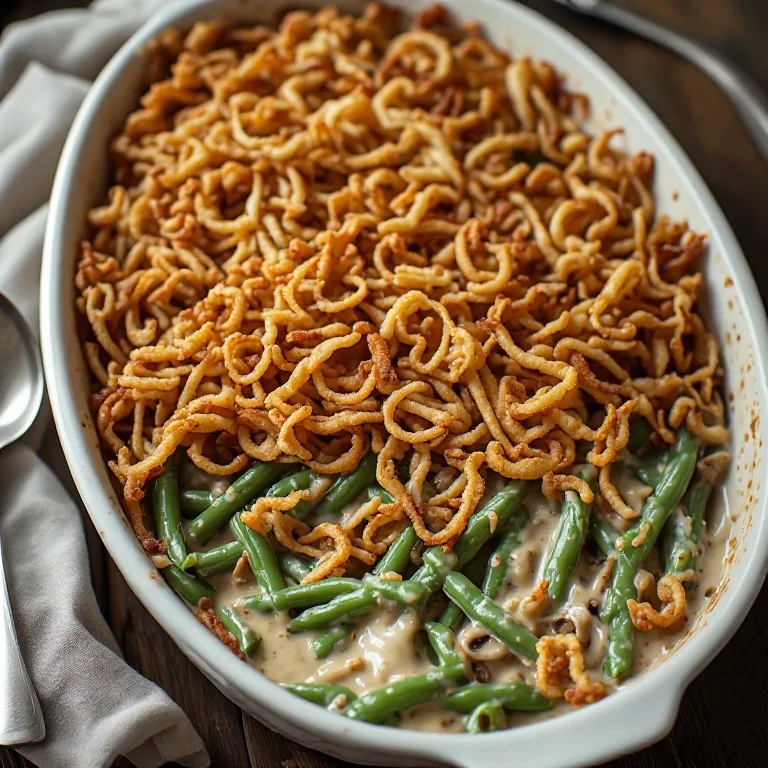
Prefer the fine-crumb, five-minute style instead? See the copycat Stove Top stuffing — the quick stovetop method with the lighter, more commercial herb character. For the other Thanksgiving side dishes this pairs with, see Homemade Jiffy Corn Muffin Mix, Bob Evans Mashed Potatoes, and Campbell’s Green Bean Casserole.