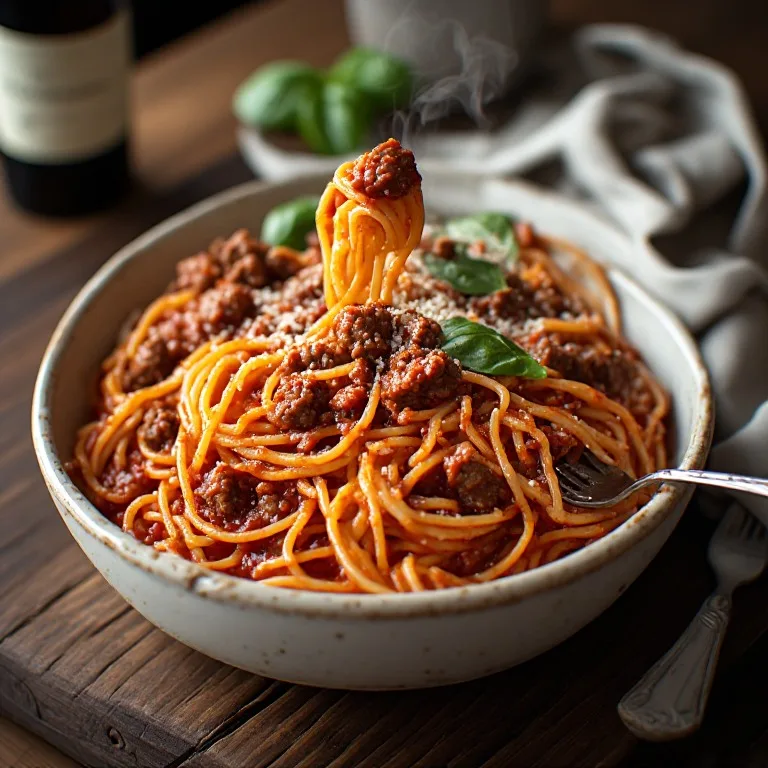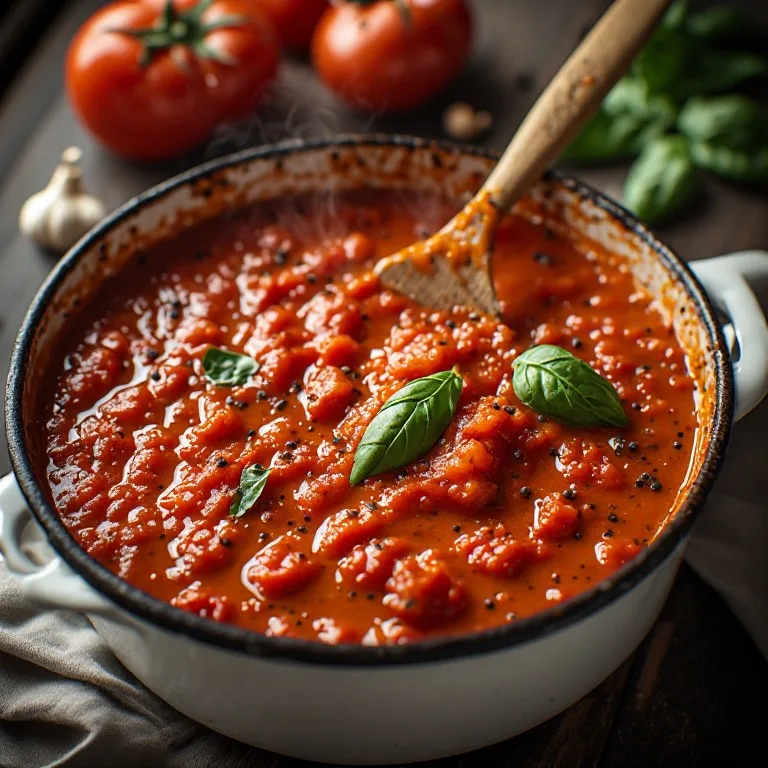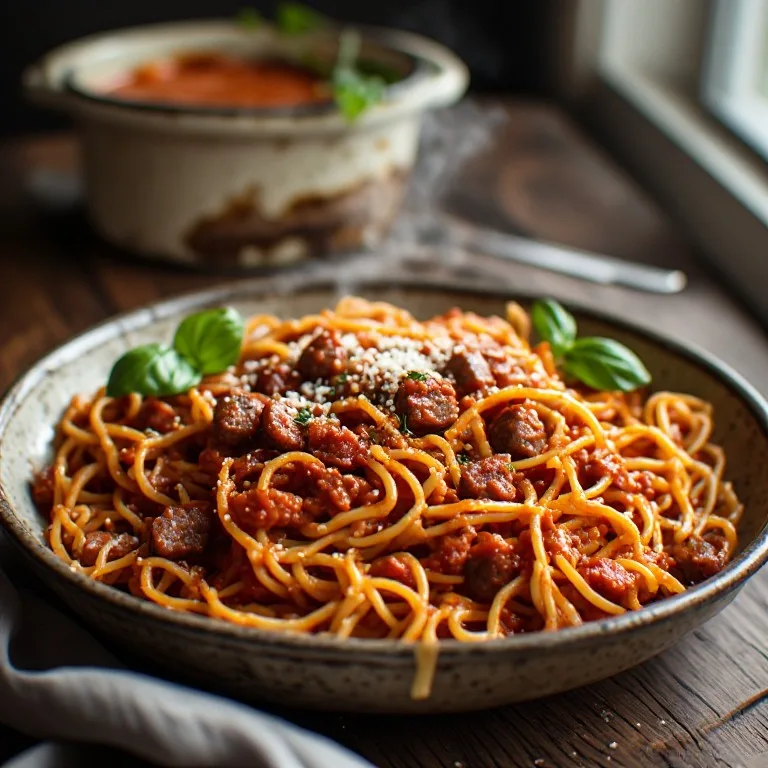



Homemade spaghetti sauce is one of those recipes that sounds simple until you realize how many versions exist, how much they differ, and what makes the difference between a sauce worth making once and one worth making every Sunday. This is the Italian-American long-simmered version — not a quick marinara, not a weekend project, but a 90-minute pot that produces something genuinely better than what comes in a jar.
The recipe builds on three principles that the best restaurant versions share: a proper soffritto (onion and garlic cooked slowly in olive oil until sweet), tomato paste caramelized until it deepens in color, and a simmer long enough that the tomatoes mellow and the fat from the sausage emulsifies into the sauce. The result is cohesive, not thin — the kind of sauce that clings to spaghetti instead of pooling at the bottom of the bowl.
The Quick Version (25 Minutes)
If you need sauce tonight and have no time, this works: sauté 4 minced garlic cloves in 3 tbsp olive oil for 60 seconds, add two 28-oz cans of crushed San Marzano tomatoes, season with salt, dried oregano, and red pepper flakes, and simmer 20 minutes. It will taste bright, clean, and genuinely better than most jarred sauces. What it won’t taste like is this recipe.
The difference between 25 minutes and 90 minutes is not subtle. The same ingredients, the same pot, the same heat produce a noticeably different sauce. A quick sauce is bright and acidic; a long-simmered sauce is round and deep. Both are good. They are not interchangeable.
Why San Marzano Tomatoes
San Marzano tomatoes are grown in the volcanic soil of the Agro Sarnese-Nocerino valley in Campania, near Mount Vesuvius. The soil’s low acidity and high mineral content produce tomatoes that are naturally sweeter, meatier, and less sharp than most domestic canned tomatoes. Rao’s, Carmine’s, and nearly every Italian-American restaurant of any seriousness specifies them. The DOP certification (look for it on the can) guarantees the tomatoes come from the protected growing region — not just a variety grown elsewhere.
For this sauce, buy whole canned San Marzanos and crush them by hand. Pre-crushed canned tomatoes are mechanically uniform; hand-crushing creates irregular pieces that give the sauce texture and lets you feel and remove the hard cores. The best-reviewed brands at most grocery stores are La Valle, Cento San Marzano, and Mutti.
The Meat Question
The Italian-American Sunday sauce tradition was built on using whatever cuts of meat were on hand — a link of sausage, a short rib, a braciole. This recipe uses sweet Italian sausage and ground beef: together, they add savory depth and body to the sauce without turning it into a bolognese. The fat from the meat emulsifies into the tomato during the long simmer, producing a sauce that coats pasta the way the pure tomato version cannot.
If you prefer a meatless sauce, substitute 1 cup of finely diced cremini mushrooms and a Parmesan rind (add it with the tomatoes; remove before serving). The mushrooms add umami; the rind adds a slow, rich depth that mimics what the meat would contribute. See our Copycat Rao’s Marinara Sauce for the definitive meatless version from the most celebrated tomato sauce in America.
Restaurant Comparisons
If you’ve been eating Italian-American spaghetti at restaurants and trying to understand what you’re tasting, here is the short version:
Rao’s marinara (East Harlem) is deliberately simple: San Marzano tomatoes, olive oil, onion cooked barely golden, garlic, basil, oregano, 1 hour of simmering. No meat, no tomato paste, no wine. The sauce is famous for being bright and clean — the flavor of great tomatoes with great olive oil and minimal interference. See our full Copycat Rao’s Marinara.
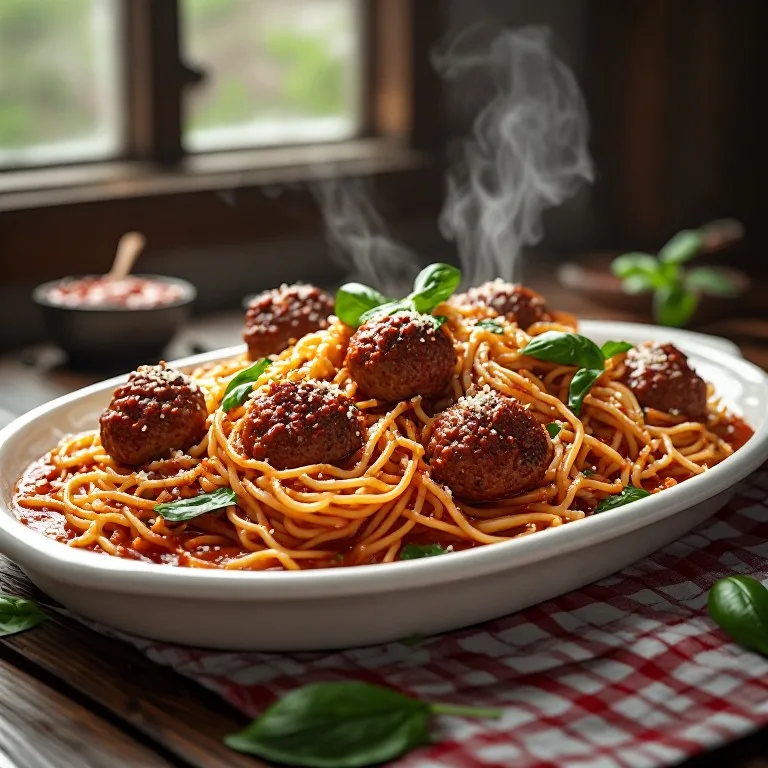
Carmine’s spaghetti (Upper West Side, Times Square) comes in a family-style bowl sized for two to four people, with large beef-and-veal meatballs simmered in a longer, richer tomato sauce. The sauce builds on a full onion soffritto and simmers with the meatball fat for an additional 30 minutes after the meatballs go in. See Copycat Carmine’s Spaghetti and Meatballs for that version.
Olive Garden’s spaghetti and meatballs uses all-beef baked meatballs (not beef-and-veal) in a garlic-forward marinara — a lighter sauce than Carmine’s, closer to the quick-marinara end of the spectrum. See our Copycat Olive Garden Spaghetti & Meatballs.
Jon & Vinny’s spaghetti al pomodoro (Los Angeles) is the pure tomato expression: Bianco DiNapoli tomatoes, a lot of garlic slowly softened in olive oil, and basil — then blended completely smooth for a glossy, restaurant-style coating and finished with grated Parmigiano-Reggiano. No meat, no wine, no cream. See Copycat Jon & Vinny’s Spaghetti al Pomodoro.
This recipe sits between the Rao’s and Carmine’s approaches: a meat-enriched sauce with the same San Marzano foundation, simmered long enough that the tomatoes and fat become a single cohesive thing.