

Copycat Benihana Ginger Dipping Sauce
Prep time: 5 min Cook time: 0 min Servings: 6 (about 3/4 cup, 2 tablespoons each)
If you searched for “Benihana ginger sauce,” there is a good chance the recipe you found is wrong. Not wrong-and-close — wrong as in an entirely different product. The most common result for that search is the orange ginger salad dressing: oil-based, sweet, with celery and ketchup. That dressing is great, but it is not what comes in the small ramekin next to your steak and shrimp.
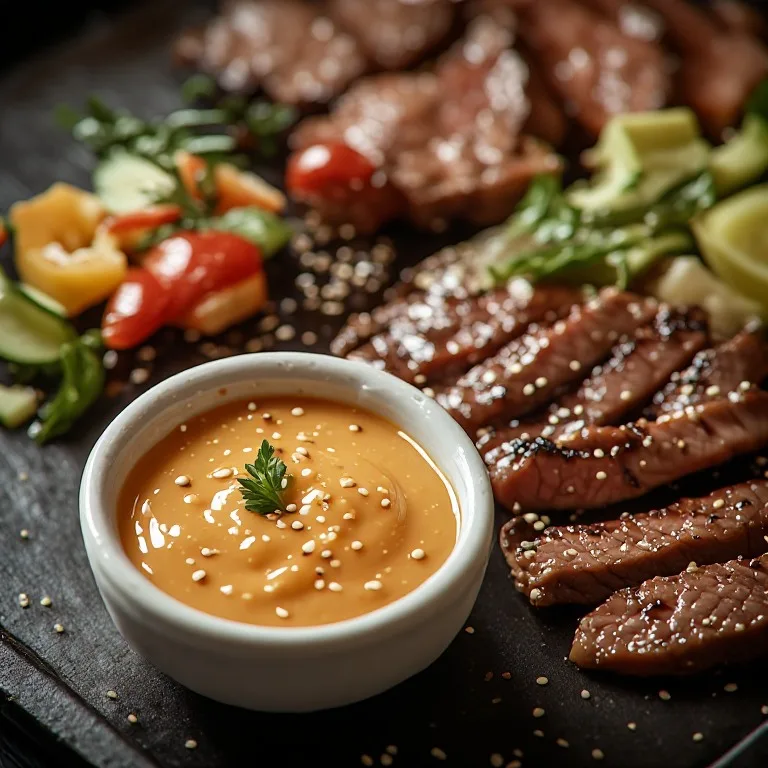
This is that ramekin. The dipping sauce. Five ingredients, no oil, no garlic, no sugar. Thin, clear, and pungent. It tastes like fresh ginger dissolved in clean umami — because that is exactly what it is.
The Sauce vs. the Dressing: Why This Confusion Exists
Benihana serves two ginger preparations at every meal, and they have almost nothing in common:
| Ginger Dipping Sauce | Ginger Salad Dressing | |
|---|---|---|
| Base | Soy + rice vinegar | Peanut oil |
| Texture | Thin, pourable | Creamy, emulsified |
| Color | Dark brown, clear | Light orange-tinted |
| Celery | No | Yes |
| Oil | No | 1/2 cup |
| Ketchup | No | Yes |
| Sugar | No | Yes |
| Calories (per 2 tbsp) | ~10 | ~90 |
| Served with | Grilled proteins at the table | Iceberg salad at the start of the meal |
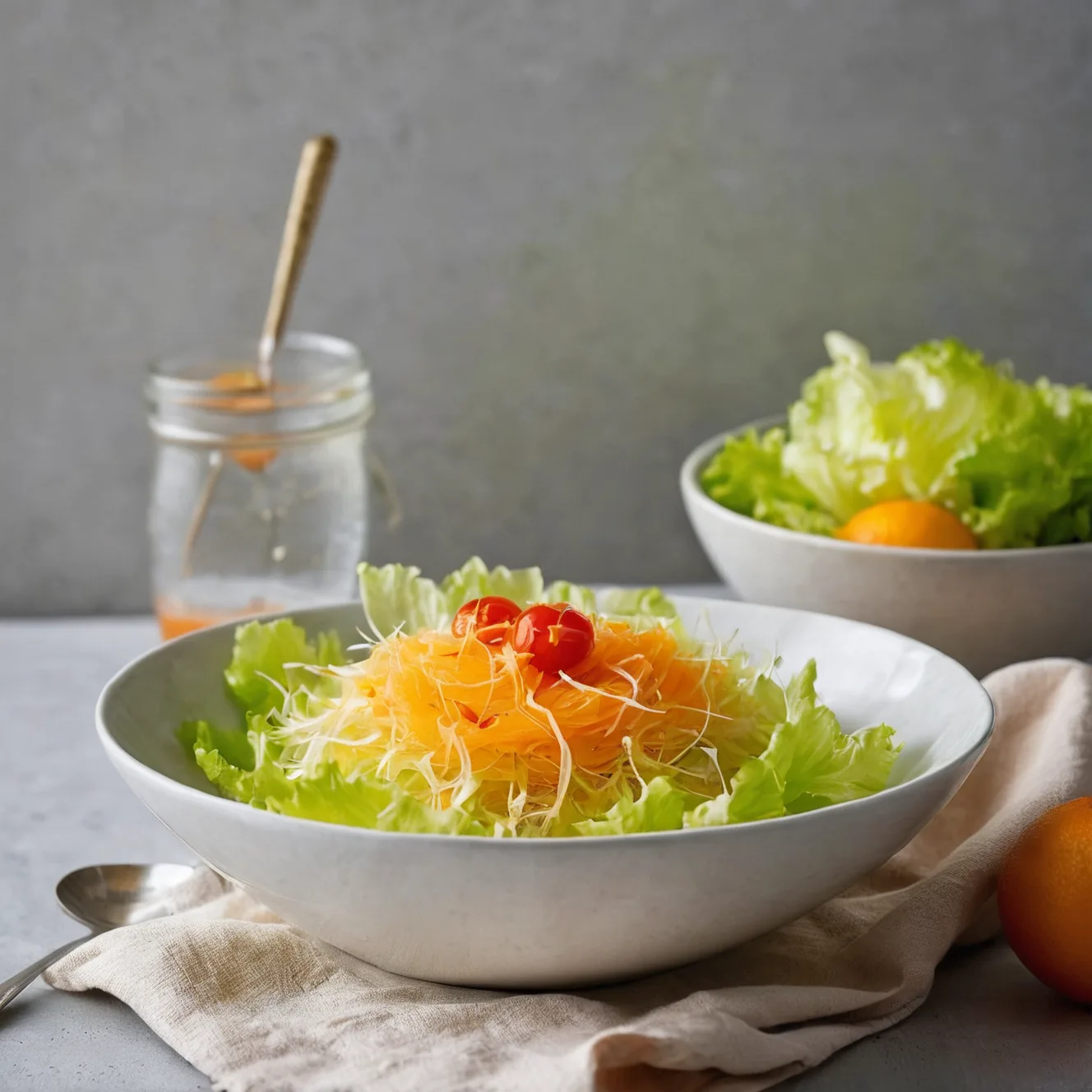
The salad dressing is the first thing you taste at a Benihana meal: a small bowl of iceberg lettuce, carrot, and cherry tomatoes with that mild orange vinaigrette poured over it. The dipping sauce arrives with the proteins — a small ramekin or two on the side, for dipping steak, shrimp, chicken, or vegetables.
Both use fresh ginger. That is the only overlap.
The Official 5-Ingredient Recipe
Benihana has published this recipe themselves, and it is deliberately simple. Five ingredients:
- Fresh ginger root, peeled
- Yellow onion
- Fresh lemon juice
- Unseasoned rice vinegar
- Low-sodium soy sauce
No garlic. No sugar. No sesame oil. No white vinegar. The five ingredients blend into a sauce that is more complex than its parts — the ginger provides pungent heat, the onion adds savory depth, the lemon cuts through the soy’s saltiness, and the rice vinegar provides clean acidity.
What About Todd Wilbur’s Version?
Todd Wilbur’s Top Secret Recipes coverage of Benihana’s dipping sauces adds three items the official Benihana recipe omits: one clove of garlic (minced), 1/2 teaspoon of granulated sugar, and a small splash of white vinegar. The result is slightly more complex — the garlic adds a roasted depth, the sugar rounds the sharp edges.
Both are good. The official 5-ingredient version is cleaner and brighter; the TSR version is richer and more rounded. If you want the authentic Benihana character, use the 5-ingredient version. If you want a slightly fuller sauce, add the garlic and sugar.
This page uses the official 5-ingredient version. To make the TSR variation, add 1 minced garlic clove, 1/2 teaspoon sugar, and a splash of white vinegar to the blender along with everything else.
Blending: Don’t Over-Process
This is not a smooth purée. At Benihana, the sauce has visible ginger particles — fine but present. Over-blending produces a fully smooth sauce that is actually slightly more bitter because more cell walls are broken, releasing harsh compounds.
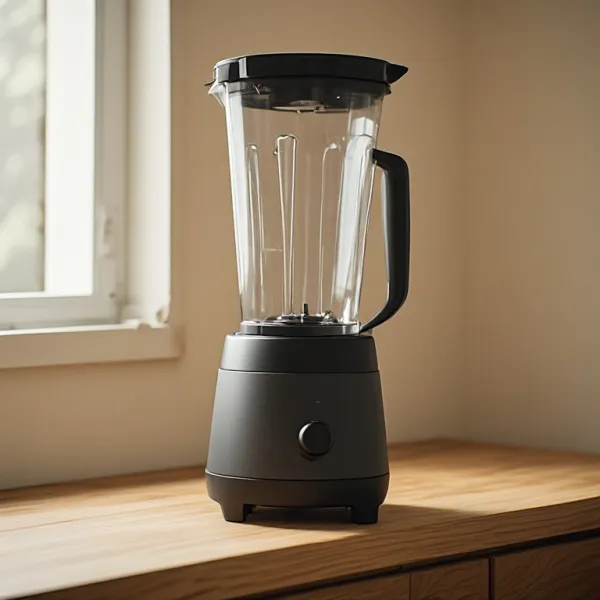
Blend on LOW for 30 seconds. Stop when the ginger is finely minced and the onion is broken down but the sauce is not completely uniform. You want a thin, pourable consistency with a slight haze from the ginger and onion particles.
A food processor works equally well; a regular box grater for the ginger (then stir the rest together) works in a pinch but produces a slightly different texture.
The Overnight Rule
Fresh from the blender, this sauce is sharp. The raw onion is aggressive. The ginger is very pungent. Do not judge it at this stage.
Refrigerate for at least 1 hour. Overnight transforms it. The volatile compounds in raw onion that make it harsh dissipate with cold and time. The ginger softens from punchy to bright. The lemon juice integrates into the rice vinegar. At 8–12 hours, the sauce tastes exactly like the ramekin at the Benihana table — mild enough to dip freely, clean enough to taste the ginger distinctly.
This is not optional. Make it the day before if you can.
Which Sauce Goes With What
At Benihana, there is a traditional pairing logic that most diners don’t know about:
- Ginger sauce is traditionally served with seafood (hibachi shrimp, scallops, fish) and vegetables
- Mustard sauce is traditionally served with chicken and beef (hibachi steak, hibachi chicken)
Todd Wilbur’s TSR coverage identifies this split explicitly: ginger for seafood and vegetables, mustard for the proteins. In the restaurant, both sauces appear on the table and guests use whichever they prefer on anything — nobody is stopped from dipping steak in ginger sauce. But knowing the intended pairing helps you understand why the ginger sauce is lighter and more acidic (it brightens seafood without overwhelming it), while the mustard sauce is bolder and more assertive (it stands up to the charred sear of the steak).
How Is This Different From Yum Yum Sauce?
Three different sauces are at the Benihana table, and they could not be more different:
- Yum yum sauce — creamy, mayo-based, pale orange-pink, slightly sweet, rich — the signature of American hibachi restaurants everywhere. A separate copycat recipe covers it.
- Ginger dipping sauce — thin, clear brown, soy-based, bright and acidic, no fat
- Mustard dipping sauce — sharp and assertive, soy + Japanese mustard + heavy cream, pairs with chicken and beef
The simplest test: yum yum sauce is opaque and creamy; ginger sauce is thin and clear.
Tips
- Use low-sodium soy sauce. At half a cup in a sauce that yields 6 servings, regular soy sauce makes this inedible as a dipping condiment. Low-sodium is not optional here. If you only have regular, cut to 1/3 cup and add 3 tablespoons of water.
- Fresh lemon juice only. Bottled lemon juice has a cooked, slightly bitter edge that reads in a sauce this simple. Use real lemon; the half lemon required costs almost nothing.
- Do not use dried ginger. Not as a substitute, not even partially. Ground ginger is a different ingredient — woody and flat compared to fresh. The fresh ginger is what makes this taste like Benihana.
- Serve cold. The sauce is served at refrigerator temperature, not room temperature. The cold sharpens the flavors and keeps the consistency right.
- Freeze in ice cube trays. This sauce freezes beautifully and keeps for 4 months frozen. Each standard ice cube is about 2 tablespoons — one cube per ramekin. Make a big batch and freeze it; you will have hibachi sauce ready whenever you need it.
Storage
Refrigerate in a sealed jar for up to 1 week. The sauce improves between day 1 and day 4 as the onion mellows and the flavors integrate. After 5–6 days, the fresh ginger flavor begins to fade.
Shake or stir before each use — the ginger and onion particles settle but return with one quick stir.
To freeze: pour into an ice cube tray and freeze solid, then transfer to a freezer bag. Keeps 4 months. Thaw overnight in the fridge or at room temperature for 20 minutes.
The Complete Benihana Spread at Home
The ginger dipping sauce is one component of the full Benihana at-home spread. Once you have it made:
- Benihana Hibachi Steak — sirloin cubed, seared at maximum heat, garlic butter and soy deglaze
- Benihana Hibachi Chicken — boneless breast, most-ordered protein, same high-heat technique
- Benihana Garlic Butter Shrimp — jumbo shrimp, lemon-garlic butter, 4 minutes total
- Benihana Fried Rice — day-old rice, dry cast iron, the garlic butter finishing move
- Benihana Yum Yum Sauce — the creamy pink sauce for everything
- Benihana Ginger Salad Dressing — the orange vinaigrette for the iceberg salad course
The full guide — including cooking timeline, equipment, and cost comparison — is in the Benihana Hibachi Night at Home hub.