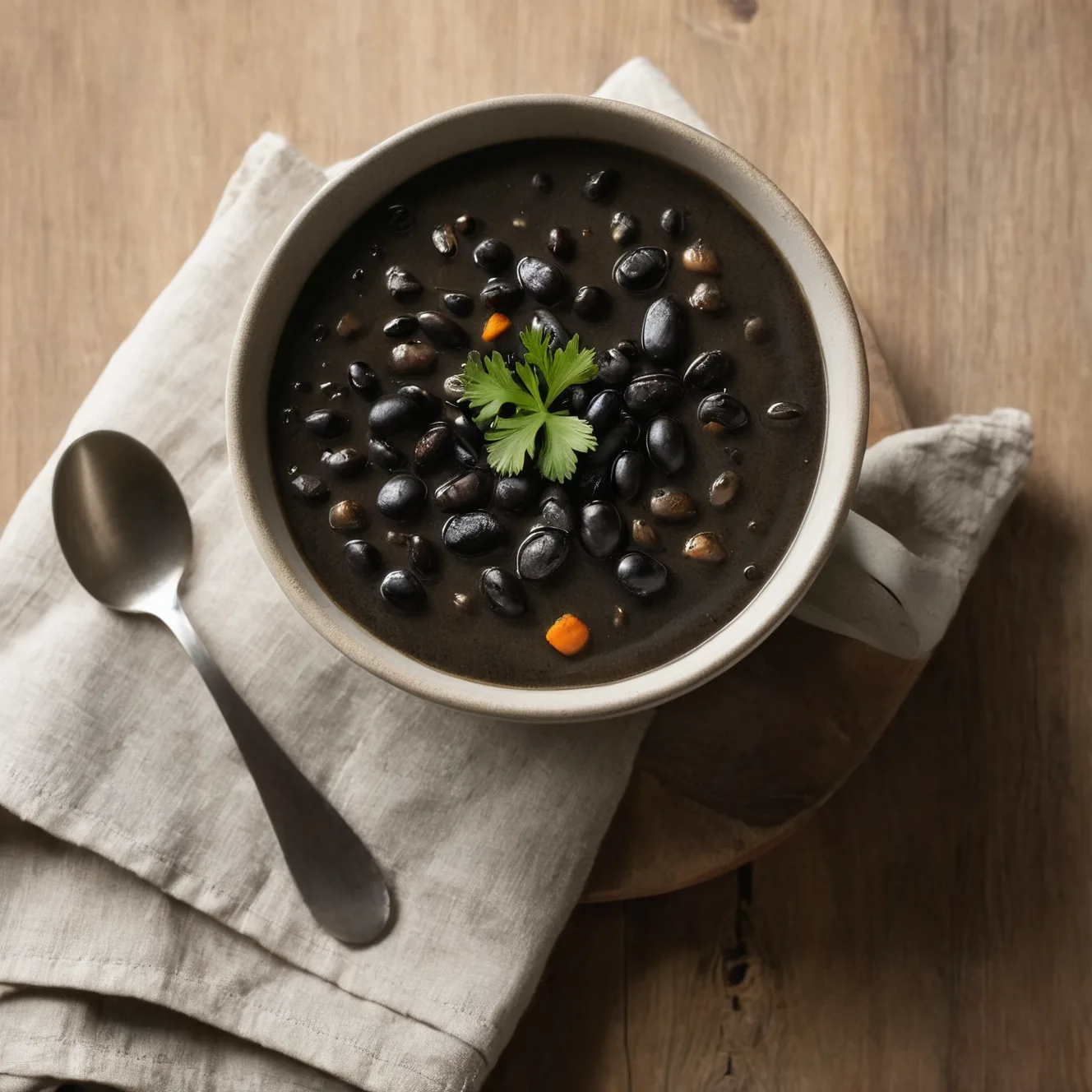
Copycat Panera Black Bean Soup
Panera’s Black Bean Soup returned to the fall 2025 menu after being discontinued in 2018 — and it’s already one of the most-searched soups the chain has had. For people who want it on a Tuesday when Panera’s fall rotation hasn’t started yet, or who live where the nearest location is too far, this recipe is the practical solution. It’s also legitimately hard to replicate from generic black bean soup recipes, which produce something brothy and flat where the restaurant version is thick, smoky, and bright. The difference is technique, not exotic ingredients.
TL;DR
Two cans of black beans with onion, celery, carrot, red bell pepper, garlic, and cumin in vegetable broth. Blend one-third of it smooth and stir it back in. Finish with lemon juice off the heat. Total time: 40 minutes. Vegan, gluten-free, about 190 calories per hearty home serving vs. 90 calories for Panera’s restaurant cup.
Why Most Copycat Recipes Don’t Match
The two most common mistakes in Panera Black Bean Soup copycats:
Wrong texture. Most recipes don’t include the partial-blend step. Without it, you get whole beans floating in a spiced broth — which is good, but tastes nothing like Panera’s version, which is thick enough to coat a spoon and has a slightly creamy consistency despite containing zero cream. The blending releases starch from the beans directly into the liquid. This is the same principle that makes French onion soup opaque, or why a properly-made bean stew is silky rather than watery.
Wrong smokiness source. Many copycat recipes call for chipotle peppers in adobo sauce to get the smoky flavor. Chipotle in adobo is not in Panera’s official ingredient list. The soup does taste smoky — but that comes from the spice blend (cumin is the primary note, smoked paprika adds the smokiness) and from the seasoned vegetable base, along with the caramelized tomato paste. Adding chipotle peppers shifts the flavor toward a Tex-Mex chili profile that’s noticeably different from what Panera actually serves. If you want smokiness, add more smoked paprika — not chipotle.
The Partial-Blend Technique
This is worth explaining in detail because it’s the single step that separates a good result from a great one.
After the soup has simmered for 20 minutes, remove about 2 cups of mostly-solid beans and some liquid. Blend them completely smooth in a blender (30–45 seconds on high, with the vent cracked to release steam). Pour the smooth puree back into the pot and stir. What you get immediately is a transformation: the broth goes from thin and amber-colored to thick and dark, with a slightly glossy, almost creamy consistency.
If you use an immersion blender directly in the pot, pulse it in bursts — four or five short pulses, not a sustained blend — so you’re breaking down about one-third of the beans while leaving the rest whole. Either method works. The key is leaving most of the beans intact; a fully-blended black bean soup is a different dish.
Why does this work? Black beans are about 14% starch by weight. When you blend them, you rupture the bean structure and release that starch directly into the liquid, creating a natural thickener. No corn starch, no cream, no butter. The optional corn starch slurry in this recipe is there if you want it even thicker — Panera uses corn starch in the official formulation — but the blended beans alone are usually enough.
The Spice Blend: What’s Actually In It
Panera’s official ingredient list says “spices” without naming each one. Their product description mentions cumin specifically. Based on the soup’s flavor profile — earthy-smoky with mild warmth and no citrus spice — the blend breaks down as:
| Spice | Role in the Soup |
|---|---|
| Cumin (dominant) | The primary earthy, warm backbone — this is what makes it taste “black bean soup” rather than generic |
| Smoked paprika | The smokiness — not heat, but the sweet, woody, slightly-tobacco smoke of paprika |
| Dried oregano | Background savory depth; keeps the cumin from tasting one-dimensional |
| Red pepper flakes | Mild warmth — the soup is “spicy” per Panera’s own description, but mild by most standards |
| Black pepper | Sharp finish |
The tomato paste is not a spice but plays a critical flavor role: caramelized in the pan before liquid is added, it contributes umami, color, and a faintly sweet-savory depth that rounds out the cumin. Don’t skip the step of cooking it for a full minute in the pan — it goes from raw-tangy to deep and complex.
Lemon Juice: Why It Goes In Last
Panera lists lemon juice as an ingredient in their Black Bean Soup. It’s counterintuitive for a savory soup — you’d expect a squeeze at the end of a dal or in a salad dressing, but not in a soup with cumin and bell pepper. Here’s why it works:
Black bean soup, without any acid, tends to taste heavy and slightly muddy. The beans are starchy and earthy; the cumin is warm and dry; the tomato paste and broth add body. Without something to lift it, the soup can finish flat. Lemon juice — added off the heat at the very end — cuts through the richness and makes the individual flavors read more clearly. It doesn’t make the soup taste lemony. It makes the cumin taste more like cumin, the smoked paprika taste brighter, and the whole bowl feel lighter than it is.
Adding lemon juice during cooking rather than at the end dissipates the effect: the volatile aromatic compounds cook off and you’re left with dull acidity rather than brightness. Add it with the heat off, stir it in, then taste and adjust before serving.
Restaurant vs. Home: What’s Different
The home copycat is quite close to Panera’s version, but there are two structural differences worth knowing:
Sodium. Panera’s cup contains approximately 740mg of sodium, and a bowl runs over 1,100mg — a significant portion of the daily recommended limit. That’s typical for a commercial soup: the seasoned vegetable base contributes a lot of sodium before any salt is added. At home using low-sodium broth and controlled seasoning, this recipe comes in around 420mg per serving. If you’re used to the restaurant version and this tastes under-seasoned, add salt gradually until you reach your preference.
Corn starch. Panera uses corn starch as a thickener in addition to the partial-blend step. The optional slurry in this recipe mirrors that. Without it, the home version is slightly less thick than the restaurant — still thick, but the slurry gets you closer. If you’re cooking for someone avoiding corn starch (unusual, but it exists), the blended beans alone produce a very good result.
The retail version. Panera at Home sells a refrigerated 16 oz version of the Black Bean Soup at Publix, Kroger, Target, and Walmart (labeled gluten-free). It’s a decent substitute when you can find it, but the serving size is different from the restaurant (the retail package is more concentrated — about 200 calories per cup vs. 90 for the restaurant cup), and the flavor is slightly less bright because it’s pasteurized for shelf stability. The home copycat is closer to the restaurant version than the retail package is.
Making It in an Instant Pot
If you start with dried beans, the Instant Pot cuts the total time significantly.
- Add 1 cup dried black beans (no soaking required), 4 cups vegetable broth, the diced vegetables, and all the spices to the Instant Pot.
- Cook on High Pressure for 30 minutes, then natural pressure release for 15 minutes.
- Open, stir in the tomato paste (it can go in before or after pressure cooking — before gives more depth, after keeps it brighter).
- Use the immersion blender to do the partial blend directly in the pot.
- Stir in the lemon juice, adjust seasoning, and serve.
Total active time: about 15 minutes. Total elapsed time: about 70 minutes.
Serving
With a bread bowl. Panera’s classic presentation — their sourdough bread bowl holds the soup while you eat the bowl itself from the outside in. Our guide to making a Panera-style bread bowl at home walks through the sourdough boule technique. For a quicker version: buy a round sourdough boule from any grocery store bakery, cut the top, hollow it out leaving a 3/4-inch wall, and brush the inside lightly with olive oil before filling.
Simple garnishes that work: A pinch of fresh cilantro for color and herbal brightness. A lime wedge on the side — squeeze it directly into the bowl rather than the pot so each serving can be adjusted independently. Sour cream or plain yogurt (dairy-free coconut yogurt works too). A few tortilla chips for texture contrast and informal dunking.
As a meal. A cup of this soup plus the Panera Fuji Apple Chicken Salad or the Panera Green Goddess Salad is the standard Panera You Pick Two approach — and the contrast between a hearty, warm soup and a bright, acidic salad is genuinely good.
Storage and Reheating
Refrigerator: Up to 5 days in an airtight container. The soup thickens in the refrigerator as the beans continue absorbing liquid — add a splash of broth when reheating to restore the consistency.
Freezer: Up to 3 months. Black bean soup freezes exceptionally well; the beans don’t suffer from freezing the way potatoes or dairy-based soups do. Freeze in individual portions for easy weeknight meals. Thaw overnight in the refrigerator or defrost gently in a pot over low heat with a splash of water.
Reheating: Medium-low heat with a splash of vegetable broth, stirring frequently. Don’t boil — you don’t need to and vigorous boiling can make the blended portion gummy.
Related Panera Soups
Other Panera soup copycats for a home rotation:
- Panera Broccoli Cheddar Soup — the chain’s most-ordered soup; cheesy, thick, not for the dairy-free
- Panera Tomato Soup — the creamy tomato baseline, also vegan-adaptable
- Panera Chicken Noodle Soup — the year-round classic
- Panera Autumn Squash Soup — seasonal fall item; butternut squash and apple
- Panera Chicken Tikka Masala Soup — the seasonal Indian-spiced lentil soup; tamarind is the key
- Panera Lemon Chicken Orzo Soup — the discontinued spring favorite