

Pin It

Viral TikTok Garlic Parmesan Orzo (Creamy One-Pan, 20 Minutes)

Viral TikTok Garlic Parmesan Orzo (Creamy One-Pan, 20 Minutes)
Jump to Recipe
Prep 5 min Cook 15 min Serves 4
Quick answer: Melt 3 tablespoons of butter in a wide skillet over medium heat. Add 1.5 cups of dry orzo and toast, stirring, for 1 to 2 minutes until the grains smell nutty and a few turn faintly golden. Add 5 cloves of minced garlic and cook 30 seconds — no longer. Pour in 3 cups of low-sodium chicken broth and 3/4 teaspoon of kosher salt. Bring to a simmer, cover, and cook 10 to 12 minutes until the orzo is tender and has absorbed most of the broth, stirring once or twice. Pull the pan off heat. Stir in 3 tablespoons of heavy cream, 1/2 cup of freshly grated Parmesan (never pre-shredded), and 1 tablespoon of lemon juice. Taste for salt. Top with black pepper and fresh parsley. Serve immediately — orzo thickens fast.

Shop the tools

Gear matched to this recipe. These are Amazon affiliate links — we may earn a small commission if you buy, at no extra cost to you.

As an Amazon Associate, Copycat Spices earns from qualifying purchases. Product images are generic illustrations, not the exact item listed.

Viral TikTok Garlic Parmesan Orzo (Creamy One-Pan, 20 Minutes)

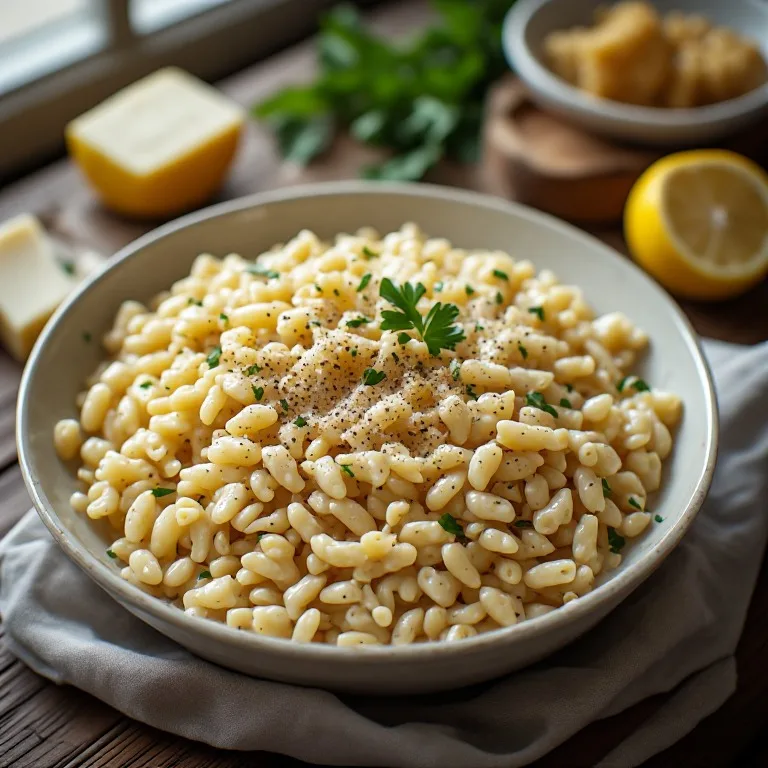
The creamy garlic parmesan orzo taking over FoodTok: toasted in butter for nutty depth, cooked pilaf-style in broth until the starch turns the liquid silky, then finished off heat with cream and freshly grated Parmesan. One pan, 20 minutes, no roux, no draining.

Easy Prep: 5 min Cook: 15 min Total: 20 min4 servings ~$4.50/serving
Prep5 min
Cook15 min
Total20 min
Servings
4
At home~$4.50/serving
vs
Restaurant~$20.25/serving
You save ~78%

The Story Behind the Recipe

The creamy garlic parmesan orzo taking over FoodTok: toasted in butter for nutty depth, cooked pilaf-style in broth until the starch turns the liquid silky, then finished off heat with cream and freshly grated Parmesan. One pan, 20 minutes, no roux, no draining.

Nutrition Facts

Per serving (4 servings)
Calories410
Total Fat16g
Total Carbs50g
Dietary Fiber2g
Sugars1g
Protein14g
Sodium620mg

* Estimated values based on standard recipe preparation. Actual values may vary.

Ingredients

  • Optional add-ins

Instructions

💡
Pro tip: This recipe tastes even better the next day. The flavors need time to meld together in the fridge.
❄️
Storage: Keeps in an airtight container in the fridge for up to 2 weeks. Freezer-friendly for up to 3 months.
🎃 Free Halloween cookbook — download now The Copycat Halloween Cookbook A ready-made, photo-illustrated PDF of our best halloween copycat recipes — free to download, no building required. Pay what you want to support if you love it.

Free PDF — instant download. We'll also send new seasonal copycat recipes now and then; unsubscribe anytime. Or just download it →

Garlic parmesan orzo is the one-pan pasta that shows up in every fall 2026 FoodTok round-up — and for good reason. The whole dish comes together in 20 minutes in a single skillet, uses pantry staples, and produces a sauce that tastes far richer than its ingredient list suggests.

The reason is the technique. Toasting dry orzo in butter before the liquid goes in deepens the flavor in a way that plain boiled pasta cannot match, and cooking the orzo in broth rather than a pot of water produces a naturally thickened, creamy sauce with no roux and no separate sauce-making step. The Parmesan and cream go in off heat, where they melt smoothly without seizing.

The TL;DR: toast the orzo, add garlic briefly, dump in broth, cover and simmer 10 minutes, finish off heat with cream and freshly grated Parmesan. That is genuinely the whole method.

The Toast Makes the Dish

The instruction that separates TikTok garlic parmesan orzo from a basic pot of pasta is the first step: dry orzo cooked in hot butter until it smells nutty and a few grains turn faintly golden.

This is pilaf technique applied to pasta — the same method used for rice pilaf and Spanish arroz. Heat transforms the starch and protein on the grain’s surface through the Maillard reaction, creating flavor compounds that are not present in raw pasta. The result is a subtle toasted-grain note in the finished dish and, practically, a starch coating that absorbs the broth more evenly and holds up better under heat.

The toast takes 90 seconds. Stir constantly, watch for the first hint of golden color at the grain edges, and stop. Going too far — deep brown, heavy color — produces a bitter edge that overpowers the garlic and cheese.

The 30-Second Garlic Rule

Garlic burns fast. In already-hot butter, minced garlic can go from raw to brown in under a minute, and brown garlic has a harsh, acrid quality that does not cook out.

The technique here: push the toasted orzo to the edges of the pan, add the garlic to the center, and stir it for exactly 30 seconds — just until it turns fragrant and slightly translucent. Then immediately stir it into the orzo and pour in the broth. The liquid drops the pan temperature and stops the garlic from going further.

If your garlic is already starting to brown when you add it (pan too hot, garlic cut too fine), pour the broth in early. Slightly under-cooked garlic in a dish like this is invisible — slightly burnt garlic is the whole dish.

For a more garlic-forward version without the burn risk, use garlic confit (garlic slow-cooked in olive oil until soft and sweet) instead of raw minced. Stir it in after the broth goes in, not during the toast stage.

Fresh Parmesan — Not Optional

Pre-shredded Parmesan from a bag is coated with cellulose powder or potato starch to prevent the strands from clumping together in the package. Those same anti-caking agents prevent the cheese from melting smoothly into the sauce. Added to a warm, starchy liquid, pre-shredded Parmesan produces stringy, slightly gritty clumps rather than a silky emulsion.

A block of Parmigiano-Reggiano or Grana Padano, grated fresh on the fine side of a box grater, melts into the orzo starch and cream in seconds. The texture difference is significant — smooth and coating versus lumpy and separated.

Grate it immediately before using. Freshly grated cheese melts faster and more evenly than cheese grated earlier and left to dry out.

The Four Failure Modes

1. Orzo turns mushy. Orzo overcooks fast. In the last 2 minutes of the covered simmer, check the texture every 60 seconds. You are looking for tender grains that still have the slightest firmness at the center — if they are fully soft and the center yields completely, they are done. One more minute and they are mush. Reduce the heat to the lowest setting possible and check early rather than late.

2. Garlic tastes bitter or harsh. It burned. Brown garlic in a hot pan turns acrid in the same way that any nut or seed goes from toasted to burnt — the flavor compounds that were appealing become overwhelming. Start the garlic in a slightly cooler pan, use the 30-second rule strictly, and when in doubt add the broth early. You cannot fix burnt garlic in a finished dish.

3. Sauce is gluey and thick, not creamy. The Parmesan went in while the pan was still over heat, causing the proteins to seize before they emulsified. Always pull the pan completely off the burner before adding the dairy. The residual heat from the pan and the orzo is sufficient to melt the cheese and warm the cream — full heat is not needed and is actively harmful here.

4. Orzo thickens to cement as it sits. This is not a failure — it is how orzo behaves. The grains keep absorbing liquid after cooking stops. Serve the dish within a few minutes of finishing. If serving a crowd and it has thickened while waiting, stir in a splash of warm broth to loosen.

How It Compares to Other Orzo Recipes

This is not Marry Me Orzo — that version is a cream-and-sun-dried-tomato dish with a richer, more acidic, Italian-American flavor profile. The garlic parmesan version is plainer, faster, and pairs more broadly as a side dish or base.

It is also distinct from One-Pot Orzo, which typically cooks with vegetables and a lighter broth in a more brothy style. This recipe is specifically optimized for the creamy, pillowy, restaurant-style side-dish texture.

For other one-pan creamy pasta techniques, Boursin Pasta uses a similar dump-and-simmer approach with a different cheese, and Pumpkin Pasta applies the toasted-starch creaminess principle to a fall seasonal format. The Baked Feta Pasta that launched a thousand one-pan pasta recipes is also worth reading for the contrast in technique — oven-roasted versus stovetop.

Storage and Reheating

Garlic parmesan orzo keeps in the refrigerator for up to 3 days in a sealed container. The flavor improves slightly overnight as the garlic mellows and the Parmesan integrates. The texture will not — it will solidify significantly as the orzo absorbs the remaining liquid.

To reheat: Add to a small skillet over low heat with 3 to 4 tablespoons of chicken broth per serving. Stir constantly until the orzo loosens and heats through, about 3 to 4 minutes. It will look like it needs more broth than you expect — add it, stir, and it will come back to the original creamy consistency. Do not try to reheat in the original skillet without added liquid; the orzo will stick and scorch.

Microwave option: Cover the bowl, add a tablespoon of broth, and microwave on medium power in 60-second intervals, stirring between each.

Do not freeze. Orzo’s starch structure breaks down in the freezer-thaw cycle and the texture becomes grainy and waterlogged on reheating.
🥗

Make It Healthier

Love Viral TikTok Garlic Parmesan Orzo (Creamy One-Pan, 20 Minutes) but want a lighter version? Try these simple swaps:

  • ✓Skip the heavy cream entirely — the orzo starch plus Parmesan creates a genuinely creamy sauce on its own. Dropping the cream cuts about 35 calories and 3.5g of fat per serving with minimal impact on texture.
  • ✓Use vegetable broth instead of chicken broth to make the base vegetarian. The flavor is slightly less rich but still good with the amount of garlic and Parmesan in this recipe.
  • ✓Add 2 cups of baby spinach or arugula off heat with the cream — they wilt into the sauce and add volume, fiber, and nutrients without changing the character of the dish.
  • ✓Reduce the butter to 1.5 tablespoons and use a nonstick pan. You can toast orzo successfully with less fat — just stir more frequently and lower the heat slightly to avoid burning.

Frequently Asked Questions

Why does TikTok garlic parmesan orzo taste different from plain boiled orzo?

The toast. Dry orzo toasted in butter undergoes the Maillard reaction — the same process that makes toasted bread smell better than untoasted bread, or browned butter taste more complex than melted butter. The heat changes the starches and proteins on the grain's surface, creating hundreds of new flavor compounds that are absent in plain boiled pasta. The second difference is the cooking method: the orzo absorbs the broth directly (pilaf-style) rather than cooking in a large pot of water and being drained. This concentrates the broth's flavor into each grain and lets the natural orzo starch thicken the cooking liquid into a sauce. You are not adding a roux or a separate béchamel — the starch is doing the work.

What happens if I skip toasting?

The dish is edible, but noticeably flatter. Un-toasted orzo produces a starchier, more one-dimensional sauce that tends toward gluey rather than silky — the unmodified starch releases in a way that makes the sauce feel heavy rather than creamy. You also lose the subtle nutty note that makes this version work as a standalone dish rather than just a bland pasta side. The toast takes 90 seconds and cannot be done after the fact — there is no way to add it retroactively once the broth goes in.

My sauce looks thick and gluey, not creamy. What went wrong?

Orzo overcooked or the cheese went in over high heat. Orzo goes from properly tender to mush in 90 seconds — it requires attention in the last 2 minutes of cooking. If the sauce looks thick and pasty rather than silky, the most likely cause is that the Parmesan was added while the pan was still on medium heat, causing the proteins to seize before they could emulsify into the starchy liquid. The fix for next time: pull the pan completely off the burner before adding any dairy. If your current batch is already gluey, stir in 2 to 3 tablespoons of warm chicken broth to loosen it and serve immediately.

Can I use pre-shredded Parmesan?

You can, but the sauce will not be as smooth. Pre-shredded Parmesan is coated with anti-caking agents — cellulose powder or potato starch — that prevent the strands from sticking together in the bag. The same coating prevents the cheese from melting properly into the sauce; instead of dispersing smoothly, it melts into stringy or gritty clumps. A block of Parmigiano-Reggiano or Grana Padano grated on the fine side of a box grater will cost a bit more and take an extra minute but produces a visibly different result. Pecorino Romano also works and adds a slightly sharper, saltier note — use a little less of it.

Can I make this vegetarian or vegan?

Vegetarian: use vegetable broth instead of chicken broth. The Parmesan already makes this dish non-vegan (it contains rennet from animal sources). For vegan, use vegetable broth, omit the cream, add 2 tablespoons of olive oil instead of butter, and use a vegan Parmesan substitute (nutritional yeast adds a similar umami punch, though not identical). The starch from the orzo still produces a creamy sauce without dairy.

How do I reheat leftovers without it turning to cement?

Orzo continues to absorb liquid as it cools. Leftover garlic parmesan orzo will be significantly thicker than when you served it — sometimes completely solid. This is normal. Reheat in a skillet over low heat with 3 to 4 tablespoons of chicken broth or water per serving, stirring until the orzo loosens and heats through. Add more liquid than you think you need; it will re-absorb quickly once warm. Microwave reheating works in a pinch — cover the bowl, add a splash of broth or water, microwave on medium power in 60-second intervals, stirring between each.

What can I add to make this a full meal instead of a side dish?

Protein options that require no extra work: stir 1/2 cup of canned white beans (drained) into the finished orzo off heat, or serve with a fried egg on top. For chicken: sear 4 boneless thighs in the same pan before the orzo step, remove, build the orzo recipe, and nestle the seared chicken back in for the last 5 minutes of simmering. Shrimp: peel and season 3/4 lb of large shrimp, sear 2 minutes per side in butter after the orzo is done, rest on top to serve. Vegetables: cherry tomatoes halved and added with the broth will blister and collapse into the sauce; frozen peas can be stirred in off heat with the cream.

Love this recipe? Share it!

Free PDF: our 12 most-wanted copycat recipes — instant download.

Made it? Buy us a coffee

Every recipe here is free, with no paywalls. If this one was a hit at your table, a small tip keeps new copycats coming.

$

Ratings & Reviews

—
No ratings yet

Rate this recipe

Click a star to rate

Leave a Review

0/500

CS

Copycat Spices Editorial

Researched + fact-checked. Every recipe on Copycat Spices is built from published sources — official ingredient lists, brand-published recipes, interviews and food-science references — and fact-checked before it goes live, then written as clear, step-by-step instructions for home cooks of all skill levels.

Learn more about our mission →