


Pin It

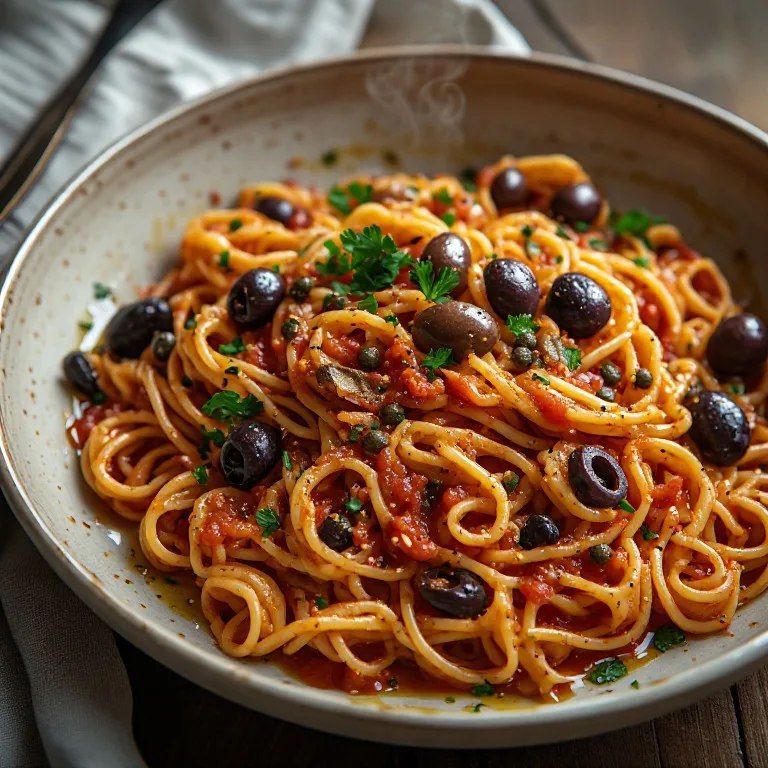
Pasta Puttanesca (The Pantry Pasta TikTok Can't Stop Making)

Pasta Puttanesca (The Pantry Pasta TikTok Can't Stop Making)
Jump to Recipe
Prep 5 min Cook 20 min Serves 4
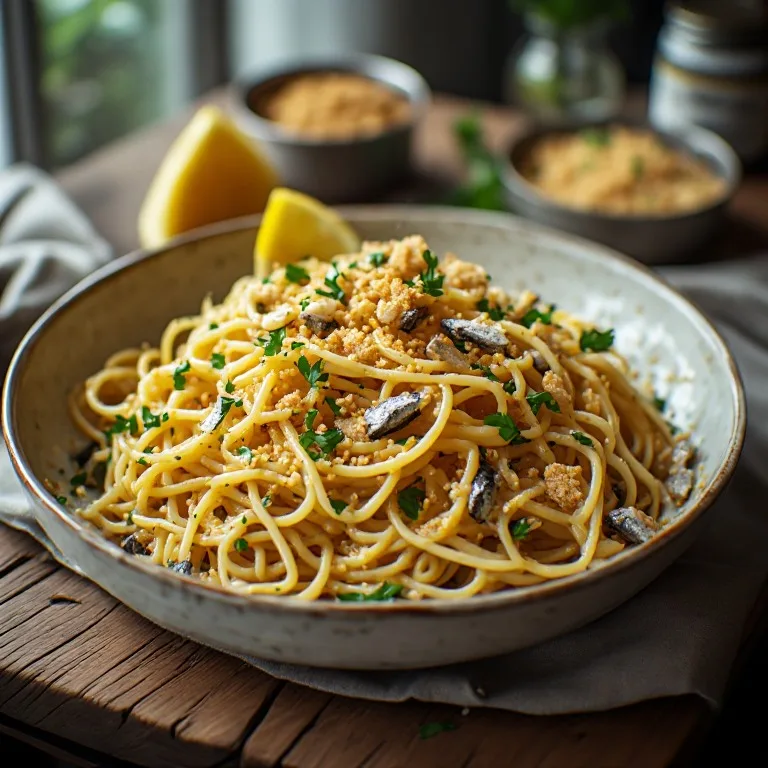
Quick answer: Heat 4 tablespoons of olive oil in a wide skillet over medium heat and add 5 anchovy fillets — they will melt completely into the oil in about 2 minutes. Add 4 thinly sliced garlic cloves and 1/4 teaspoon of red pepper flakes for 1 minute, then pour in a 28-oz can of hand-crushed San Marzano tomatoes, 1/2 cup of pitted Gaeta or Kalamata olives (roughly chopped), and 3 tablespoons of drained capers. Simmer uncovered for 12 to 15 minutes, stirring occasionally, until the sauce thickens slightly. Meanwhile cook 12 oz of spaghetti in unsalted (or very lightly salted) boiling water; reserve 1 cup of pasta water. Toss the pasta into the sauce with a splash of pasta water until glossy. Finish with chopped fresh parsley and a drizzle of olive oil. No Parmesan — the briny sauce is already complete.

Shop the tools

Gear matched to this recipe. These are Amazon affiliate links — we may earn a small commission if you buy, at no extra cost to you.

As an Amazon Associate, Copycat Spices earns from qualifying purchases. Product images are generic illustrations, not the exact item listed.

Pasta Puttanesca (The Pantry Pasta TikTok Can't Stop Making)

The viral TikTok pasta puttanesca recipe that converts anchovy skeptics: bold briny sauce from pantry staples, ready in 25 minutes. The anchovy secret, the salt balance, and every technique mistake that makes it taste muddy instead of electric.

Easy Prep: 5 min Cook: 20 min Total: 25 min4 servings ~$4.50/serving
Prep5 min
Cook20 min
Total25 min
Servings
4
At home~$4.50/serving
vs
Restaurant~$20.25/serving
You save ~78%

The Story Behind the Recipe

Pasta puttanesca was born in Naples sometime in the mid-20th century. The name literally translates from Italian slang as something close to "in the style of a promiscuous woman," but culinary historians argue the more likely origin is "puttanata" — Italian for a mess, or something thrown together carelessly. Food writer Annarita Cuomo traced the earliest printed recipes to 1960s Naples, specifically to Ischia, where restaurateur Sandro Petti reportedly invented the dish late one night when he had almost nothing in his pantry: a tin of anchovies, some olives, capers, canned tomatoes, and pasta. "Facci una puttanata qualsiasi" his friends told him — make us whatever mess you've got. The version most of the world knows today is the Neapolitan standard: olive oil, garlic, anchovies, San Marzano tomatoes, Gaeta olives, capers, red pepper flakes, and spaghetti. At a trattoria in Naples it costs €10–14; at a sidewalk spot near the Amalfi Coast, closer to €18. At home, with a well-stocked pantry, it costs about $2.50 per serving.

On TikTok, puttanesca became a rallying point for "anchovy skeptics getting converted" content — creators showing viewers that the anchovies dissolve completely into hot olive oil, leaving zero fishiness and only a deep savory base that elevates the whole sauce. The sauce itself takes under 20 minutes from pantry to plate, which made it perfect for the "weeknight pasta" genre. But the versions with the most views have one thing in common: they all understand that restraint is the technique. Puttanesca is not about building complexity — it is about bright, briny, assertive flavors that stay in their own lanes. The sauce should not taste muddy or stewed. It should taste like the sea and the sun, with a heat that builds slowly.

Nutrition Facts

Per serving (4 servings)
Calories490
Total Fat14g
Total Carbs74g
Dietary Fiber5g
Sugars7g
Protein15g
Sodium1180mg

* Estimated values based on standard recipe preparation. Actual values may vary.

Ingredients

  • Optional additions (keep them light)

Instructions

💡
Pro tip: This recipe tastes even better the next day. The flavors need time to meld together in the fridge.
❄️
Storage: Keeps in an airtight container in the fridge for up to 2 weeks. Freezer-friendly for up to 3 months.
🎃 Free Halloween cookbook — download now The Copycat Halloween Cookbook A ready-made, photo-illustrated PDF of our best halloween copycat recipes — free to download, no building required. Pay what you want to support if you love it.

Free PDF — instant download. We'll also send new seasonal copycat recipes now and then; unsubscribe anytime. Or just download it →

Pasta puttanesca is the answer to “I have nothing to cook” and “I don’t want to go to the store.”

The entire sauce comes from a pantry: a tin of anchovies, a can of tomatoes, some olives, capers, garlic, and olive oil. Nothing in it requires refrigeration. It has probably been in your cabinet for weeks. And it produces a pasta sauce with more depth, more character, and more confidence than most dishes that require a grocery run.

The reason TikTok keeps returning to puttanesca is the anchovy scene — the moment creators show a pan of olive oil, drop in 5 anchovy fillets, and the fillets dissolve completely in under 3 minutes, leaving an amber-golden, fragrant oil with zero fishiness. The comments section on any puttanesca video is always some version of “I’ve been avoiding anchovies my whole life and I just made this and I’m never going back.”

The TL;DR: melt anchovies in olive oil, add garlic and red pepper for 1 minute, add tomatoes plus olives plus capers, simmer 15 minutes, toss with spaghetti and pasta water. No salt added. No Parmesan. Ready in 25 minutes.

The Anchovy Situation

Five anchovy fillets sounds like a lot. They melt in 2 to 3 minutes of stirring in medium-hot olive oil, leaving no pieces and no fishy taste. What they leave behind is a pool of glutamate-rich, savory oil that makes the tomato sauce taste like it has been cooking for 2 hours.

This is not just a claim — it is chemistry. Anchovies are about 25% protein by weight. In hot oil, those proteins denature and break down into their component amino acids, many of which are glutamates. Glutamates are the molecules responsible for the savory depth in Parmesan, soy sauce, mushrooms, and aged cheeses. The anchovy is essentially a liquid umami bomb that you dissolve invisibly into the cooking fat.

The test: make puttanesca once with the anchovies and once without. The version without anchovies tastes like a decent tomato-olive sauce. The version with them tastes like it belongs in a restaurant.

If you are genuinely allergic to fish or cannot use anchovies, white miso (1 tablespoon) stirred into the oil before the garlic is the closest functional substitute — it provides glutamates and a similar depth without any shellfish or tree-nut allergens.

Salt Balance: The Rule Is Restraint

Puttanesca has three built-in salt sources that most recipes underestimate:

Anchovies: about 110mg sodium per fillet × 5 = 550mg in the pot. Capers (brine-packed): about 75mg per tablespoon × 3 tablespoons = 225mg. Olives (pitted Kalamata): about 40mg per olive × ~12 olives = ~480mg.

Total: roughly 1,250mg of sodium from pantry ingredients alone, before the pasta water is factored in. A serving of properly salted pasta water (1 tablespoon per quart, 4 quarts) would add another 900mg to the pot. In a puttanesca, that is too much.

The rule: use little to no salt in the pasta water. Taste before you add anything. The pasta water should be mildly mineral-tasting — not the “mild seawater” standard used for most pasta dishes. The sauce itself carries the seasoning.

Taste the sauce before it hits the pasta. If it needs something, it is almost never more salt — it is usually a tiny splash of pasta water to loosen it, which also slightly dilutes the saltiness while adding starch to bind the sauce.

Keep the Sauce Short

Puttanesca tastes best when the sauce is 15 minutes old, not 45. The flavors — briny olives, bright capers, sharp tomato, clean garlic — want to stay assertive and separate, each distinct. Longer cooking melds them into a homogeneous tomato sauce and strips away exactly what makes puttanesca itself.

The 15-minute simmer is enough to: fully break down the crushed tomatoes, reduce excess tomato liquid to a saucy consistency, mellow the raw edge off the garlic, and let the olives and capers warm through and release some of their brine into the sauce.

At 30 minutes the sauce starts to taste stewed. At 45 minutes it has lost the bright, electric quality that makes puttanesca worth making rather than a jar of marinara. This is a dish where restraint in cooking time is the technique.

Olives and Capers: What to Buy

Olives: Gaeta olives (from southern Lazio) are traditional — mild, meaty, and nutty-briny without sharpness. Find them at Italian grocers or specialty food stores. Kalamata olives are the best-stocked substitute — more assertively tangy, which actually works well in the sauce. Buy them pitted and packed in brine (not vinegar). Rough-chop them so they integrate rather than sitting as whole olives in every bite.

Capers: Capers in brine from a jar (the standard supermarket product) work well — just drain them. For a cleaner, more purely caper-flavored result, buy salt-packed capers from an Italian deli or specialty store, soak in water for 15 minutes, rinse, and use. The salt-packed version tastes more like a caper and less like whatever brine it was stored in.

The No-Parmesan Rule Explained

The Italian cooking tradition of not combining Parmesan or Pecorino with fish or anchovies has a culinary logic beyond convention: puttanesca sauce is already heavily salted from three sources. Parmesan would add a fourth layer of salt and a second layer of savory depth that would make the sauce muddy and one-note rather than bright and multi-dimensional.

More specifically: the clean, briny, acidic pop of the capers and the fruity bitterness of the olives are volatile flavor compounds that read clearly in the finished dish. Parmesan’s fat and salt would coat the palate in a way that mutes those top notes. The sauce stops tasting of the sea and starts tasting of cheese.

The correct finish is a drizzle of raw, cold olive oil — a tablespoon over each bowl just before serving. This adds the bright, fruity character that the cooked-in olive oil has lost from heat exposure, without adding salt or muting the sauce’s character.

How This Compares to Similar Dishes

Puttanesca is often grouped with Pasta Amatriciana and Pasta alla Gricia as the “pantry pasta canon,” but it is from a completely different culinary tradition — Neapolitan, not Roman. And while Amatriciana relies on guanciale for its depth, puttanesca achieves the same result with anchovies. Both use no cream, no butter, and no Parmesan.

Caramelized Onion Pasta uses a similar technique — building depth from a humble ingredient dissolving completely into the sauce — but is a 50-minute dish compared to puttanesca’s 20 minutes, and the flavor profile is opposite: sweet and savory vs. briny and sharp.

Baked Feta Pasta shares the “pantry dump” simplicity but is mild and creamy; puttanesca is assertive. Pasta e Ceci (the Hack Version) and Amatriciana are the closest relatives in pantry spirit.
🥗

Make It Healthier

Love Pasta Puttanesca (The Pantry Pasta TikTok Can't Stop Making) but want a lighter version? Try these simple swaps:

  • ✓The sodium is the main number to manage. The biggest single reduction: use salt-packed capers (rinsed well and soaked in water for 15 minutes), which end up less salty than brine-packed, and use only 2 tablespoons instead of 3. This saves roughly 200–300mg sodium per serving without affecting the flavor character.
  • ✓Swap in whole wheat spaghetti or a legume pasta (chickpea, lentil) for 10–12g more protein per serving and significantly more fiber. The sauce's bold flavors — briny olives, briny capers, anchovy depth, sharp tomato — handle the stronger flavor of whole wheat pasta better than most delicate cream sauces would.
  • ✓Four anchovy fillets instead of five saves about 70mg sodium per serving. The minimum to taste the effect: 3 fillets. Below that the savory depth drops noticeably and the sauce shifts toward a basic tomato-olive sauce.
  • ✓Reduce the oil from 4 tablespoons to 2 tablespoons. The sauce will be slightly less luxurious but entirely functional — the tomato liquid fills in. Finishing with a teaspoon of raw olive oil at the table recovers some of the bright fruitiness without adding the full 4-tablespoon cooking portion.

Frequently Asked Questions

Will I be able to taste the anchovies in the finished dish?

No — and this is the single most important thing to know about puttanesca. Anchovy fillets contain mostly protein and fat, with very little moisture. In hot olive oil over medium heat, the protein denatures and the fillets break down completely in 2 to 3 minutes of stirring, leaving no pieces, no texture, and no fishiness. What dissolves into the oil are glutamates — the same savory compounds found in Parmesan, aged cheeses, and soy sauce. The result is a foundation that makes the tomato sauce taste more complete, more savory, and more dimensional. The dish does not taste of anchovies. It tastes of very good tomato sauce. Make it once without them and the sauce tastes flat and incomplete by comparison — that is the anchovies' entire job, done invisibly.

What are Gaeta olives and can I substitute Kalamata?

Gaeta olives are small, dark, brine-cured Italian olives from the town of Gaeta in southern Lazio. They are the traditional choice for puttanesca: relatively mild, slightly meaty, and nutty-briny without the sharp tannin note of many brined olives. They are available at Italian delis and specialty grocers. Kalamata olives (Greek, usually packed in vinegar brine) are the best widely available substitute — they are more assertively tangy and slightly more bitter, but their flavor survives the sauce well. Avoid Nicoise olives (too small and delicate), canned black olives in water (no flavor), and any olive with a strong vinegar brine that has not been rinsed, as it will make the sauce sour rather than briny.

Salt-packed capers versus brine-packed capers — which is correct?

Both are traditional, with salt-packed being the preference in Neapolitan cooking. Salt-packed capers have a cleaner, more floral caper flavor — the salt draws out moisture without adding the acidic-brine note. The trade-off: they require 15 minutes of soaking in cool water (change the water once) and thorough rinsing. Brine-packed capers in a jar are more common in American supermarkets and work well with no prep beyond draining. The flavor difference in the finished dish is noticeable but not dramatic — brine-packed give a slightly more acidic edge, salt-packed are rounder and more purely caper-flavored. Both are correct. The wrong choice is caper berries (too large, too stem-forward) or capers in vinegar brine left unrinsed (overwhelming tartness).

Should puttanesca be made with whole tomatoes, crushed tomatoes, or fresh tomatoes?

Whole peeled canned tomatoes, crushed by hand immediately before adding to the pan, are the correct choice for the texture puttanesca needs. Hand-crushing to irregular pieces produces a sauce that is slightly chunky and rustic — tomato pieces that have body, not a smooth purée. Canned crushed tomatoes are too homogeneous and thin; they produce a flat, pourable sauce instead of a sauce with texture. Fresh tomatoes do not work here unless they are peak-summer ripe (August–September at the absolute latest); out-of-season fresh tomatoes are watery and tasteless after 15 minutes of simmering. San Marzano whole peeled tomatoes (DOP-certified, in the red-and-white can) are the standard recommendation and genuinely worth it: lower acid, sweeter, meatier than generic canned whole tomatoes.

Why is there no Parmesan on pasta puttanesca?

The traditional rule in Italian cooking is: no Parmesan (or Pecorino) on any pasta with fish, shellfish, or anchovies. The reasoning is culinary balance: the sauce is already aggressively salty from three sources — anchovies, capers, and olives. Adding an aged cheese would overload the salt and make the sauce muddy rather than bright. Parmesan also mutes the clean tomato and briny flavors that give puttanesca its character. In practice, some people do add it and find it enjoyable; the rule is about flavor balance, not tradition for its own sake. The correct finish is a drizzle of raw olive oil, which adds fruitiness and brightness rather than salt and fat.

What does 'puttanesca' actually mean and where did the dish come from?

The name derives from the Italian word 'puttana,' which is a vulgar term roughly equivalent to 'prostitute' in English. 'Puttanesca' (adjective) means 'in the style of.' The popular story — that the dish was invented because it could be made quickly between clients at a brothel — has no documented basis and most food historians consider it apocryphal. The more credible explanation comes from the verb form 'fare una puttanata,' Italian slang for 'to make a mess' or 'to throw something together carelessly.' The restaurateur Sandro Petti is widely credited with the dish's modern form at his Ischia restaurant in the early 1960s, allegedly improvising with pantry scraps late at night for insistent customers. The dish appears in print by 1965 and spread across Italy through the 1970s.

Can I make puttanesca sauce ahead of time?

Yes — the sauce actually improves overnight as the flavors meld. Cool completely and refrigerate in a sealed container for up to 4 days, or freeze for up to 3 months. Reheat gently in a pan over medium-low heat with a splash of water to loosen (the sauce tightens as it cools, especially if refrigerated). Cook the pasta fresh each time — pasta absorbs sauce as it sits, turning what was a glossy, sauce-coated dish into a dry clump overnight. The sauce component is an excellent batch-cook project.

Love this recipe? Share it!

Free PDF: our 12 most-wanted copycat recipes — instant download.

Made it? Buy us a coffee

Every recipe here is free, with no paywalls. If this one was a hit at your table, a small tip keeps new copycats coming.

$

Ratings & Reviews

—
No ratings yet

Rate this recipe

Click a star to rate

Leave a Review

0/500

CS

Copycat Spices Editorial

Researched + fact-checked. Every recipe on Copycat Spices is built from published sources — official ingredient lists, brand-published recipes, interviews and food-science references — and fact-checked before it goes live, then written as clear, step-by-step instructions for home cooks of all skill levels.

Learn more about our mission →